
Climate change is reshaping the way many industries prepare for emergencies and carry out operations. For helicopter operators, this means adapting to hotter temperatures, increasingly unpredictable weather, and more frequent natural disasters. The U.S. faced 23 weather and climate disasters in 2025 alone, resulting in an estimated $115 billion in damages. This harrowing statistic shows just how quickly operational demands are shifting.
Rotorcraft have long supported missions that demand precision and quick access to challenging environments. Today, these services are evolving to meet growing demands created by today’s climate conditions.
Below, we explore how helicopter services are adjusting through equipment modifications and smarter operational strategies.
Why Helicopter Operations Are Evolving Due to Environmental Changes
Climate change is creating new challenges for industries that rely on helicopters for quick response, remote access, and critical infrastructure. As global temperatures rise and extreme weather becomes more frequent and unpredictable, demand for rotorcraft continues to rise for missions affected by wildfires, storms, and other natural hazards.
Here are several climate-related trends contributing to this shift.
Longer Wildfire Seasons
Warmer and drier conditions are extending fire seasons across many regions. In fact, the average peak growth rate of wildfires in the U.S. nearly doubled between 2001 and 2020. This increases the need for quick transport, aerial reconnaissance, and helicopters outfitted with firefighting equipment.
More Severe Storms
Stronger storms, heavier precipitation, and other extreme weather events are damaging infrastructure and isolating communities. The 2025 Atlantic hurricane season produced three Category 5 hurricanes—only the second year in history to do so—underscoring how these storms are becoming more intense and more dangerous for response teams. Growing storm severity demands aircraft capable of quickly assessing damage, delivering hundreds or thousands of pounds of supplies, and aiding disaster relief and rebuilding efforts.
Greater Infrastructure Demands
Infrastructure faces mounting stress due to extreme weather. Damaged power lines, pipelines, roads, bridges, dams, and communication networks often require helicopters to reach locations that ground vehicles can't access for essential repairs.
New Mission Types Driven by a Warming Climate
Helicopters are being called upon for a wider range of roles as the climate changes. Their ability to access remote areas quickly, transport heavy equipment, and facilitate urgent operations has made them invaluable for climate-related challenges.
Here are several mission types that have emerged as climate-related challenges expand.
Wildfire Response
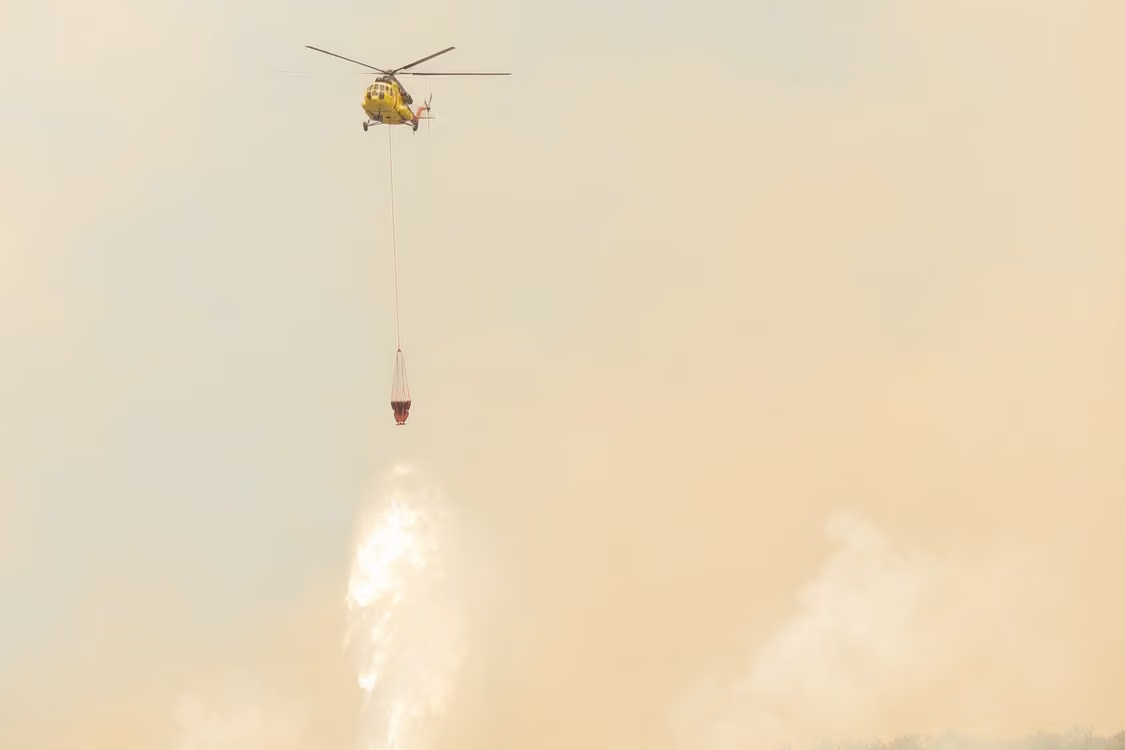
Firefighting helicopters assist wildfire suppression operations through:
- Aerial water drops using specialized fire suppression equipment like Bambi Buckets
- Quick transportation of firefighters to remote or expansive regions
- Aerial reconnaissance using advanced infrared technology
- Remote logistics support
- Wildfire search and rescue response
Fast aerial response helps firefighters contain wildfires more quickly while supporting nearby communities.
Disaster Recovery
Our warming climate is contributing to more destructive hurricanes, floods, tornadoes, landslides, and winter storms.
Here are several ways helicopters aid disaster response and recovery efforts after natural disasters:
- Deliver emergency supplies
- Assess damage from a bird’s-eye view
- Transport first responders and utility crews when infrastructure is inaccessible
- Perform search and rescue missions
- Evacuate victims
- Enable utility inspections
- Help inspect, repair, and rebuild utilities and other infrastructure
As severe weather events become more frequent, helicopters continue to play a vital role in restoring access, accelerating recovery efforts, and helping affected communities recover more quickly.
Environmental Monitoring
Rotorcraft equipped with specialized sensors like light detection and ranging technology (LiDAR) help government agencies and environmental organizations:
- Monitor valuable ecosystems
- Map vegetation and terrain
- Identify erosion
- Survey coastlines
- Evaluate wildfire damage
Helicopters can perform these assessments while minimizing disturbance to the surrounding landscape and wildlife.
Renewable Energy Support
Helicopters are frequently called upon to assist with construction and maintenance of renewable energy projects like:
- Wind farms
- Offshore wind farm operations
- Solar facilities
- Transmission line upgrades
- Flood control projects
- Dam maintenance
- Levee reinforcement
- Remote communication towers
Many of these sites are difficult to reach by ground. Helicopters transport and precisely place heavy equipment and components while minimizing disruption to sensitive terrain. Experienced heavy-lift helicopter operators are well equipped to play a key role in renewable energy construction and other infrastructure projects in challenging regions.

Equipment Modifications for Climate Adaptation
Adapting to a changing climate requires improved technology and equipment. Here are some of the technologies helping helicopter operators work more safely and efficiently within demanding circumstances.
Advanced Thermal Imaging
Thermal imaging systems help aerial crews detect heat differences that are hard to detect with the human eye.
These imaging tools enable many essential operations, including:
- Wildfire monitoring
- Hotspot monitoring
- Search and rescue operations
- Infrastructure inspections
By providing enhanced visibility during hazardous missions, thermal technology helps operators collect information faster so they can make smarter decisions in the field.
Enhanced Communication and Mapping Technology
Modern flight crews rely on advanced communication and navigation systems that enhance situational awareness and decision-making during complex missions. Improved GPS navigation, satellite communications, and geographic information system (GIS) integration keep pilots and crews connected before, during, and after each mission.
These tools give flight crews access to real-time information to help them:
- Navigate remote and unfamiliar terrain
- Share current information with ground crews and emergency agencies
- Track aircraft positions and mission progress
- Coordinate response efforts across agencies
- Plan safer, more efficient flight routes
- Monitor changing conditions throughout a mission
These capabilities are especially valuable during operations like disaster response and infrastructure repair where conditions can change rapidly.

External Load Systems
External load systems enable helicopters to transport cargo outside the aircraft using specialized rigging equipment. These systems are crucial for moving and placing large materials in hard-to-reach locations.
Precision long-line operations support:
- Remote construction
- Utility repairs
- Emergency equipment delivery
- Transportation of personnel
- Delivery of generators and other heavy components
Skilled pilots and ground crews remain in close coordination during heavy lifts to ensure safe and accurate load placement.
Operational Adjustments for a Changing Climate
Helicopter operators like Helicopter Express are adapting operations alongside equipment to safely complete missions in demanding conditions.
Key operational adjustments include:
More Dynamic Flight Planning
Enhanced flight planning is becoming more critical as pilots increasingly face climate-related factors like:
- Wildfire smoke
- Extreme heat
- Changing wind patterns
- Reduced air quality
- Rapidly developing storms
Today's flight planning extends well beyond selecting the most direct route. Operators continuously evaluate weather forecasts, smoke movement, shifting wind, air quality, aircraft performance, and mission priorities before and during each flight. This allows crews to adjust routes, schedules, and mission timing as conditions change.
Careful capacity management is equally important. Flight teams must match the right aircraft, payload, crew, and equipment to every project while coordinating closely with customers and ground personnel. Combined with advanced planning tools, these operational strategies improve safety, reduce unnecessary repositioning, and help missions stay on schedule despite rapid changes.
Ability to Safely Operate in Higher Temperatures
Hot weather creates unique obstacles for helicopter operators, as high temperatures can:
- Reduce lift
- Affect payload capacity
- Impact fuel planning
- Require adjustments to mission timing
Experienced teams like Helicopter Express know how to account for temperature, altitude, aircraft performance, and load requirements before each mission in demanding environments.
Expanded Emergency Preparedness
As climate-related emergencies become more frequent and complex, operators are investing in stronger preparedness strategies, including:
- Crew training
- Multi-crew coordination
- Emergency communication
- Contingency planning
- Mutual aid partnerships
Enhanced preparation allows helicopter operators to support customers and communities in situations where timing and reliability matter most.
The Future of Climate Adaptation in Helicopter Services
Advances in aircraft technology, alternative fuels, and digital tools are shaping how the helicopter industry is preparing for future missions. As conditions evolve, we expect rotorcraft operators to build on these innovations to improve efficiency while continuing to reduce emissions.
For example, Airbus is aiming for 100% sustainable aviation fuel (SAF) capability by 2030. Other industry leaders are relying on emerging technologies to improve their services.
Some examples include:
- AI-Assisted Planning: Artificial intelligence tools like AI co-pilots and predictive analytics are helping operators optimize routes, monitor weather, allocate aircraft, and identify potential operational risks before missions begin.
- Autonomous Infrastructure Inspections: Autonomous systems are assisting crews in the inspection of infrastructure like power lines and pipelines so they can identify issues sooner and plan for more effective maintenance.
- Improved Weather Forecasting: More advanced forecasting tools and weather radar systems are allowing pilots to identify changing weather patterns and select safer weather windows.
- Helicopter-Drone Coordination: Drones are supporting helicopter operations by evaluating conditions and providing the collected data to rotorcraft teams before they’re dispatched to a scene.
As these technologies further develop, helicopters will continue to play an important role in missions where speed, access, and lifting capability are crucial.
To learn more about where rotorcraft technology is headed, explore the emerging trends and innovations transforming helicopter design and functionality.
Helicopter Express: Built for the Demands of a Changing Climate
As the operating landscape evolves, helicopter teams have been forced to adapt. Helicopter Express supports specialized missions spanning heavy-lift construction, emergency response, and everything in between with an advanced fleet and flexible operational planning.
Our experienced pilots routinely operate in extreme heat, remote terrain, disaster response zones, and other demanding environments where quick decision-making and precision are essential. Contact Helicopter Express today to request a quote or learn how we can help you complete important work despite shifting hazards.