The Evolution of Helicopter Hoist Systems: From Rescue to Construction

Helicopter hoist systems have come a long way since 1945. Learn how modern hoists work, their current applications, and what to know about operator training.

Imagine being stranded on a sinking ship in the middle of a storm, with no lifeline and no way to escape. Now think of the relief you’d feel as you spot a helicopter in the sky, hovering overhead to lower a rescue hoist system and pull you to safety.

That was a real scenario that played out in Fairfield, Connecticut in 1945, when a Sikorsky R-5 equipped with a hydraulic hoist rescued two crew members from a damaged oil barge. This defining moment represented the first recorded helicopter hoist operation in history, setting the stage for a critical tool that would adapt to serve additional aircraft missions over time.

Today, helicopter hoists—also referred to as winch systems—support everything from disaster relief to construction. This guide explains how they work, how they’re used today, and the training required for safe operation.

What Is a Helicopter Hoist and How Does It Work?

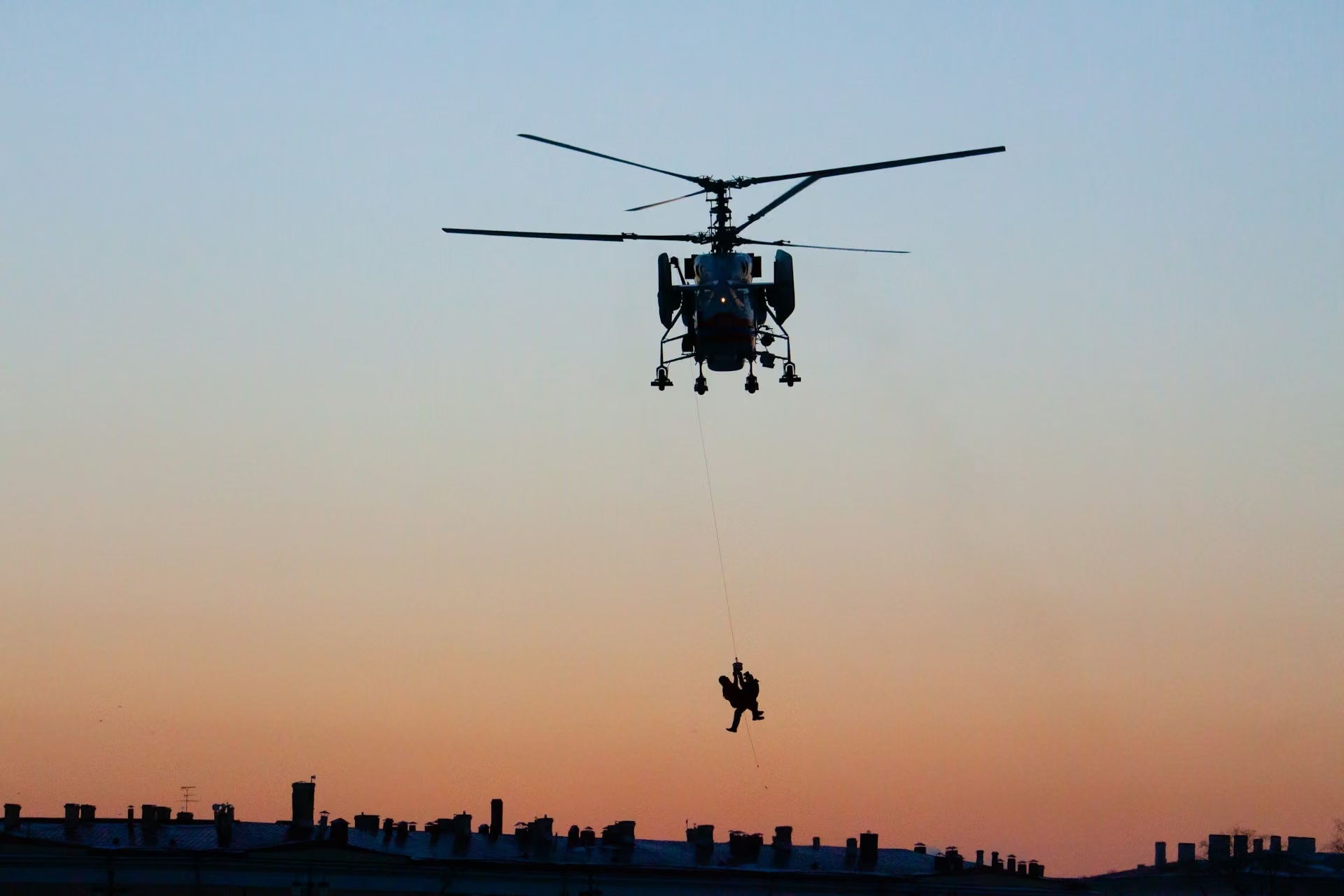
A helicopter hoist is an onboard lifting device that raises or lowers people and cargo via a cable that’s attached to the aircraft. During a hoist operation, the pilot keeps the aircraft in a stable, hovering position. The hoist lowers a stretcher, rescuer, or cargo load into hard-to-access environments such as difficult terrain, rooftops, or open water. Once the task is complete, the hoist brings the load back up to the helicopter.

These systems allow helicopter operators to perform emergency rescues and external-load work in locations where landing is impractical or unsafe. Modern hoists are often equipped with features such as lighting, cameras, and communication technology that improve safety and efficiency.

A Brief History of the Hoist System

Since the first hoist rescue recorded off the coast of Connecticut over 80 years ago, hoist systems have continued to evolve. Helicopters are capable of reaching people in locations inaccessible by airplane, boat, or ground vehicle, while their hoists have proved their value in both civilian and military missions. These systems are increasingly vital for maritime search-and-rescue efforts and recoveries in steep mountainous zones.

While early helicopter hoists were relatively simple, manufacturers have vastly improved their lifting capacity, safety, and reliability over the last few decades. Expanded capabilities have opened the door to new uses beyond emergency response, including utility work, aerial firefighting, and human external cargo (HEC) operations.
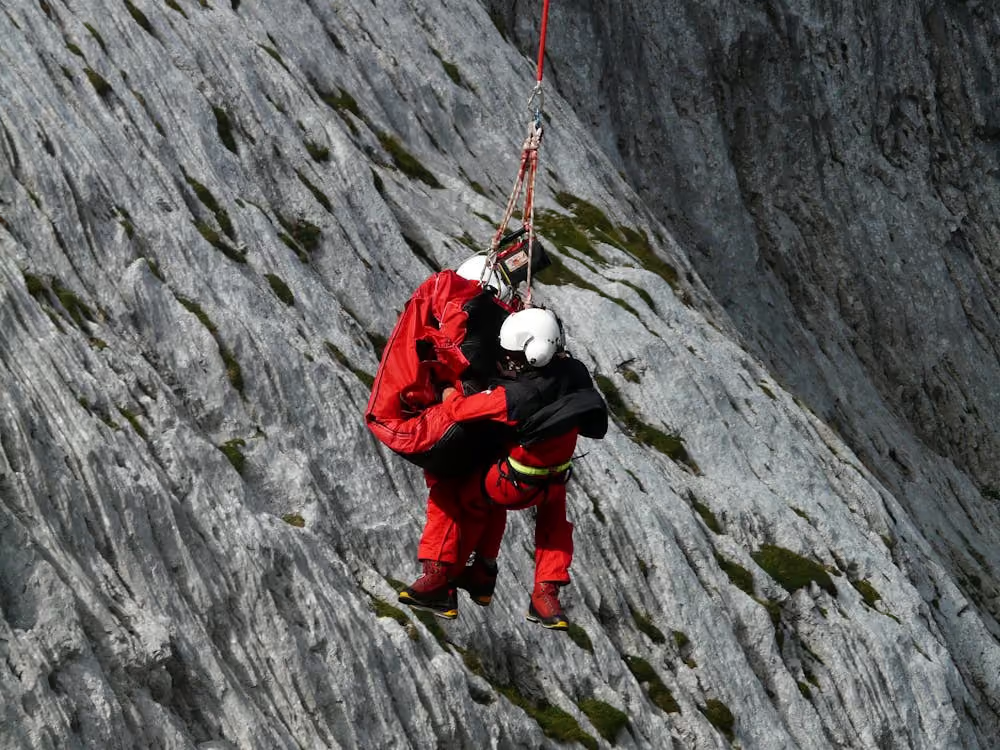
rescuers suspended from a helicopter hoist rescuing a person from the side of a mountain
Photo by Pixabay from Pexels

Helicopter Hoists: Key Components and Specifications

Helicopter hoist systems combine strength, precision controls, and advanced monitoring to improve safety in challenging environments.

Core Components

Hoist systems include several core components:

  • Hoist Mechanism: The motorized mechanism that raises and lowers the cable.

  • Cable: Stainless-steel wires, twisted into strands, with an outer wrap.

  • Hook or Rescue Device: The attachment designed for personnel and cargo lifting.

  • Operator Controls: The mechanisms that pay out or reel in the line. They enable crews to control hoist speed, load management, and positioning.

Critical Specifications

These are the specs that matter most:

  • Cable Length: The amount of wire rope available that affects how far crews can reach below the aircraft. Deep water rescues, tall structures, and situations that require more hover clearance demand longer cables with extended vertical reach.
  • Hoist Speed: How quickly the cable pays out or reels in. Affects rescue duration and length of time the responder and survivor are exposed to the elements.
  • Power Source: The source that powers the hoist. Smaller aircraft typically rely on electric hoists. Larger helicopters and mission-specific aircraft may use electric or hydraulic systems.
  • Duty Cycle: Defines whether the hoist is built for frequent heavy loads or occasional use. Duty cycle significantly impacts planning and maintenance.

Modern Designs and Safety Innovations

Improved designs, advanced features, and newer technology have transformed helicopter hoist operations over the years. Many hoists now include multiple layers of protection for better situational awareness, longer maintenance intervals, and enhanced reliability.

These features include:

  • Load Monitoring Sensors and Onboard Diagnostics: Real-time sensor data and diagnostics share load and system status before and during flight. This helps crews avoid dangerous overload conditions like shock loads and cable failure.

  • Emergency Stop Features: These features allow operators to quickly halt or release the hoist during emergencies.

  • Data Recording: Flight and hoist data can be reviewed post-flight to optimize performance and training.

  • Improved Cable Design: Newer designs aim to limit mis-wraps, wear, and maintenance requirements.

  • Integrated Cameras and Lighting: Improved visibility means safer conditions during periods of low light or inclement weather.

  • Communication Technology: Some systems communicate with display devices to render mission images to aerial crew members in real time.

  • Smart Hooks: These allow crews to measure loads while they’re on the hook.

Integrations like these are tailored to specific aircraft models, mission types, and certification requirements.

How Helicopter Hoists Are Used Today

Search and rescue remains one of the most recognized uses of helicopter hoists. But today’s systems also enable routine, planned utility work and a wide range of operations across industries when landing is unsafe or impossible.

Common additional uses include emergency medical services, utility and construction support, aerial firefighting, and disaster response.

Search and Rescue

Search-and-rescue crews rely on helicopters to reach people trapped in mountains, flood zones, forests, and offshore water environments. When blocked roads, challenging terrain, or inclement weather limit ground-based access after natural or man-made disasters, rotorcraft can transport experienced responders directly to the scene. Once responders spot individuals in distress, they use the hoist to extract survivors so they can be quickly transported to medical care and safety.
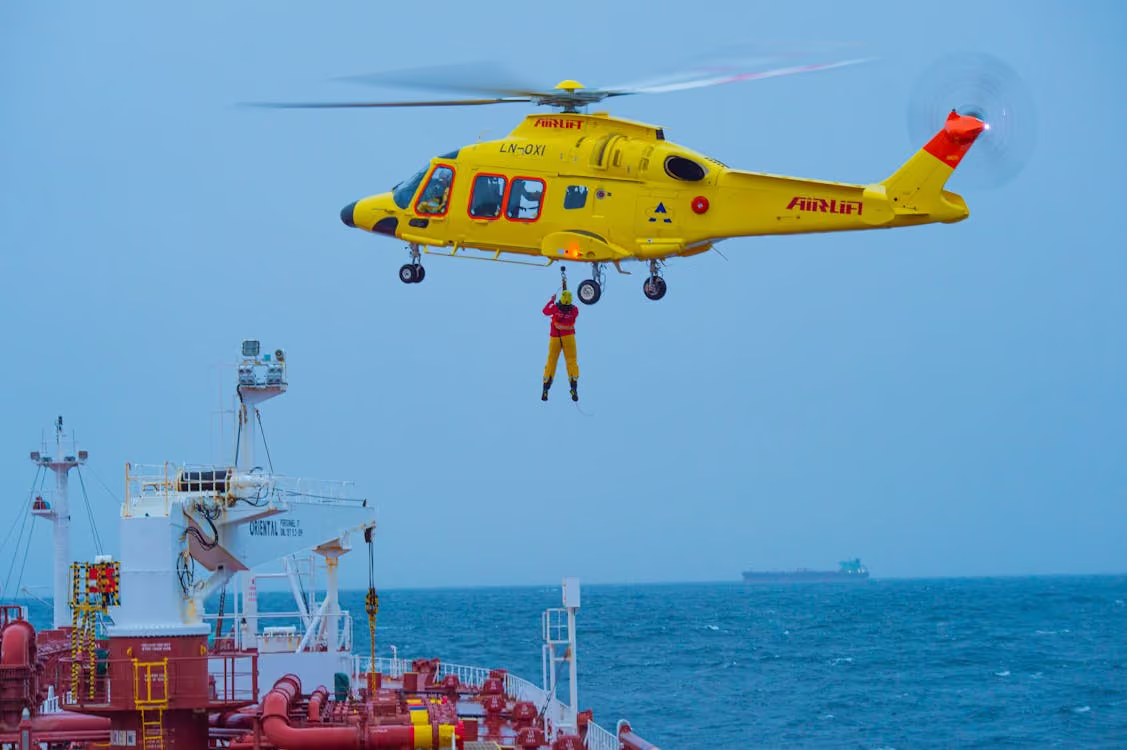
yellow rescue helicopter hovers above a ship while a hoist lifts a person from the ship deck
Photo by Oleksiy Yeshtokyn from Pexels

Emergency Medical Services (EMS)

Helicopters also deliver emergency medical teams directly to patients in rural regions to expedite their transportation to the nearest hospital or medical facility. And in high-rise, urban cities, hoist rescue systems help responders reach rooftops and disaster areas without requiring landing zones nearby.

Quicker response times of medical helicopters due to their ability to bypass difficult terrain and traffic congestion mean critically ill or injured patients receive medical care much faster than they would by ambulance. Trauma patients in particular are more likely to survive when transported to trauma centers by helicopter—especially when distance is a factor.

Utility and Construction Support

Helicopters also facilitate external cargo work, such as infrastructure projects involving utility construction and aerial crane lifting and placement. They can transport personnel, tools, and equipment into hard-to-access locations, such as remote or elevated environments aboard ships or in mountains.

Companies like Helicopter Express support these complex operations by providing specialized heavy-lift and external-load services to industries across the United States and abroad.

Aerial Firefighting

Another use of helicopter hoists is assisting aerial firefighting missions in environments where crews cannot safely land due to rugged terrain, dense forests, steep slopes, or active fire conditions. Hoists allow firefighters, rescue personnel, and specialized equipment to be lowered directly into remote regions that may otherwise be inaccessible. They also help extract injured personnel and civilians during fast-moving fires, minimizing delays and reducing risks on the ground.
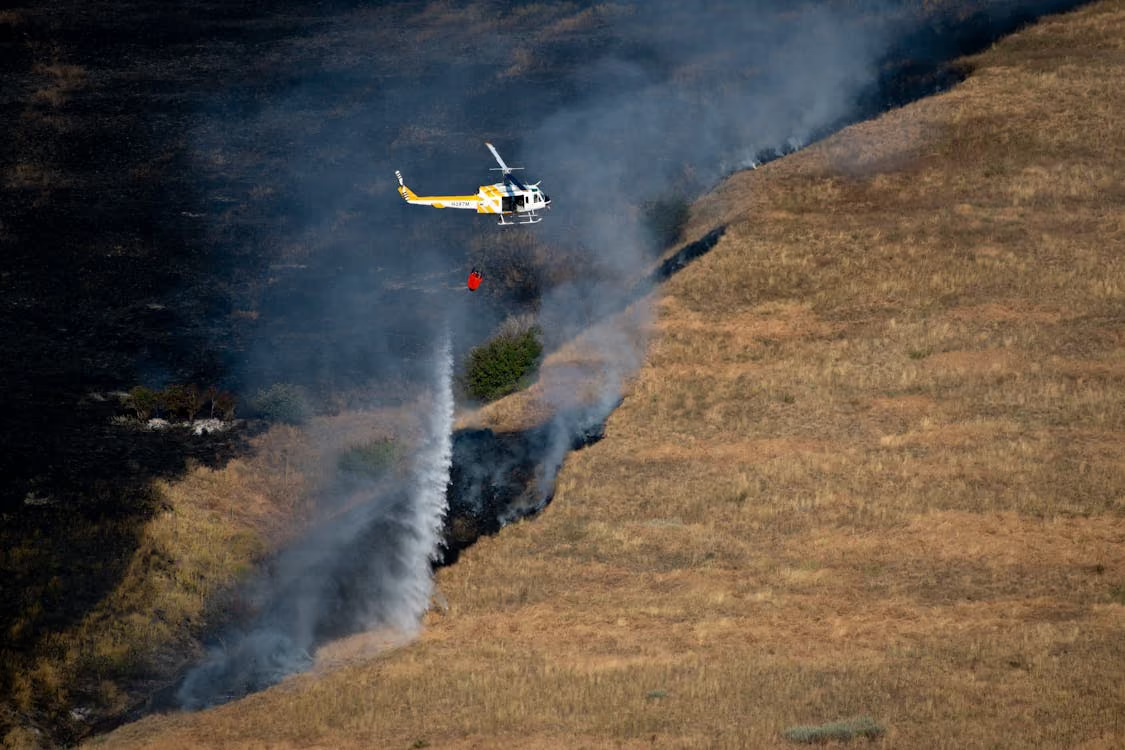
yellow and white helicopter using a Bambi Bucket to extinguish a wildfire in a dry field in Montana
Photo by Graham Roy from Pexels

Disaster Response

During man-made emergencies, and in the aftermath of natural disasters like hurricanes and earthquakes, helicopters provide disaster relief for impacted areas. Their hoist systems help quickly evacuate victims, deliver emergency supplies, and assist rescue crews when local infrastructure is damaged.

Hoist Operator Training and Crew Coordination

Because hoist work involves crews, multiple moving parts, and frequently changing conditions, safety requires extensive training and coordination practice. This ensures every team member understands their role.

Many organizations use simulators, pool-based drills, and mock rescue environments to provide realistic operational experience prior to live missions.

Core training elements include:

  • Aircraft and Hoist Familiarization: Teams learn system limitations, operating procedures, equipment handling, and each member’s role.
  • Hover Coordination and Communications: Pilots and hoist operators practice maintaining stable hover positioning and communication during lifts. Miscommunication for even a few feet of the lift can have serious consequences.
  • Wet and Dry Hoisting: Crews train in dry environments and pools to practice for land and water rescues, extractions, and basket and stretcher recoveries.
  • Emergency Procedures: Scenarios involving load oscillation, hoist malfunctions, cable cuts, and quick-release actions are rehearsed before operators ever face them during flight.
  • Ground and Deck Operations: Training also addresses the unique hazards crews may face on land and during ship-board rescues.
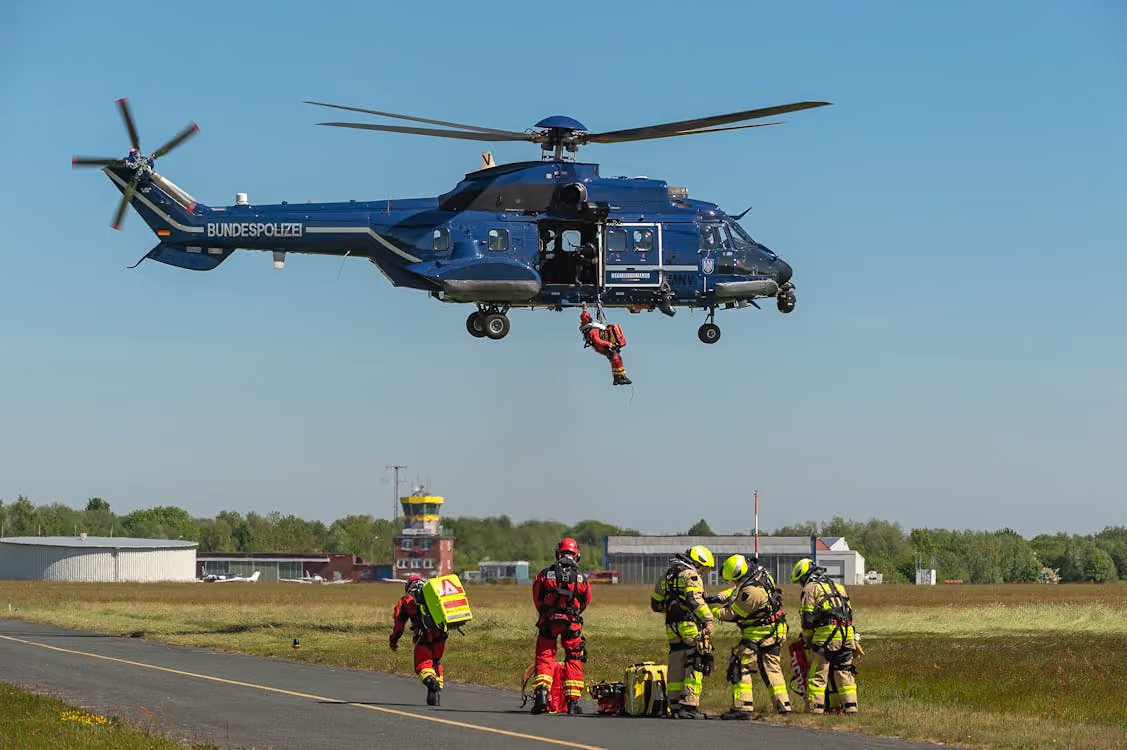
German police helicopter conducting hoist training with rescue personnel in an outdoor field under blue skies
Photo by Andreas Hoffmann from Pexels

Helicopter Express: Aerial Lifting Expertise You Can Count On

Modern hoist systems have expanded the types of missions that rely on helicopters. Rotorcraft and hoists provide enhanced access and quicker response for demanding rescue and construction projects.

At Helicopter Express in North Georgia, much of our daily operation centers around heavy lifting and precision aerial work. Our elite pilots, crew, and project coordinators assist clients across the United States and abroad with a full range of helicopter services, from utility maintenance and heavy-lift construction to aerial firefighting and disaster relief.

If your project demands both precision and skill, reach out to Helicopter Express today. We’ll show you how our experienced team and safety-focused approach support clients when traditional access methods fall short.

The Evolution of Helicopter Hoist Systems: From Rescue to Construction

Imagine being stranded on a sinking ship in the middle of a storm, with no lifeline and no way to escape. Now think of the relief you’d feel as you spot a helicopter in the sky, hovering overhead to lower a rescue hoist system and pull you to safety.

That was a real scenario that played out in Fairfield, Connecticut in 1945, when a Sikorsky R-5 equipped with a hydraulic hoist rescued two crew members from a damaged oil barge. This defining moment represented the first recorded helicopter hoist operation in history, setting the stage for a critical tool that would adapt to serve additional aircraft missions over time.

Today, helicopter hoists—also referred to as winch systems—support everything from disaster relief to construction. This guide explains how they work, how they’re used today, and the training required for safe operation.

What Is a Helicopter Hoist and How Does It Work?

A helicopter hoist is an onboard lifting device that raises or lowers people and cargo via a cable that’s attached to the aircraft. During a hoist operation, the pilot keeps the aircraft in a stable, hovering position. The hoist lowers a stretcher, rescuer, or cargo load into hard-to-access environments such as difficult terrain, rooftops, or open water. Once the task is complete, the hoist brings the load back up to the helicopter.

These systems allow helicopter operators to perform emergency rescues and external-load work in locations where landing is impractical or unsafe. Modern hoists are often equipped with features such as lighting, cameras, and communication technology that improve safety and efficiency.

A Brief History of the Hoist System

Since the first hoist rescue recorded off the coast of Connecticut over 80 years ago, hoist systems have continued to evolve. Helicopters are capable of reaching people in locations inaccessible by airplane, boat, or ground vehicle, while their hoists have proved their value in both civilian and military missions. These systems are increasingly vital for maritime search-and-rescue efforts and recoveries in steep mountainous zones.

While early helicopter hoists were relatively simple, manufacturers have vastly improved their lifting capacity, safety, and reliability over the last few decades. Expanded capabilities have opened the door to new uses beyond emergency response, including utility work, aerial firefighting, and human external cargo (HEC) operations.

rescuers suspended from a helicopter hoist rescuing a person from the side of a mountain
Photo by Pixabay from Pexels

Helicopter Hoists: Key Components and Specifications

Helicopter hoist systems combine strength, precision controls, and advanced monitoring to improve safety in challenging environments.

Core Components

Hoist systems include several core components:

  • Hoist Mechanism: The motorized mechanism that raises and lowers the cable.

  • Cable: Stainless-steel wires, twisted into strands, with an outer wrap.

  • Hook or Rescue Device: The attachment designed for personnel and cargo lifting.

  • Operator Controls: The mechanisms that pay out or reel in the line. They enable crews to control hoist speed, load management, and positioning.

Critical Specifications

These are the specs that matter most:

  • Cable Length: The amount of wire rope available that affects how far crews can reach below the aircraft. Deep water rescues, tall structures, and situations that require more hover clearance demand longer cables with extended vertical reach.
  • Hoist Speed: How quickly the cable pays out or reels in. Affects rescue duration and length of time the responder and survivor are exposed to the elements.
  • Power Source: The source that powers the hoist. Smaller aircraft typically rely on electric hoists. Larger helicopters and mission-specific aircraft may use electric or hydraulic systems.
  • Duty Cycle: Defines whether the hoist is built for frequent heavy loads or occasional use. Duty cycle significantly impacts planning and maintenance.

Modern Designs and Safety Innovations

Improved designs, advanced features, and newer technology have transformed helicopter hoist operations over the years. Many hoists now include multiple layers of protection for better situational awareness, longer maintenance intervals, and enhanced reliability.

These features include:

  • Load Monitoring Sensors and Onboard Diagnostics: Real-time sensor data and diagnostics share load and system status before and during flight. This helps crews avoid dangerous overload conditions like shock loads and cable failure.

  • Emergency Stop Features: These features allow operators to quickly halt or release the hoist during emergencies.

  • Data Recording: Flight and hoist data can be reviewed post-flight to optimize performance and training.

  • Improved Cable Design: Newer designs aim to limit mis-wraps, wear, and maintenance requirements.

  • Integrated Cameras and Lighting: Improved visibility means safer conditions during periods of low light or inclement weather.

  • Communication Technology: Some systems communicate with display devices to render mission images to aerial crew members in real time.

  • Smart Hooks: These allow crews to measure loads while they’re on the hook.

Integrations like these are tailored to specific aircraft models, mission types, and certification requirements.

How Helicopter Hoists Are Used Today

Search and rescue remains one of the most recognized uses of helicopter hoists. But today’s systems also enable routine, planned utility work and a wide range of operations across industries when landing is unsafe or impossible.

Common additional uses include emergency medical services, utility and construction support, aerial firefighting, and disaster response.

Search and Rescue

Search-and-rescue crews rely on helicopters to reach people trapped in mountains, flood zones, forests, and offshore water environments. When blocked roads, challenging terrain, or inclement weather limit ground-based access after natural or man-made disasters, rotorcraft can transport experienced responders directly to the scene. Once responders spot individuals in distress, they use the hoist to extract survivors so they can be quickly transported to medical care and safety.

yellow rescue helicopter hovers above a ship while a hoist lifts a person from the ship deck
Photo by Oleksiy Yeshtokyn from Pexels

Emergency Medical Services (EMS)

Helicopters also deliver emergency medical teams directly to patients in rural regions to expedite their transportation to the nearest hospital or medical facility. And in high-rise, urban cities, hoist rescue systems help responders reach rooftops and disaster areas without requiring landing zones nearby.

Quicker response times of medical helicopters due to their ability to bypass difficult terrain and traffic congestion mean critically ill or injured patients receive medical care much faster than they would by ambulance. Trauma patients in particular are more likely to survive when transported to trauma centers by helicopter—especially when distance is a factor.

Utility and Construction Support

Helicopters also facilitate external cargo work, such as infrastructure projects involving utility construction and aerial crane lifting and placement. They can transport personnel, tools, and equipment into hard-to-access locations, such as remote or elevated environments aboard ships or in mountains.

Companies like Helicopter Express support these complex operations by providing specialized heavy-lift and external-load services to industries across the United States and abroad.

Aerial Firefighting

Another use of helicopter hoists is assisting aerial firefighting missions in environments where crews cannot safely land due to rugged terrain, dense forests, steep slopes, or active fire conditions. Hoists allow firefighters, rescue personnel, and specialized equipment to be lowered directly into remote regions that may otherwise be inaccessible. They also help extract injured personnel and civilians during fast-moving fires, minimizing delays and reducing risks on the ground.

yellow and white helicopter using a Bambi Bucket to extinguish a wildfire in a dry field in Montana
Photo by Graham Roy from Pexels

Disaster Response

During man-made emergencies, and in the aftermath of natural disasters like hurricanes and earthquakes, helicopters provide disaster relief for impacted areas. Their hoist systems help quickly evacuate victims, deliver emergency supplies, and assist rescue crews when local infrastructure is damaged.

Hoist Operator Training and Crew Coordination

Because hoist work involves crews, multiple moving parts, and frequently changing conditions, safety requires extensive training and coordination practice. This ensures every team member understands their role.

Many organizations use simulators, pool-based drills, and mock rescue environments to provide realistic operational experience prior to live missions.

Core training elements include:

  • Aircraft and Hoist Familiarization: Teams learn system limitations, operating procedures, equipment handling, and each member’s role.
  • Hover Coordination and Communications: Pilots and hoist operators practice maintaining stable hover positioning and communication during lifts. Miscommunication for even a few feet of the lift can have serious consequences.
  • Wet and Dry Hoisting: Crews train in dry environments and pools to practice for land and water rescues, extractions, and basket and stretcher recoveries.
  • Emergency Procedures: Scenarios involving load oscillation, hoist malfunctions, cable cuts, and quick-release actions are rehearsed before operators ever face them during flight.
  • Ground and Deck Operations: Training also addresses the unique hazards crews may face on land and during ship-board rescues.
German police helicopter conducting hoist training with rescue personnel in an outdoor field under blue skies
Photo by Andreas Hoffmann from Pexels

Helicopter Express: Aerial Lifting Expertise You Can Count On

Modern hoist systems have expanded the types of missions that rely on helicopters. Rotorcraft and hoists provide enhanced access and quicker response for demanding rescue and construction projects.

At Helicopter Express in North Georgia, much of our daily operation centers around heavy lifting and precision aerial work. Our elite pilots, crew, and project coordinators assist clients across the United States and abroad with a full range of helicopter services, from utility maintenance and heavy-lift construction to aerial firefighting and disaster relief.

If your project demands both precision and skill, reach out to Helicopter Express today. We’ll show you how our experienced team and safety-focused approach support clients when traditional access methods fall short.

Make us your go-to team.

Our highly skilled pilots have the experience and equipment needed to rise to any challenge. When you need experts you can trust, give us a call.