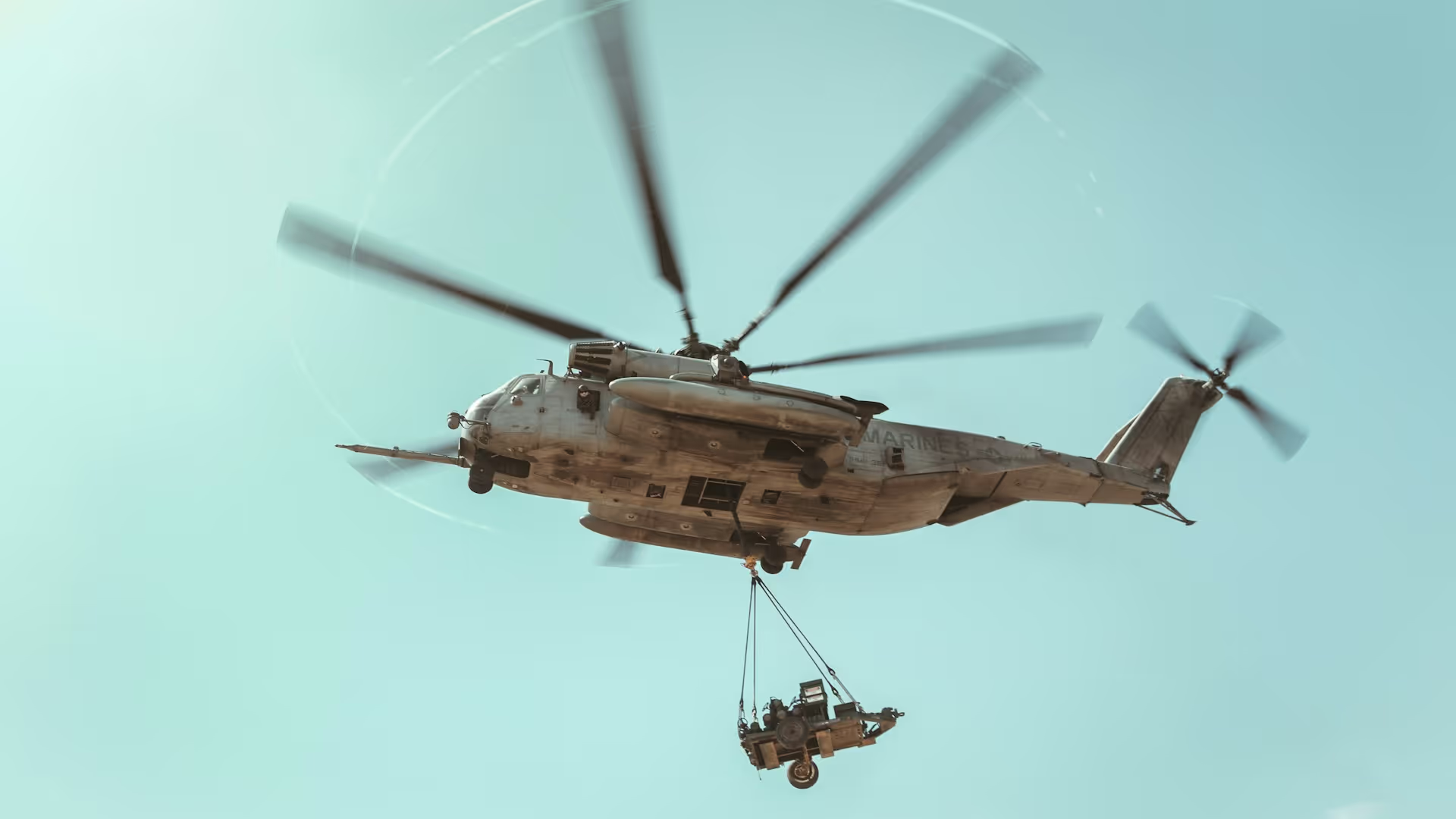
The Art of Helicopter Rigging: Equipment, Techniques, and Certifications

Learn how helicopter rigging works, from the specialized equipment and techniques used to the training and certifications that ensure safe aerial lifting.

Helicopters are capable of moving thousands of pounds of cargo in locations that traditional cranes cannot easily access, increasing project efficiency (and often reducing costs). But what may seem like a simple lift-and-go task is actually a complex operation. Aerial lifting requires careful planning, specialized rigging equipment and techniques, and close coordination between pilots and crews.

In this guide, we’ll explore how helicopter rigging works, its real-world applications, the gear and protocols required for the successful transportation of external loads, and the training and certifications that support safety. You’ll also learn about the benefits and challenges of helicopter-assisted work and how Helicopter Express supports precision lifting.

What Is Helicopter Rigging (and When Is It Used)?

Helicopter rigging refers to the setup of purpose-built cables, slings, hooks, and connectors that enable helicopters to quickly lift and transport external loads while maintaining safety and stability. Often referred to as “aerial crane operations,” these heavy lifts are commonly used in situations where traditional ground cranes would be impractical.

Helicopter rigging has many real-world applications. Helicopter cranes are often used for:

  • Construction and Infrastructure Projects: Heavy-lift construction—like the building of skyscrapers, bridges, and other infrastructure—often requires the delivery of steel beams, concrete pillars, and other heavy materials to job sites that are difficult to access.

  • Rooftop Equipment Installation: Helicopters can quickly place large HVAC systems and other units directly onto rooftops with extreme accuracy.

  • Utility and Energy Work: Aerial cranes allow for the placement of powerline towers and transformers in rugged terrain where ground-based transportation is challenging.

  • Transportation of Cargo to Remote Locations: Helicopters can deliver heavy materials and supplies to remote locations, such as islands, forests, and offshore energy platforms.

  • Emergency Response Operations: Rotorcraft also support critical emergency missions like disaster recovery, aerial firefighting, medical evacuation, and search-and-rescue efforts.

Specialized Equipment Required for Helicopter Rigging

Aerial lifts require specific gear designed to support dynamic loads, intense rotor wash, and constantly changing flight conditions. Each rigging component below plays a critical role in keeping external loads balanced and secure.

Key Rigging Gear

  • Longlines: These high-strength, low-stretch ropes connect the cargo hook to the load.

  • Cargo Hooks: Available as belly hooks that mount to the aircraft or remote hooks placed at the longline’s end, cargo hooks must be aircraft-certified with fail-safe jettison capability for emergency load release.

  • Weighted Balls and Ballasts: Weights attached near the bottom of the longline keep the line vertical despite rotor wash. They also reduce swing to support stability.

  • Swivels and Anti-Rotation Rigs: This equipment connects the longline to the cargo and prevents external loads from twisting or spinning beneath the rotor.

  • Multi-Leg Bridles: Often used for irregularly shaped loads—like HVAC units or timber bundles—bridles distribute weight evenly to maintain a stable center of gravity.

  • Cargo Nets and Carriers: High-strength (yet lightweight) cargo nets, grapples, slings, and other specialized carriers are necessary for certain types of loads.

Essential Rigging Hardware

  • Aviation-Rated Connectors: Hooks, shackles, carabiners, and connectors bring structural elements together with security. They must be compatible with the aircraft's specific cargo hook dimensions.

  • Protective Jackets: Fitted over longlines, these covers protect against abrasion, heat, and environmental damage during repeated lifts. They also separate internal electrical or  plumbing lines required for firefighting foam and remote sensors.

  • Custom Synthetic Slings: Designed for sensitive or high-value cargo (like aircraft engines or rotor components), custom-engineered, high-performance fiber or twin-path slings provide a secure hold without the risk of damage.

Critical Support Equipment

  • Load Cells or Indicators: Integrated into hooks or rigging assembly, these load-measuring devices provide real-time weight readings to ensure sling loads stay within safe weight limits.

  • Deployment Bags: Lay-flat bags and storage systems enable quick, tangle-free setup and recovery of longlines and their associated rigging between lifting operations.

Specific types of missions may demand additional equipment. For example, longlines with integrated plumbing for foam or water—as well as Bambi Buckets or tanks—are typically needed for aerial firefighting missions. Medical evacuations and search-and-rescue operations require human external cargo (HEC) lines.
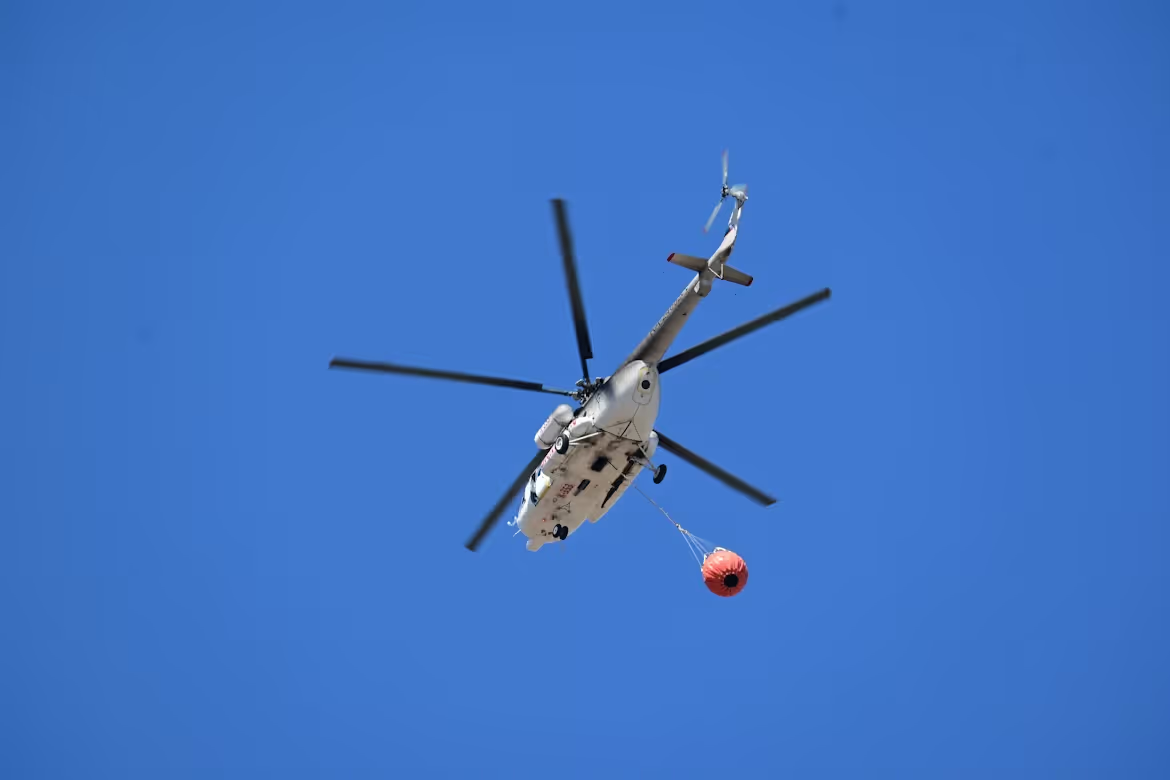
white helicopter with black blades carrying a Bambi Bucket under blue skies
Photo by Project: KENO from Unsplash

How Aerial Crane Operations Are Planned and Performed

Successful lifts begin long before the aircraft departs the helipad. Pilots and ground-based crews must collaborate to create a comprehensive lifting strategy that accounts for the project type, aircraft make and model, rigging specifications, and the site environment. Methodical planning keeps operations safe and efficient despite the dynamic challenges of aerial work, shifting loads, and complex conditions.

Step 1: Defining Project Requirements

Operators must first understand all operational parameters, including:

  • Load weight, size, and dimensions
  • Aircraft capabilities and lifting capacity
  • Pickup and drop-off locations
  • Planned routes (including terrain details and potential obstacles)
  • Current and projected weather
  • Designated timeline and critical deadlines
  • Budget for helicopter-assisted work

These details help operators determine the ideal helicopter model, rigging configuration, and flight path for the mission.

See our step-by-step project planning guide to help you prepare for your first helicopter-assisted operation.

Step 2: Pre-Flight Briefing

Once your hired team has established a lifting plan, a pre-flight briefing is necessary to ensure the pilot, aerial crew, and ground crew understand the sequence of events. During this briefing, they review:

  • The lifting plan
  • Their individual roles
  • Safety procedures and expectations
  • Established radio and hand signals
  • Designated safety zones

Step 3: Preparing the Worksite and Rigging Equipment

Next, rigging operators prepare the job site and select the appropriate rigging hardware for the operation. This step includes:

  • Clearing debris and materials from the job site
  • Limiting access to essential crew members only
  • Selecting the correct slings, nets, longline, hooks, and other hardware
  • Inspecting all equipment for damage
  • Attaching taglines to help control movement

Step 4: Stabilizing and Securing the Load

Once the site and equipment are ready, rigging specialists properly prepare the cargo for lift. These tasks help ensure the load remains balanced once airborne:

  • Rigging and balancing external cargo while protecting sharp edges
  • Checking that load weight and rigging do not exceed maximum limits
  • Positioning the helicopter over the pickup point
  • Ensuring the longline and hook are stable and clear of people and obstacles

Step 5: Hooking Up the Cargo

Next, the pilot positions the helicopter so the ground crew can attach the rigging equipment to the aircraft’s cargo hook. This step requires meticulous coordination between the pilot and the hook-up personnel. It includes the hook-up operator:

  • Receiving the signal to approach
  • Attaching the rigging to the cargo hook (while staying low and within the designated safe approach path)
  • Confirming that the safety latch is properly secured
  • Moving back to a safe position before the lift begins

Step 6: Transporting the Load

The pilot then begins the lifting sequence and carefully transports the external cargo to its destination. Tasks during this stage include:

  • The pilot slowly lifting the aircraft until slings are taut and the load rises above the ground
  • Ground personnel checking that the cargo is balanced and free of obstructions
  • The pilot following the planned route and avoiding nearby structures while keeping the load low and stable

Step 7: Placing the Load

Once the cargo reaches its destination, the pilot and ground crew collaborate to set the load down safely and accurately. Ground teams at the destination stand clear while the pilot:

  • Properly positions the load
  • Gently lowers the external cargo to the landing area while a marshaller guides the aircraft

Step 8: Post-Lift Actions

The work doesn’t end there. After the lift has been successful, rigging personnel complete several tasks to ensure all equipment remains in good working condition. This includes:

  • Disconnecting and de-rigging (once signaled that the approach is clear)
  • Inspecting rigging equipment for damage or wear
  • Clearing personnel and equipment from the work area
  • Signaling for the pilot to depart
  • Debriefing to discuss any issues with the hookup, equipment, transportation, or placement
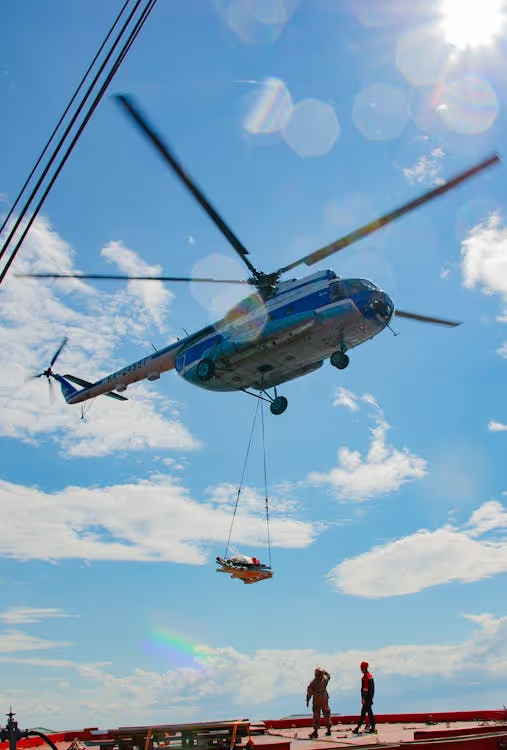
blue and white helicopter lowering cargo on ropes onto a rooftop with ground crews looking on
Photo by Ivan Prymuhin from Pexels

Essential Safety Protocols and Techniques

Safety must be central to every helicopter rigging operation and lift. It’s important to ensure the operator you choose follows safety regulations established by the Occupational Safety and Health Administration (OSHA) as well as aviation best practices. Strict procedures help protect crews, equipment, cargo, and landscapes.

Key safety measures include:

  • Equipment Checks: Before the operation begins, cargo hooks, slings, and connectors should be tested to confirm proper function.

  • Use of Personal Protective Equipment (PPE): Personnel should wear eye protection and hard hats secured by chin straps to ensure safety in rotor-wash environments. Loose fitting clothing that could snag on the hoist line should never be worn.

  • Load Zone Clearance: Non-essential crew should remain outside the lifting area to prevent injuries from swinging loads or debris. Loose gear within 100 feet of the lifting location should be secured or removed from the site.

  • Static Charge Control: Ground personnel should wear protective rubber gloves and use grounding devices before touching suspended loads. These actions help dissipate electrical charges that can build during flight.

  • Use of Emergency Mechanical Control: Personnel must ensure that cargo hooks have properly working emergency mechanical control.

  • Load Weight Verification: External loads must always remain within the helicopter’s certified lifting capacity.

  • Caution During Low-Visibility Periods: Special precautions should be taken to eliminate dust and other conditions that limit visibility.
  • Continuous Monitoring and Communication: Crews must continuously monitor and communicate the stability of the load, as well as environmental conditions (such as wind speed and visibility).

Training and Certifications for Helicopter Riggers

Because helicopter lifting operations involve suspended loads and moving aircraft, OSHA requires riggers who perform certain activities to be qualified.

A qualified rigger is typically someone who:

  • Completed a recognized certification or training program
  • Demonstrates extensive knowledge of rigging equipment and load calculations
  • Understands hazard identification and mitigation strategies
  • Maintains up-to-date safety training

Roles that may benefit from rigging training courses include riggers, site managers and supervisors, mining personnel, drillers, ground support crews, aircrews, and anyone else involved in aerial crane activities. Proper training ensures every member of the team understands the technical aspects of rigging as well as critical safety protocols that prevent accidents.
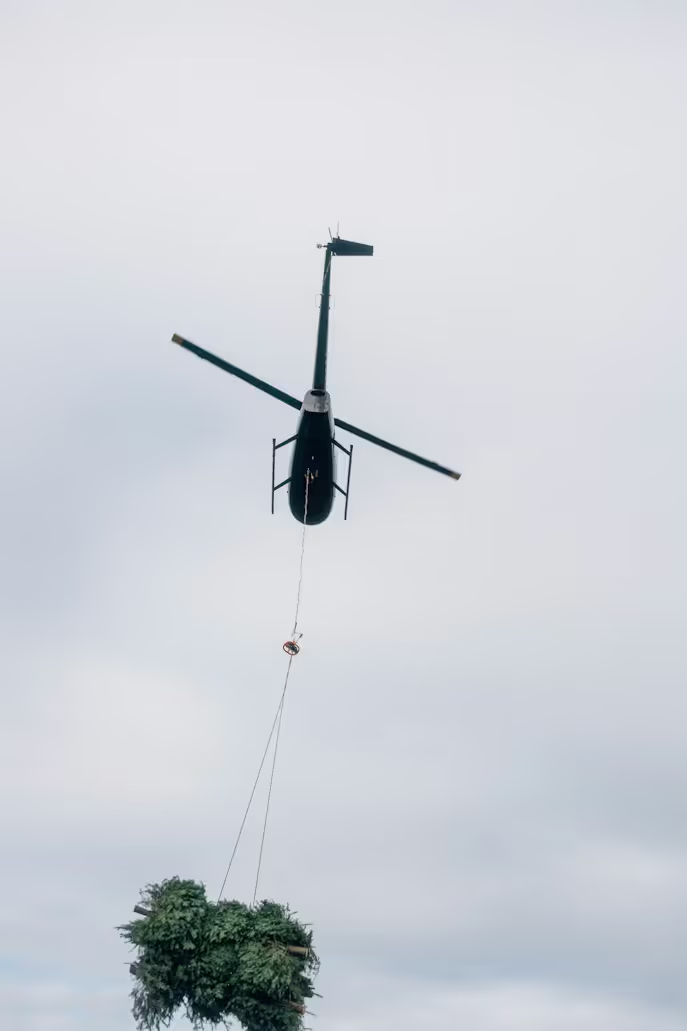
helicopter lifting Christmas trees on a longline beneath the aircraft
Photo by Cristofer Maximilian from Unsplash

Benefits of Using Aerial Cranes

Aerial lifting offers many advantages over traditional cranes. Key benefits include:

  • Access to Challenging Locations: Helicopters can easily reach rooftops, mountainsides, and remote job sites that ground-based equipment cannot.

  • Precision Placement: Standard cranes have limited mobility and are difficult to maneuver. Rotorcraft, on the other hand, allow pilots to hover and rotate in place to control the placement of heavy equipment. Increased precision means less chance of harm to nearby properties, crews, bystanders, and job sites.

  • Improved Efficiency: Helicopters can bypass traffic and other obstacles, transporting and installing large components in a matter of hours, rather than days. Faster lifts mean less downtime and shorter schedules that save time and money.

  • Reduced Site Disruption: Helicopters require minimal setup space and typically avoid blocking roads or damaging landscapes.

These advantages make aerial lifting an ideal choice for many construction, utility, and emergency response projects with complex logistical challenges.

Learn more about how helicopters help prevent accidents during construction projects.

Challenges of Helicopter Lifting

Despite their many advantages, aerial cranes require careful risk management. Several factors can complicate these operations, like:

  • Load Instability: Suspended cargo can swing or rotate if improperly balanced or affected by wind.

  • Rotor Wash Hazards: Downward airflow from the rotor can move debris or interfere with lightweight rigging components.

  • Environmental Obstacles: Strong winds, low visibility, and changing atmospheric conditions can impact aircraft performance, while structures and uneven terrain can limit safe flight paths.

  • Communication Breakdowns: Miscommunication between pilots and ground crews may lead to unsafe situations.

Rest assured that trained and experienced crews are capable of mitigating most risks through a combination of planning, equipment inspections, safety protocols, and ongoing training.

Helicopter Express: Ensuring Safety and Precision During Every Rig and Lift

At Helicopter Express, we know that helicopter rigging requires more than just strong cables and powerful aircraft. Aerial crane operations demand certified rigging crews, a coordinated lifting strategy, and constant communication.

Our team builds every external-load operation around these principles, whether supporting heavy-lift construction projects, utility line placement, emergency response missions, or any other type of work that requires a capable aircraft. 

When you work with Helicopter Express, you can count on:

  • Elite pilots capable of placing heavy loads with pinpoint precision in challenging environments
  • A customized lifting plan that accounts for unique load characteristics, site conditions, timelines, and budgets
  • A well-maintained fleet with state-of-the-art rigging systems
  • Collaborative project coordination from the initial planning session to successful completion

Contact us today to learn how our helicopter lifting services can support your team and boost your project’s efficiency.

The Art of Helicopter Rigging: Equipment, Techniques, and Certifications

Helicopters are capable of moving thousands of pounds of cargo in locations that traditional cranes cannot easily access, increasing project efficiency (and often reducing costs). But what may seem like a simple lift-and-go task is actually a complex operation. Aerial lifting requires careful planning, specialized rigging equipment and techniques, and close coordination between pilots and crews.

In this guide, we’ll explore how helicopter rigging works, its real-world applications, the gear and protocols required for the successful transportation of external loads, and the training and certifications that support safety. You’ll also learn about the benefits and challenges of helicopter-assisted work and how Helicopter Express supports precision lifting.

What Is Helicopter Rigging (and When Is It Used)?

Helicopter rigging refers to the setup of purpose-built cables, slings, hooks, and connectors that enable helicopters to quickly lift and transport external loads while maintaining safety and stability. Often referred to as “aerial crane operations,” these heavy lifts are commonly used in situations where traditional ground cranes would be impractical.

Helicopter rigging has many real-world applications. Helicopter cranes are often used for:

  • Construction and Infrastructure Projects: Heavy-lift construction—like the building of skyscrapers, bridges, and other infrastructure—often requires the delivery of steel beams, concrete pillars, and other heavy materials to job sites that are difficult to access.

  • Rooftop Equipment Installation: Helicopters can quickly place large HVAC systems and other units directly onto rooftops with extreme accuracy.

  • Utility and Energy Work: Aerial cranes allow for the placement of powerline towers and transformers in rugged terrain where ground-based transportation is challenging.

  • Transportation of Cargo to Remote Locations: Helicopters can deliver heavy materials and supplies to remote locations, such as islands, forests, and offshore energy platforms.

  • Emergency Response Operations: Rotorcraft also support critical emergency missions like disaster recovery, aerial firefighting, medical evacuation, and search-and-rescue efforts.

Specialized Equipment Required for Helicopter Rigging

Aerial lifts require specific gear designed to support dynamic loads, intense rotor wash, and constantly changing flight conditions. Each rigging component below plays a critical role in keeping external loads balanced and secure.

Key Rigging Gear

  • Longlines: These high-strength, low-stretch ropes connect the cargo hook to the load.

  • Cargo Hooks: Available as belly hooks that mount to the aircraft or remote hooks placed at the longline’s end, cargo hooks must be aircraft-certified with fail-safe jettison capability for emergency load release.

  • Weighted Balls and Ballasts: Weights attached near the bottom of the longline keep the line vertical despite rotor wash. They also reduce swing to support stability.

  • Swivels and Anti-Rotation Rigs: This equipment connects the longline to the cargo and prevents external loads from twisting or spinning beneath the rotor.

  • Multi-Leg Bridles: Often used for irregularly shaped loads—like HVAC units or timber bundles—bridles distribute weight evenly to maintain a stable center of gravity.

  • Cargo Nets and Carriers: High-strength (yet lightweight) cargo nets, grapples, slings, and other specialized carriers are necessary for certain types of loads.

Essential Rigging Hardware

  • Aviation-Rated Connectors: Hooks, shackles, carabiners, and connectors bring structural elements together with security. They must be compatible with the aircraft's specific cargo hook dimensions.

  • Protective Jackets: Fitted over longlines, these covers protect against abrasion, heat, and environmental damage during repeated lifts. They also separate internal electrical or  plumbing lines required for firefighting foam and remote sensors.

  • Custom Synthetic Slings: Designed for sensitive or high-value cargo (like aircraft engines or rotor components), custom-engineered, high-performance fiber or twin-path slings provide a secure hold without the risk of damage.

Critical Support Equipment

  • Load Cells or Indicators: Integrated into hooks or rigging assembly, these load-measuring devices provide real-time weight readings to ensure sling loads stay within safe weight limits.

  • Deployment Bags: Lay-flat bags and storage systems enable quick, tangle-free setup and recovery of longlines and their associated rigging between lifting operations.

Specific types of missions may demand additional equipment. For example, longlines with integrated plumbing for foam or water—as well as Bambi Buckets or tanks—are typically needed for aerial firefighting missions. Medical evacuations and search-and-rescue operations require human external cargo (HEC) lines.

white helicopter with black blades carrying a Bambi Bucket under blue skies
Photo by Project: KENO from Unsplash

How Aerial Crane Operations Are Planned and Performed

Successful lifts begin long before the aircraft departs the helipad. Pilots and ground-based crews must collaborate to create a comprehensive lifting strategy that accounts for the project type, aircraft make and model, rigging specifications, and the site environment. Methodical planning keeps operations safe and efficient despite the dynamic challenges of aerial work, shifting loads, and complex conditions.

Step 1: Defining Project Requirements

Operators must first understand all operational parameters, including:

  • Load weight, size, and dimensions
  • Aircraft capabilities and lifting capacity
  • Pickup and drop-off locations
  • Planned routes (including terrain details and potential obstacles)
  • Current and projected weather
  • Designated timeline and critical deadlines
  • Budget for helicopter-assisted work

These details help operators determine the ideal helicopter model, rigging configuration, and flight path for the mission.

See our step-by-step project planning guide to help you prepare for your first helicopter-assisted operation.

Step 2: Pre-Flight Briefing

Once your hired team has established a lifting plan, a pre-flight briefing is necessary to ensure the pilot, aerial crew, and ground crew understand the sequence of events. During this briefing, they review:

  • The lifting plan
  • Their individual roles
  • Safety procedures and expectations
  • Established radio and hand signals
  • Designated safety zones

Step 3: Preparing the Worksite and Rigging Equipment

Next, rigging operators prepare the job site and select the appropriate rigging hardware for the operation. This step includes:

  • Clearing debris and materials from the job site
  • Limiting access to essential crew members only
  • Selecting the correct slings, nets, longline, hooks, and other hardware
  • Inspecting all equipment for damage
  • Attaching taglines to help control movement

Step 4: Stabilizing and Securing the Load

Once the site and equipment are ready, rigging specialists properly prepare the cargo for lift. These tasks help ensure the load remains balanced once airborne:

  • Rigging and balancing external cargo while protecting sharp edges
  • Checking that load weight and rigging do not exceed maximum limits
  • Positioning the helicopter over the pickup point
  • Ensuring the longline and hook are stable and clear of people and obstacles

Step 5: Hooking Up the Cargo

Next, the pilot positions the helicopter so the ground crew can attach the rigging equipment to the aircraft’s cargo hook. This step requires meticulous coordination between the pilot and the hook-up personnel. It includes the hook-up operator:

  • Receiving the signal to approach
  • Attaching the rigging to the cargo hook (while staying low and within the designated safe approach path)
  • Confirming that the safety latch is properly secured
  • Moving back to a safe position before the lift begins

Step 6: Transporting the Load

The pilot then begins the lifting sequence and carefully transports the external cargo to its destination. Tasks during this stage include:

  • The pilot slowly lifting the aircraft until slings are taut and the load rises above the ground
  • Ground personnel checking that the cargo is balanced and free of obstructions
  • The pilot following the planned route and avoiding nearby structures while keeping the load low and stable

Step 7: Placing the Load

Once the cargo reaches its destination, the pilot and ground crew collaborate to set the load down safely and accurately. Ground teams at the destination stand clear while the pilot:

  • Properly positions the load
  • Gently lowers the external cargo to the landing area while a marshaller guides the aircraft

Step 8: Post-Lift Actions

The work doesn’t end there. After the lift has been successful, rigging personnel complete several tasks to ensure all equipment remains in good working condition. This includes:

  • Disconnecting and de-rigging (once signaled that the approach is clear)
  • Inspecting rigging equipment for damage or wear
  • Clearing personnel and equipment from the work area
  • Signaling for the pilot to depart
  • Debriefing to discuss any issues with the hookup, equipment, transportation, or placement
blue and white helicopter lowering cargo on ropes onto a rooftop with ground crews looking on
Photo by Ivan Prymuhin from Pexels

Essential Safety Protocols and Techniques

Safety must be central to every helicopter rigging operation and lift. It’s important to ensure the operator you choose follows safety regulations established by the Occupational Safety and Health Administration (OSHA) as well as aviation best practices. Strict procedures help protect crews, equipment, cargo, and landscapes.

Key safety measures include:

  • Equipment Checks: Before the operation begins, cargo hooks, slings, and connectors should be tested to confirm proper function.

  • Use of Personal Protective Equipment (PPE): Personnel should wear eye protection and hard hats secured by chin straps to ensure safety in rotor-wash environments. Loose fitting clothing that could snag on the hoist line should never be worn.

  • Load Zone Clearance: Non-essential crew should remain outside the lifting area to prevent injuries from swinging loads or debris. Loose gear within 100 feet of the lifting location should be secured or removed from the site.

  • Static Charge Control: Ground personnel should wear protective rubber gloves and use grounding devices before touching suspended loads. These actions help dissipate electrical charges that can build during flight.

  • Use of Emergency Mechanical Control: Personnel must ensure that cargo hooks have properly working emergency mechanical control.

  • Load Weight Verification: External loads must always remain within the helicopter’s certified lifting capacity.

  • Caution During Low-Visibility Periods: Special precautions should be taken to eliminate dust and other conditions that limit visibility.
  • Continuous Monitoring and Communication: Crews must continuously monitor and communicate the stability of the load, as well as environmental conditions (such as wind speed and visibility).

Training and Certifications for Helicopter Riggers

Because helicopter lifting operations involve suspended loads and moving aircraft, OSHA requires riggers who perform certain activities to be qualified.

A qualified rigger is typically someone who:

  • Completed a recognized certification or training program
  • Demonstrates extensive knowledge of rigging equipment and load calculations
  • Understands hazard identification and mitigation strategies
  • Maintains up-to-date safety training

Roles that may benefit from rigging training courses include riggers, site managers and supervisors, mining personnel, drillers, ground support crews, aircrews, and anyone else involved in aerial crane activities. Proper training ensures every member of the team understands the technical aspects of rigging as well as critical safety protocols that prevent accidents.

helicopter lifting Christmas trees on a longline beneath the aircraft
Photo by Cristofer Maximilian from Unsplash

Benefits of Using Aerial Cranes

Aerial lifting offers many advantages over traditional cranes. Key benefits include:

  • Access to Challenging Locations: Helicopters can easily reach rooftops, mountainsides, and remote job sites that ground-based equipment cannot.

  • Precision Placement: Standard cranes have limited mobility and are difficult to maneuver. Rotorcraft, on the other hand, allow pilots to hover and rotate in place to control the placement of heavy equipment. Increased precision means less chance of harm to nearby properties, crews, bystanders, and job sites.

  • Improved Efficiency: Helicopters can bypass traffic and other obstacles, transporting and installing large components in a matter of hours, rather than days. Faster lifts mean less downtime and shorter schedules that save time and money.

  • Reduced Site Disruption: Helicopters require minimal setup space and typically avoid blocking roads or damaging landscapes.

These advantages make aerial lifting an ideal choice for many construction, utility, and emergency response projects with complex logistical challenges.

Learn more about how helicopters help prevent accidents during construction projects.

Challenges of Helicopter Lifting

Despite their many advantages, aerial cranes require careful risk management. Several factors can complicate these operations, like:

  • Load Instability: Suspended cargo can swing or rotate if improperly balanced or affected by wind.

  • Rotor Wash Hazards: Downward airflow from the rotor can move debris or interfere with lightweight rigging components.

  • Environmental Obstacles: Strong winds, low visibility, and changing atmospheric conditions can impact aircraft performance, while structures and uneven terrain can limit safe flight paths.

  • Communication Breakdowns: Miscommunication between pilots and ground crews may lead to unsafe situations.

Rest assured that trained and experienced crews are capable of mitigating most risks through a combination of planning, equipment inspections, safety protocols, and ongoing training.

Helicopter Express: Ensuring Safety and Precision During Every Rig and Lift

At Helicopter Express, we know that helicopter rigging requires more than just strong cables and powerful aircraft. Aerial crane operations demand certified rigging crews, a coordinated lifting strategy, and constant communication.

Our team builds every external-load operation around these principles, whether supporting heavy-lift construction projects, utility line placement, emergency response missions, or any other type of work that requires a capable aircraft. 

When you work with Helicopter Express, you can count on:

  • Elite pilots capable of placing heavy loads with pinpoint precision in challenging environments
  • A customized lifting plan that accounts for unique load characteristics, site conditions, timelines, and budgets
  • A well-maintained fleet with state-of-the-art rigging systems
  • Collaborative project coordination from the initial planning session to successful completion

Contact us today to learn how our helicopter lifting services can support your team and boost your project’s efficiency.

Make us your go-to team.

Our highly skilled pilots have the experience and equipment needed to rise to any challenge. When you need experts you can trust, give us a call.