Your First Helicopter Project: A Step-by-Step Planning Guide

Concerned about your first helicopter project? Helicopter Express shares how to choose the right partner and guidance on permits, budgets, flight plans, timelines, and more.

When trucks and traditional cranes struggle to get the job done, helicopters rise to the challenge. These rotorcraft make hard-to-reach locations accessible, boost operational efficiency, and ensure operations meet critical deadlines without breaking the budget. But if it’s your first time hiring a helicopter company, the process can feel overwhelming.

Whether you’re coordinating a heavy-lift construction build, filming an aerial sequence, or supporting a disaster relief mission, success starts with a clear plan and the right aviation partner. This step-by-step planning guide will walk you through your first helicopter-assisted project. You’ll learn what preliminary information to gather, how to evaluate potential partners, and how the right team will keep your operation safe, efficient, and on schedule. 

But First—Why Consider Helicopter Support?

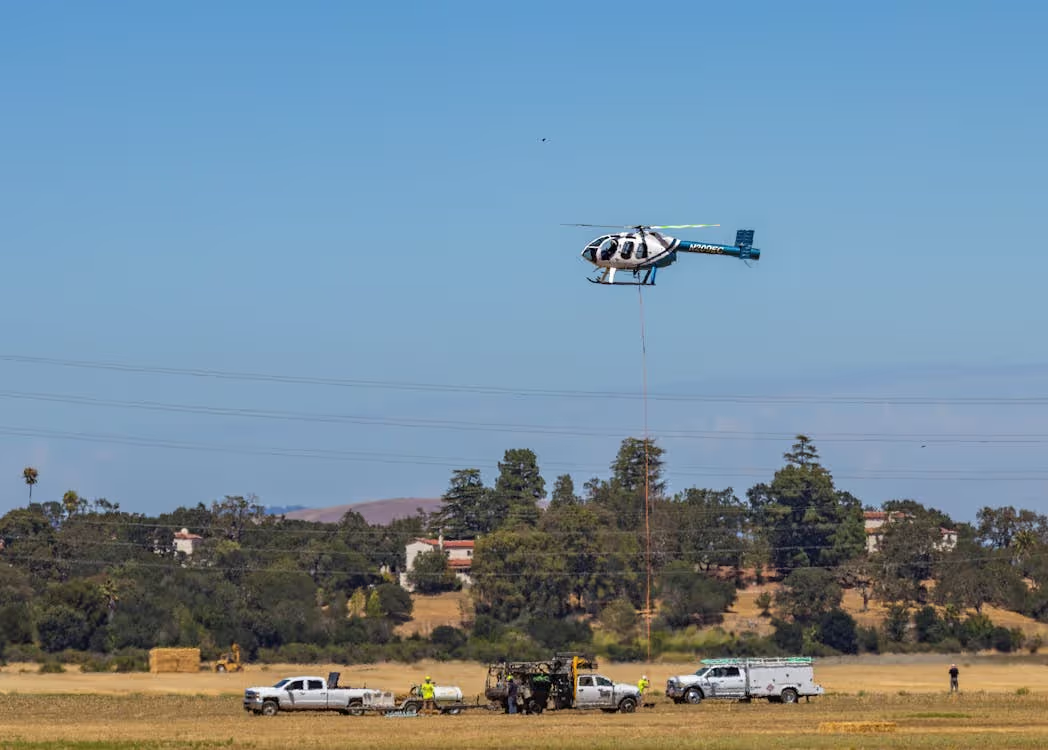
Helicopters serve a wide range of industries and missions. In construction and heavy lifting, they transport materials, place structural components, and install equipment like HVAC units on high-rise buildings. Utility companies rely on helicopters for powerline installation, maintenance, and inspections. Emergency services use them for medical evacuations, disaster relief operations, and firefighting support.

Beyond these applications, helicopters support aerial cinematography for film and commercial productions, provide charter services for business executives and special events, and enable scientific research in fields ranging from atmospheric studies to volcano monitoring. 

Key Benefits of Helicopter-Assisted Operations

Below, we highlight a few critical advantages of hiring a helicopter service:

  • Access: Helicopters can reach places ground crews can’t in order to reduce long travel times and costly logistics.

  • Efficiency: Rotorcraft operations speed up timelines by moving materials and crews more quickly and efficiently.

  • Cost Savings: Helicopters offer simplified logistics and reduce the need for large ground crews and extensive equipment rentals.

  • Versatility: Versatile fleets can handle everything from delicate instruments to massive structural components.

  • Precision: Materials can be placed exactly where they need to go, even in tight or hard-to-access spaces.

  • Reduced Site Impact: Helicopter lifts require minimal site prep and create far less environmental disruption than ground-based cranes.

  • Quick Deployment: Aerial crews can mobilize fast, reducing delays tied to transporting and setting up heavy ground equipment.

Now that you know how helicopters can support your mission, let’s dive into our step-by-step planning guide.

Step 1: Define Project Requirements

Before you contact a helicopter service provider, it’s important to have a clear understanding of your needs, requirements, and vision. Determine your:

  • Project Purpose: What’s the purpose of your mission? How will a helicopter support your goals?

  • Load Size: Does your operation require you to lift heavy materials or transport cargo and personnel? Determine how many passengers the helicopter will need to carry and the weight and dimensions of any internal and external cargo. Your helicopter service company will need this information to select the ideal aircraft make and model.

  • Route: Determine your departure and arrival points. Your team will need to know whether they’ll be working in a metropolitan area, remote location, or somewhere in between.

  • Timeline: Are there any critical deadlines you must hit? When are you hoping to start and complete your operation? Are you expecting to hire a helicopter for a few hours, days, or weeks?

  • Budget: Consider how much money you’re willing to allocate toward aerial work. Helicopter support can be costly, but the increased efficiency often results in significant cost savings.

Step 2: Research Helicopter Companies

Your time is valuable, and helicopter support isn’t cheap. That’s why it’s crucial to ensure the helicopter company you hire is the right fit. Start researching potential companies and create a short list of 2-3 to look into further.

Here are some of the most important considerations when selecting an aviation partner:

  • Company History: You want to work with an experienced organization that has developed a smooth, seamless operation. Inquire about how long they’ve been in business, how their business is structured, and how many clients they’ve served or successful projects they’ve completed.
  • Pilot Experience: Seek trained pilots with expertise in your industry. For example, if your assignment involves heavy-lift construction, your pilot should be highly trained and experienced in handling heavy loads, maneuvering in tight spaces, and ensuring crew and cargo safety during lifts. Ask about experience, flight hours, and certifications.

  • Safety Record: Reputable helicopter service companies are transparent about their safety procedures and training protocols. Ask about their track record, incident history, and emergency preparedness plans.

  • Maintenance Protocols: Reliable providers can clearly specify how they maintain their aircraft through rigorous protocols in order to guarantee reliable performance and minimal downtime.

  • Insurance: Verify that the company has adequate liability insurance for passengers and cargo. You may be able to add additional coverage if necessary.

  • Certifications: Any operator you work with should be licensed. All aircraft should be certified under the Federal Aviation Administration (FAA).

  • Client Testimonials: Request client references or testimonials. Previous client experiences will help you understand how efficiently the organization operates and how well its project managers communicate.

  • Timeline: How soon can they get started? Make sure their availability aligns with your goals.

If you’re hiring for a heavy-lift construction project, ask these 14 questions to successfully vet any potential heavy-lift aviation partner.
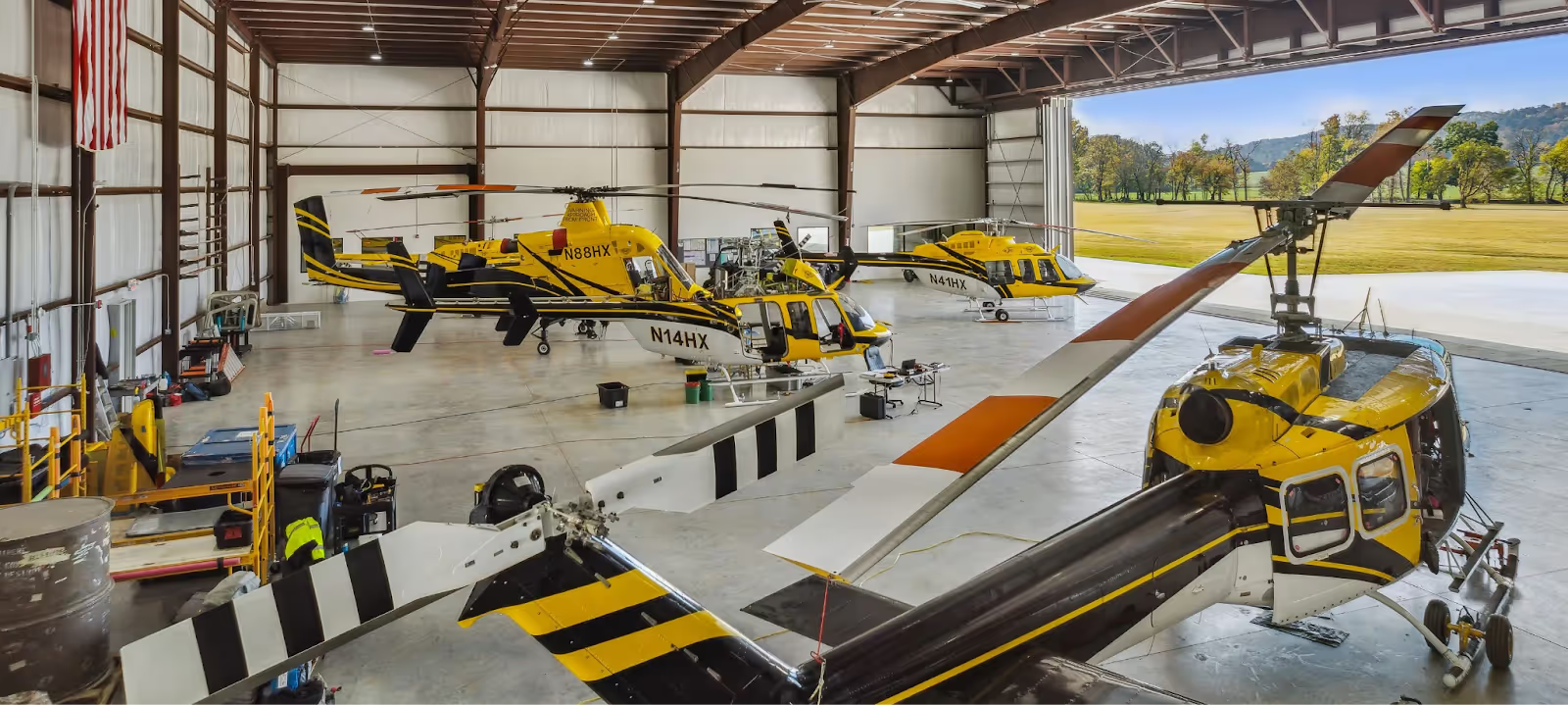
Photo from Helicopter Express

Step 3: Request and Compare Quotes

When you’re ready to request quotes, follow each company’s outlined process. Most providers offer phone consultations or online quote request forms for your convenience. To get a personalized quote from Helicopter Express, give us a call or submit our online quote form. We’re based in North Georgia, but we serve clients across the country and globe.

Keep in mind that helicopter costs vary widely depending on factors like:

  • Hourly rate
  • Project complexity
  • Location
  • Pilot fees
  • Fuel surcharges
  • Landing fees
  • Extra services (ground transport, catering, etc.)

Step 4: Review and Understand Your Agreement

Once you’ve selected a helicopter company and you’re satisfied with their cost structure, communication, certifications, and expertise, be sure to read your contract carefully.

Before you sign anything, ensure you understand:

  • Payment Terms: Deposits, payment schedules, and accepted payment methods
  • Timelines: Start dates, key milestones, and estimated completion dates
  • Liability Clauses: Responsibility allocations and insurance coverage
  • Cancellation Policies: Notice requirements, refund terms, and weather-related contingencies

Don’t hesitate to ask questions. Any reputable company will be happy to explain all aspects of your contract and address your concerns.

Step 5: Develop a Comprehensive Plan

Quality helicopter service companies understand that every operation presents unique requirements and challenges. A team of experts should work closely with you to develop a comprehensive, customized strategy tailored to your scope, location, timeline, and budget.

Let’s walk through key elements of your customized helicopter project plan, from your timeline to your emergency response strategy.

Developing a Detailed Timeline

Your aircraft provider will work closely with you to draft a day-by-day or week-by-week plan that accounts for:

  • All tasks requiring a helicopter (e.g. aerial surveys, material transport, structure placement, etc.)
  • Estimated duration and intensity, including hours per day, number of flight days, and number of aircraft needed
  • Your earliest possible start date and latest acceptable completion date
  • Daily pre-flight briefings and post-flight debriefs
  • Weather and contingency buffers 
construction workers sitting on scaffolding under a blue sky
Photo by MC G'Zay from Pexels

Choosing the Ideal Aircraft

Most helicopter companies offer a versatile fleet made up of different aircraft models. Helicopters vary when it comes to:

  • Passenger capacity
  • Seat configurations
  • External load capacity
  • Speed
  • Range
  • Capabilities
  • Amenities

Your project manager will help you choose the ideal aircraft that meets your unique requirements.
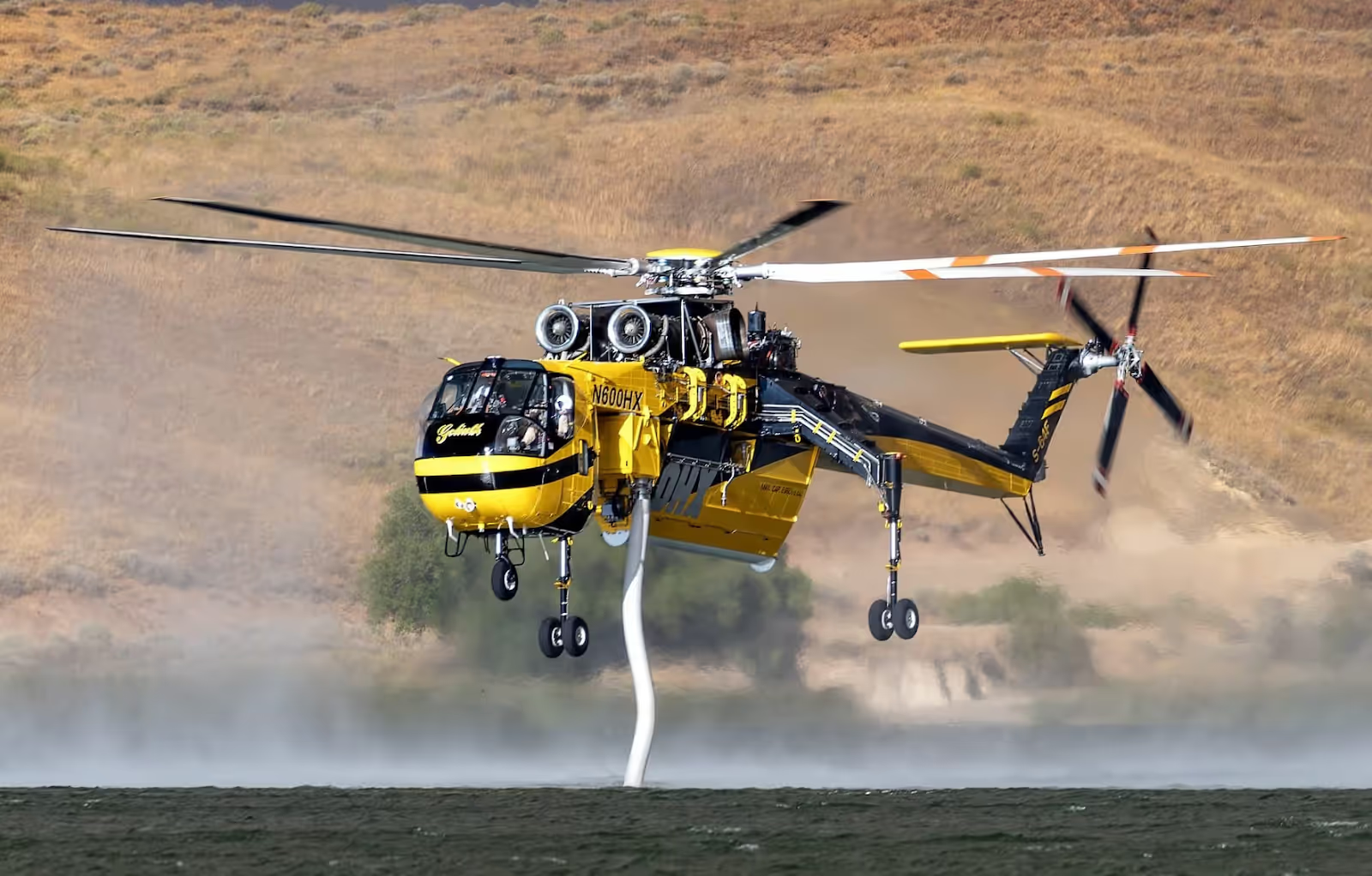
Photo from Helicopter Express

Securing Permits and Approvals

Depending on your project type and location, your operation may require zoning permits, licenses, and approvals. Here are some examples:

  • Site-Specific Permits: You may need zoning permits, land use approvals, or noise reviews.

  • Stakeholder and Authority Approvals: You may be required to notify local government, airport or heliport authorities, emergency services, and/or air traffic control to ensure public safety and compliance.

  • Operations Waivers: Helicopter-assisted construction projects may require a special operations waiver for flying below standard altitudes, plus approval from state or provincial aviation agencies for landing zones.

  • Landing Site Requirements: If your project requires temporary or permanent landing zones, you may need to seek review and approval of staging, rigging, and lifting plans.

  • Environmental Assessments: Environmental evaluations and compliance with local environmental protection statutes may be required.

Your project manager will help you work through these requirements early to ensure legal compliance and help prevent delays.

Establishing a Flight Plan

You will work with your helicopter team to establish a flight plan that addresses your specific operational needs. This includes:

  • Determining flight paths, including departure and arrival zones
  • Designating staging areas and planning load lifting sequences
  • Marking load weights and dimensions
  • Evaluating weather and environmental conditions
  • Planning for contingencies
white and blue helicopter hovering over a power line with utility workers and trucks below
Photo by Robert So from Pexels

Performing a Risk Assessment

A risk assessment is crucial for identifying, evaluating, and mitigating risks prior to starting work. Common risks include:

  • Powerlines
  • Unsecured material in staging areas
  • Roof openings that present fall risks
  • Weather-related hazards
  • Location-based obstacles


Following the risk assessment, your team must eliminate or establish protections against all noted risks (e.g. removing unsecured materials, securing temporary structures, providing fall prevention strategies, etc.).

Establishing Clear Communication Protocols

Effective communication is essential for safe operations. Your communication strategy should include:

  • Notifications to workers (and residents, if necessary) of when and where work will occur
  • Coordination with essential public safety officials and local authorities
  • Establishment of clear radio communication between pilots, ground crews, and air traffic control, with designated channels to avoid confusion
  • Review and testing of all communication systems, including radios and warning air horns
  • Regular project updates and status reports

helicopter crew members directing a helicopter as it lands on a concrete surface
Photo by Maarten van den Heuvel from Pexels

Implementing Safety Precautions and Emergency Procedures

Your hired crew must also establish and communicate precautions to all personnel. This involves:

  • Providing training on personal protective equipment, fall hazards, and safeguards
  • Implementing temporary road closures and traffic management as needed
  • Prohibiting access to operational areas for all non-essential personnel
  • Preparing and distributing emergency plans, such as emergency signals, exit routes, and escape procedures
  • Communicating emergency contact information to all team members

man in a reflective jacket running toward a navy blue helicopter on snowy ground
Photo by Maël  BALLAND from Pexels 

Why Helicopter Express Is the Right Partner for Your Operation

When you’re ready to move forward with your helicopter-assisted project, choosing the right partner is crucial. At Helicopter Express, we bring over three decades of experience, unwavering safety protocols, rigorous maintenance standards, and a relentless pursuit of customer satisfaction.

We believe in building long-term partnerships based on transparency and mutual trust. We are invested in your success and recognize that your achievements are a reflection of our performance. 

Here’s what sets us apart:

  • Elite pilots and crew with extensive experience across diverse mission types, from heavy-lift construction and utility work to charters and cinematography

  • Modern, state-of-the-art helicopter fleet ranging from versatile mid-capacity aircraft to powerful heavy-lift Sikorsky Skycranes capable of lifting up to 25,000 pounds

  • Comprehensive security protocols, ongoing training, and rigorous maintenance standards to ensure every operation upholds the highest standards of reliability and professionalism

  • Collaborative partnerships with direct access to your project manager, clear communication channels, and regular updates

When you’re ready to transform your helicopter project from concept to reality, contact us for a quote. Your operation deserves a team with the expertise, equipment, and commitment to ensure success.

Your First Helicopter Project: A Step-by-Step Planning Guide

When trucks and traditional cranes struggle to get the job done, helicopters rise to the challenge. These rotorcraft make hard-to-reach locations accessible, boost operational efficiency, and ensure operations meet critical deadlines without breaking the budget. But if it’s your first time hiring a helicopter company, the process can feel overwhelming.

Whether you’re coordinating a heavy-lift construction build, filming an aerial sequence, or supporting a disaster relief mission, success starts with a clear plan and the right aviation partner. This step-by-step planning guide will walk you through your first helicopter-assisted project. You’ll learn what preliminary information to gather, how to evaluate potential partners, and how the right team will keep your operation safe, efficient, and on schedule. 

But First—Why Consider Helicopter Support?

Helicopters serve a wide range of industries and missions. In construction and heavy lifting, they transport materials, place structural components, and install equipment like HVAC units on high-rise buildings. Utility companies rely on helicopters for powerline installation, maintenance, and inspections. Emergency services use them for medical evacuations, disaster relief operations, and firefighting support.

Beyond these applications, helicopters support aerial cinematography for film and commercial productions, provide charter services for business executives and special events, and enable scientific research in fields ranging from atmospheric studies to volcano monitoring. 

Key Benefits of Helicopter-Assisted Operations

Below, we highlight a few critical advantages of hiring a helicopter service:

  • Access: Helicopters can reach places ground crews can’t in order to reduce long travel times and costly logistics.

  • Efficiency: Rotorcraft operations speed up timelines by moving materials and crews more quickly and efficiently.

  • Cost Savings: Helicopters offer simplified logistics and reduce the need for large ground crews and extensive equipment rentals.

  • Versatility: Versatile fleets can handle everything from delicate instruments to massive structural components.

  • Precision: Materials can be placed exactly where they need to go, even in tight or hard-to-access spaces.

  • Reduced Site Impact: Helicopter lifts require minimal site prep and create far less environmental disruption than ground-based cranes.

  • Quick Deployment: Aerial crews can mobilize fast, reducing delays tied to transporting and setting up heavy ground equipment.

Now that you know how helicopters can support your mission, let’s dive into our step-by-step planning guide.

Step 1: Define Project Requirements

Before you contact a helicopter service provider, it’s important to have a clear understanding of your needs, requirements, and vision. Determine your:

  • Project Purpose: What’s the purpose of your mission? How will a helicopter support your goals?

  • Load Size: Does your operation require you to lift heavy materials or transport cargo and personnel? Determine how many passengers the helicopter will need to carry and the weight and dimensions of any internal and external cargo. Your helicopter service company will need this information to select the ideal aircraft make and model.

  • Route: Determine your departure and arrival points. Your team will need to know whether they’ll be working in a metropolitan area, remote location, or somewhere in between.

  • Timeline: Are there any critical deadlines you must hit? When are you hoping to start and complete your operation? Are you expecting to hire a helicopter for a few hours, days, or weeks?

  • Budget: Consider how much money you’re willing to allocate toward aerial work. Helicopter support can be costly, but the increased efficiency often results in significant cost savings.

Step 2: Research Helicopter Companies

Your time is valuable, and helicopter support isn’t cheap. That’s why it’s crucial to ensure the helicopter company you hire is the right fit. Start researching potential companies and create a short list of 2-3 to look into further.

Here are some of the most important considerations when selecting an aviation partner:

  • Company History: You want to work with an experienced organization that has developed a smooth, seamless operation. Inquire about how long they’ve been in business, how their business is structured, and how many clients they’ve served or successful projects they’ve completed.
  • Pilot Experience: Seek trained pilots with expertise in your industry. For example, if your assignment involves heavy-lift construction, your pilot should be highly trained and experienced in handling heavy loads, maneuvering in tight spaces, and ensuring crew and cargo safety during lifts. Ask about experience, flight hours, and certifications.

  • Safety Record: Reputable helicopter service companies are transparent about their safety procedures and training protocols. Ask about their track record, incident history, and emergency preparedness plans.

  • Maintenance Protocols: Reliable providers can clearly specify how they maintain their aircraft through rigorous protocols in order to guarantee reliable performance and minimal downtime.

  • Insurance: Verify that the company has adequate liability insurance for passengers and cargo. You may be able to add additional coverage if necessary.

  • Certifications: Any operator you work with should be licensed. All aircraft should be certified under the Federal Aviation Administration (FAA).

  • Client Testimonials: Request client references or testimonials. Previous client experiences will help you understand how efficiently the organization operates and how well its project managers communicate.

  • Timeline: How soon can they get started? Make sure their availability aligns with your goals.

If you’re hiring for a heavy-lift construction project, ask these 14 questions to successfully vet any potential heavy-lift aviation partner.

Photo from Helicopter Express

Step 3: Request and Compare Quotes

When you’re ready to request quotes, follow each company’s outlined process. Most providers offer phone consultations or online quote request forms for your convenience. To get a personalized quote from Helicopter Express, give us a call or submit our online quote form. We’re based in North Georgia, but we serve clients across the country and globe.

Keep in mind that helicopter costs vary widely depending on factors like:

  • Hourly rate
  • Project complexity
  • Location
  • Pilot fees
  • Fuel surcharges
  • Landing fees
  • Extra services (ground transport, catering, etc.)

Step 4: Review and Understand Your Agreement

Once you’ve selected a helicopter company and you’re satisfied with their cost structure, communication, certifications, and expertise, be sure to read your contract carefully.

Before you sign anything, ensure you understand:

  • Payment Terms: Deposits, payment schedules, and accepted payment methods
  • Timelines: Start dates, key milestones, and estimated completion dates
  • Liability Clauses: Responsibility allocations and insurance coverage
  • Cancellation Policies: Notice requirements, refund terms, and weather-related contingencies

Don’t hesitate to ask questions. Any reputable company will be happy to explain all aspects of your contract and address your concerns.

Step 5: Develop a Comprehensive Plan

Quality helicopter service companies understand that every operation presents unique requirements and challenges. A team of experts should work closely with you to develop a comprehensive, customized strategy tailored to your scope, location, timeline, and budget.

Let’s walk through key elements of your customized helicopter project plan, from your timeline to your emergency response strategy.

Developing a Detailed Timeline

Your aircraft provider will work closely with you to draft a day-by-day or week-by-week plan that accounts for:

  • All tasks requiring a helicopter (e.g. aerial surveys, material transport, structure placement, etc.)
  • Estimated duration and intensity, including hours per day, number of flight days, and number of aircraft needed
  • Your earliest possible start date and latest acceptable completion date
  • Daily pre-flight briefings and post-flight debriefs
  • Weather and contingency buffers 
construction workers sitting on scaffolding under a blue sky
Photo by MC G'Zay from Pexels

Choosing the Ideal Aircraft

Most helicopter companies offer a versatile fleet made up of different aircraft models. Helicopters vary when it comes to:

  • Passenger capacity
  • Seat configurations
  • External load capacity
  • Speed
  • Range
  • Capabilities
  • Amenities

Your project manager will help you choose the ideal aircraft that meets your unique requirements.

Photo from Helicopter Express

Securing Permits and Approvals

Depending on your project type and location, your operation may require zoning permits, licenses, and approvals. Here are some examples:

  • Site-Specific Permits: You may need zoning permits, land use approvals, or noise reviews.

  • Stakeholder and Authority Approvals: You may be required to notify local government, airport or heliport authorities, emergency services, and/or air traffic control to ensure public safety and compliance.

  • Operations Waivers: Helicopter-assisted construction projects may require a special operations waiver for flying below standard altitudes, plus approval from state or provincial aviation agencies for landing zones.

  • Landing Site Requirements: If your project requires temporary or permanent landing zones, you may need to seek review and approval of staging, rigging, and lifting plans.

  • Environmental Assessments: Environmental evaluations and compliance with local environmental protection statutes may be required.

Your project manager will help you work through these requirements early to ensure legal compliance and help prevent delays.

Establishing a Flight Plan

You will work with your helicopter team to establish a flight plan that addresses your specific operational needs. This includes:

  • Determining flight paths, including departure and arrival zones
  • Designating staging areas and planning load lifting sequences
  • Marking load weights and dimensions
  • Evaluating weather and environmental conditions
  • Planning for contingencies
white and blue helicopter hovering over a power line with utility workers and trucks below
Photo by Robert So from Pexels

Performing a Risk Assessment

A risk assessment is crucial for identifying, evaluating, and mitigating risks prior to starting work. Common risks include:

  • Powerlines
  • Unsecured material in staging areas
  • Roof openings that present fall risks
  • Weather-related hazards
  • Location-based obstacles


Following the risk assessment, your team must eliminate or establish protections against all noted risks (e.g. removing unsecured materials, securing temporary structures, providing fall prevention strategies, etc.).

Establishing Clear Communication Protocols

Effective communication is essential for safe operations. Your communication strategy should include:

  • Notifications to workers (and residents, if necessary) of when and where work will occur
  • Coordination with essential public safety officials and local authorities
  • Establishment of clear radio communication between pilots, ground crews, and air traffic control, with designated channels to avoid confusion
  • Review and testing of all communication systems, including radios and warning air horns
  • Regular project updates and status reports
helicopter crew members directing a helicopter as it lands on a concrete surface
Photo by Maarten van den Heuvel from Pexels

Implementing Safety Precautions and Emergency Procedures

Your hired crew must also establish and communicate precautions to all personnel. This involves:

  • Providing training on personal protective equipment, fall hazards, and safeguards
  • Implementing temporary road closures and traffic management as needed
  • Prohibiting access to operational areas for all non-essential personnel
  • Preparing and distributing emergency plans, such as emergency signals, exit routes, and escape procedures
  • Communicating emergency contact information to all team members
man in a reflective jacket running toward a navy blue helicopter on snowy ground
Photo by Maël  BALLAND from Pexels 

Why Helicopter Express Is the Right Partner for Your Operation

When you’re ready to move forward with your helicopter-assisted project, choosing the right partner is crucial. At Helicopter Express, we bring over three decades of experience, unwavering safety protocols, rigorous maintenance standards, and a relentless pursuit of customer satisfaction.

We believe in building long-term partnerships based on transparency and mutual trust. We are invested in your success and recognize that your achievements are a reflection of our performance. 

Here’s what sets us apart:

  • Elite pilots and crew with extensive experience across diverse mission types, from heavy-lift construction and utility work to charters and cinematography

  • Modern, state-of-the-art helicopter fleet ranging from versatile mid-capacity aircraft to powerful heavy-lift Sikorsky Skycranes capable of lifting up to 25,000 pounds

  • Comprehensive security protocols, ongoing training, and rigorous maintenance standards to ensure every operation upholds the highest standards of reliability and professionalism

  • Collaborative partnerships with direct access to your project manager, clear communication channels, and regular updates

When you’re ready to transform your helicopter project from concept to reality, contact us for a quote. Your operation deserves a team with the expertise, equipment, and commitment to ensure success.

Make us your go-to team.

Our highly skilled pilots have the experience and equipment needed to rise to any challenge. When you need experts you can trust, give us a call.