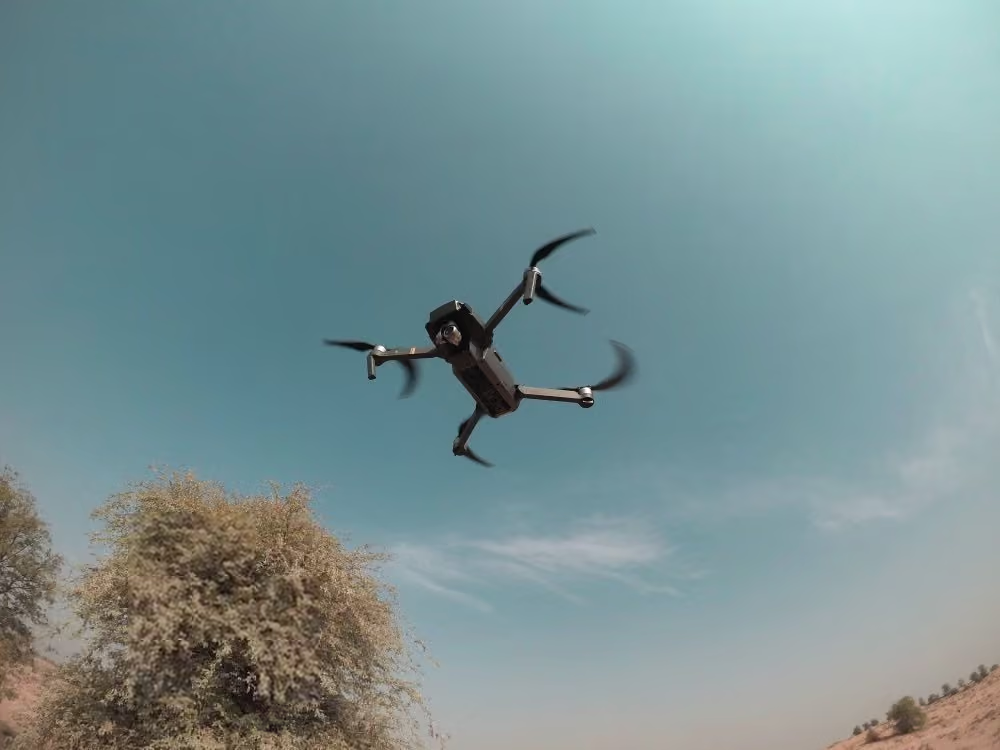
Helicopter Integration with Drone Operations: Benefits, Applications, and Considerations

Explore helicopter and drone integration, including key benefits, applications, airspace management, and safety considerations for coordinated aerial operations.

Modern aerial work frequently demands more than one type of aircraft. Lightweight drones are often ideal for low-cost data collection, while utility and heavy-lift helicopters provide longer range and the powerful lifting capacity needed for more complex operations. When used individually, each aircraft has clear limitations. When used together, helicopters and drones can cover more ground with less risk, resulting in lower costs and enhanced safety and efficiency.

Many industries are moving toward coordinated aircraft operations, from complex construction projects and routine infrastructure inspection to emergency response efforts like search and rescue. An integrated approach allows teams to use each aircraft where it provides the most value.

Keep reading to learn how helicopters and drones work together, where this method can have the greatest impact, the industries already taking advantage of this approach, and what it takes to coordinate multiple aircraft for a single project.

How Helicopters and Drones Complement Each Other for Coordinated Missions

Helicopters and drones bring different strengths to aerial operations. Using each aircraft for the tasks it handles best can improve planning, safety, and efficiency. Here’s a quick overview of what each aircraft is best suited to handle and how they often complement one another within a single coordinated mission.

Consider Drones for Reconnaissance and Preparation

Drones are cheaper to operate than helicopters and frequently require less logistics planning, making them ideal for information-gathering tasks. For example, a drone might visit a potential construction zone to perform a worksite evaluation, collect aerial images, and map the area before operations begin. By identifying access challenges, terrain hazards, and other potential obstacles, crews can plan routes, landing and staging areas, and equipment placement before the helicopter arrives.

Consider Helicopters for Transport and Execution

Helicopters are also well equipped to perform aerial assessments and collect site data. However, helicopters may be better suited to aerial assessments that span hundreds of miles or necessitate larger sensors, specialized equipment, or crewed operations.

Beyond airborne survey capabilities, rotorcraft are built to perform the tasks that drone capabilities are too limited to support. Their ability to cover long distances quickly and carry thousands of pounds of personnel and equipment makes them ideal for projects like construction, infrastructure installation, and disaster response that often warrant a long range and heavy-lift capability.

How Integrated Operations Enable Coordinated Aerial Support

Helicopters and drones are not interchangeable. Instead, the best choice of aircraft depends on mission characteristics like site location and the size or weight of needed equipment. For example, most projects require a preliminary evaluation of the planned worksite. In less expansive areas where regulations and operational conditions permit, drones offer a cost-efficient way to conduct high-resolution hazard reconnaissance without requiring an entire crewed aircraft.

For projects that take place in massive, regional corridors or call for heavy, human-operated sensor gear, helicopters offer many survey capabilities that drones cannot. Helicopter teams can deliver personnel and cargo or perform heavy-lift operations, using updated drone imagery to monitor ongoing progress and identify changing site conditions.

Once helicopter operations are complete, drones can further assist with follow-up inspections and documentation. This flexible approach offers the opportunity to adapt your strategy as the project evolves and your needs change.
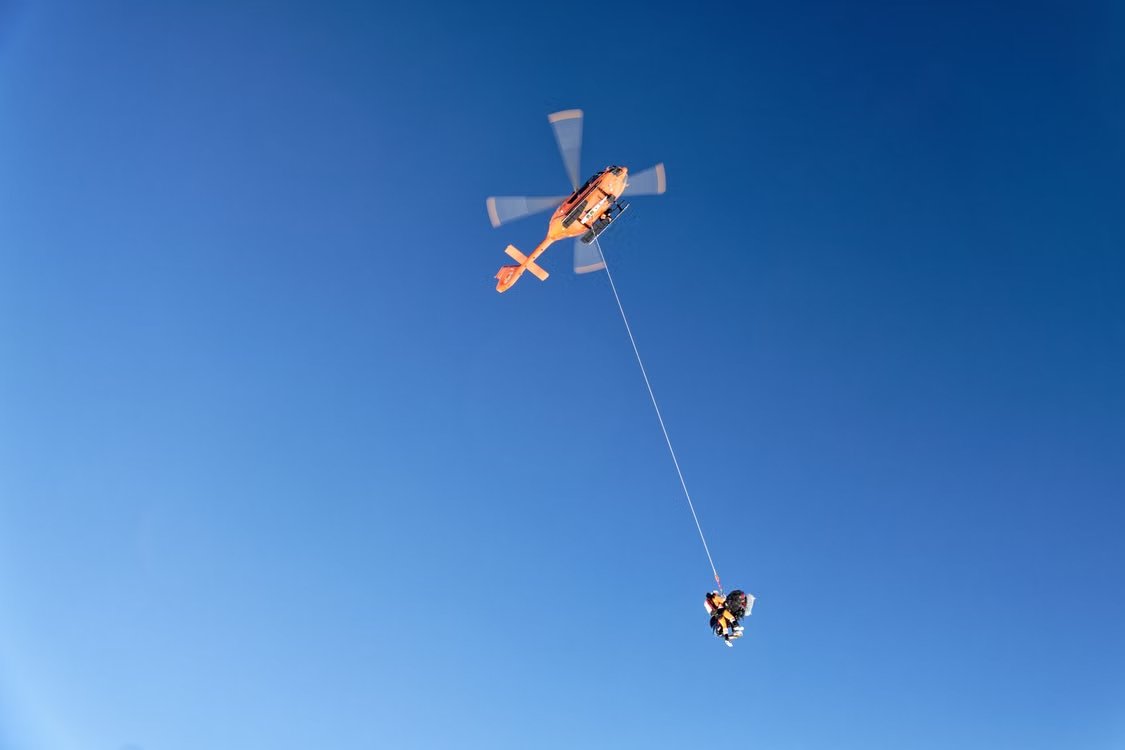
orange emergency helicopter performing a rescue operation with a rescuer suspended in mid-air against a clear blue sky
Photo by Gu Bra from Pexels

Benefits of an Integrated Approach

One 2025 study modeling coordinated helicopter-unmanned-aerial-vehicle (UAV) search and rescue in an earthquake-response scenario found that its integrated model increased SAR efficiency by 37.3%. This suggests that assigning complementary roles to helicopters and drones, while also accounting for potential flight path conflicts, offers potential for improving task allocation and search efficiency.

Here are a few additional benefits of an integrated approach that assigns each aircraft the tasks it’s best equipped to handle:

  • Improved Situational Awareness: Drone imagery can provide updated information about terrain, site conditions, access points, and hazards.

  • More Efficient Planning: Drone data can help teams plan flight routes, staging areas, equipment placement, and other details before helicopter work begins.

  • Greater Flexibility: Teams can select the aircraft best suited to each phase of a project.

  • Fewer Unnecessary Helicopter Flights: Preliminary aerial work can sometimes be completed without deploying a crewed aircraft.

  • Expanded Capabilities: Helicopters add transportation, crew support, and heavy-lift capabilities that drones generally cannot provide.

Hybrid Solutions for Complex Projects

Combining helicopters and drones gives teams more options for handling complex aerial work, including construction and infrastructure, emergency response, public security, agriculture, aerial cinematography, and more.

Here’s how.

Construction and Infrastructure

Consider an integrated approach for complex construction and infrastructure projects that take place in dense cityscapes, remote construction sites, mountaintops, and other potentially hazardous areas. Drones are often the quicker, cheaper option for smaller, more localized surveys. After preliminary drone assessments, helicopters can transport crews and materials or place heavy components with precision. Their lifting capacity makes them useful for installing HVAC equipment, utility infrastructure, turbine components, and other heavy or awkward loads.

Rotorcraft can transport crews and materials over long distances and place heavy components with extreme precision. Aerial cranes are also capable of lifting awkward loads and construction materials like wood, concrete, steel, and brick, HVAC equipment, septic tanks, turbine blades, and exhaust systems.

Finally, helicopters are adept at accessing mountaintop installation sites and other areas that are hard to reach due to distance or terrain — all without disturbing the ground to the extent of using traditional cranes. They may also save you time and money by improving efficiency and removing the need for expensive and time-consuming access roads.
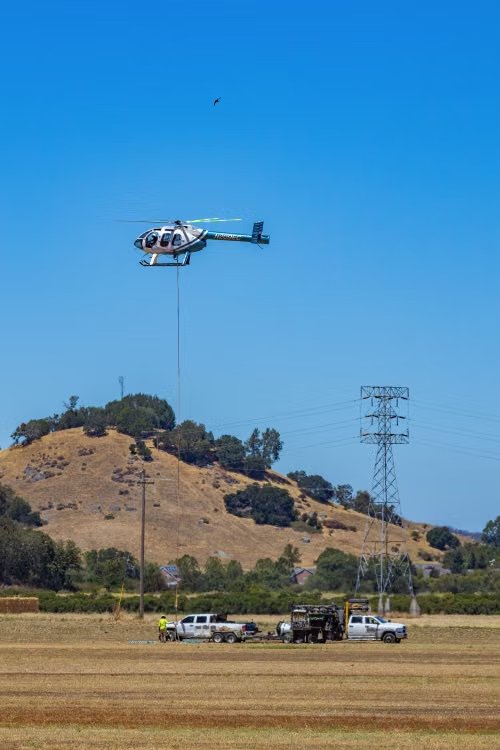
white and blue utility helicopter hovering over powerlines and utility workers in a rural landscape under a clear blue sky
Photo by Robert So from Pexels

Emergency Response

Drones can quickly provide aerial intelligence following disasters or in areas difficult to assess from the ground. Helicopters can then transport responders, supplies, or equipment to disaster zones, enabling teams to gather information and act on it quickly.

Other integrated emergency applications include:

  • Disaster Response: After a natural disaster like a hurricane or flood, drones can quickly survey damaged areas and identify hazards such as blocked roads or damaged infrastructure. Emergency helicopters can then transport personnel, supplies, and equipment into areas where ground access is limited.

  • Search and Rescue: Both drones and helicopters can be equipped with cameras and thermal sensors for large area scanning and identifying people who need help. Helicopters can also use hoists to recover and evacuate survivors when ground access is difficult or unsafe.

  • Aerial Firefighting: Both aircraft can monitor fires, collect thermal imagery, and identify hot spots while helping teams assess conditions from the air. After aerial reconnaissance is complete, firefighting helicopters can transport firefighters or deliver targeted streams of water or fire retardant through specialized equipment like Bambi Buckets.

Other Applications of Integrated Aircraft

The same complementary approach can support other missions that require detailed aerial information as well as a helicopter’s speed, range, or lifting capacity.

  • Logistics: Drones can inspect delivery areas and monitor routes, while helicopters can transport large or heavy loads to remote locations.

  • Public Security: Lightweight, agile drones are often ideal for aerial surveillance, crowd mapping, and situational awareness during large events and public safety operations. Helicopters can complement drone surveillance by covering larger areas, transporting personnel, or responding to situations that need a crewed aircraft.

  • Agriculture: Both helicopters and drones can support agricultural work such as crop monitoring and spraying applications, though the right aircraft depends on the equipment, operator, and regulations.

  • Aerial Cinematography: Drones are useful for close, flexible shots and projects with limited budgets. Helicopters provide greater range and the ability to carry heavier camera systems and crews, making them ideal for wide or fast-moving cinematic shots.

Using two aircraft on the same project can provide significant advantages, but those benefits depend on careful coordination to keep integrated missions safe.

Proper Airspace Management: Why It’s Crucial and How to Do It Safely

Once you’ve determined that an integrated approach is the way to go, one of the most critical considerations is proper airspace management. When helicopters and drones occupy the same airspace, coordination of every mission aspect helps ensure the safety of the crews and the surrounding environment.

Establishing Communication and Operating Procedures

Safe aircraft integration requires experienced operators, a clear understanding of procedures, and a highly coordinated communication process.

You’ll need to:

  • Establish Authority: Determine who controls each aircraft and who maintains overall operational authority.

  • Outline Communication Procedures: Establish protocols between project managers, helicopter pilots, drone operators, and ground personnel.

  • Define Logistics: All crew members must have a thorough understanding of logistics including operating areas, flight paths, altitudes, timing, and contingency procedures.

  • Implement Awareness Protocols: Teams should know how to monitor for other aircraft, changing weather, and evolving site conditions to maintain situational awareness at all times.

Regulatory Considerations

Both crewed helicopters and uncrewed drones must comply with the Federal Aviation Administration (FAA) rules and airspace requirements that apply to their operation. When both aircraft are used for the same project, teams must coordinate their activities carefully so the aircraft can operate safely without creating conflicts. Drone operators must give way to and avoid manned aircraft, and the FAA mandates prior airspace authorization or a waiver for some drone operations.

Depending on the mission, teams may need to establish:

  • Authorization or clearance
  • Operating areas
  • Flight paths
  • Altitude limits
  • Launch and landing locations
  • Communication procedures

A qualified and experienced aviation operator can help you confirm requirements and secure needed permits and permissions before you begin work.
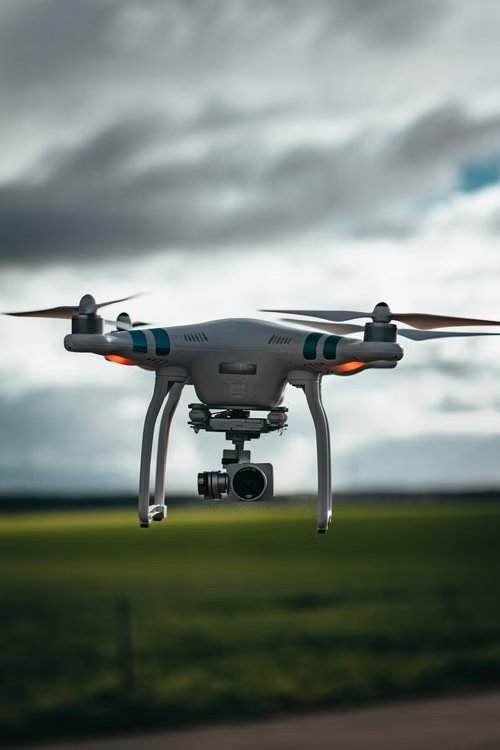
white drone with integrated camera flying low over a green field under a dramatic cloudy sky
Photo by Flo Dnd from Pexels

Ongoing Operator Training

Finally, successful integration depends on more than just capable, well-maintained aircraft and equipment. Ongoing training is crucial to ensure helicopter pilots, remote drone pilots, and other crew members understand their respective roles and how to communicate effectively and respond to shifting conditions during joint missions.

Training for aerial and ground-based teams often includes:

  • Realistic simulations
  • Coordinated flight exercises
  • Communication protocols
  • Communication systems practice
  • Emergency procedures

Along with preparing crews for proper coordination and communication in the field, ongoing training keeps each team member current on new equipment and procedures.

Bring the Experts from Helicopter Express into Your Aerial Strategy

No single aircraft can do everything a modern aerial mission demands. Successful helicopter and drone integration starts with understanding what each aircraft can contribute and planning how they will work together. With the right planning and coordination, teams can use drones for information gathering while reserving helicopters for transportation, crew support, heavy lifting, and other tasks that require their capabilities.

Helicopter Express supports both independent rotorcraft operations as well as complex projects that benefit from a complementary approach. Our helicopter services span planned tasks like construction to emergency missions like search and rescue. Reach out to our team to get a quote and see how helicopter support fits into your aerial strategy.

Helicopter Integration with Drone Operations: Benefits, Applications, and Considerations

Modern aerial work frequently demands more than one type of aircraft. Lightweight drones are often ideal for low-cost data collection, while utility and heavy-lift helicopters provide longer range and the powerful lifting capacity needed for more complex operations. When used individually, each aircraft has clear limitations. When used together, helicopters and drones can cover more ground with less risk, resulting in lower costs and enhanced safety and efficiency.

Many industries are moving toward coordinated aircraft operations, from complex construction projects and routine infrastructure inspection to emergency response efforts like search and rescue. An integrated approach allows teams to use each aircraft where it provides the most value.

Keep reading to learn how helicopters and drones work together, where this method can have the greatest impact, the industries already taking advantage of this approach, and what it takes to coordinate multiple aircraft for a single project.

How Helicopters and Drones Complement Each Other for Coordinated Missions

Helicopters and drones bring different strengths to aerial operations. Using each aircraft for the tasks it handles best can improve planning, safety, and efficiency. Here’s a quick overview of what each aircraft is best suited to handle and how they often complement one another within a single coordinated mission.

Consider Drones for Reconnaissance and Preparation

Drones are cheaper to operate than helicopters and frequently require less logistics planning, making them ideal for information-gathering tasks. For example, a drone might visit a potential construction zone to perform a worksite evaluation, collect aerial images, and map the area before operations begin. By identifying access challenges, terrain hazards, and other potential obstacles, crews can plan routes, landing and staging areas, and equipment placement before the helicopter arrives.

Consider Helicopters for Transport and Execution

Helicopters are also well equipped to perform aerial assessments and collect site data. However, helicopters may be better suited to aerial assessments that span hundreds of miles or necessitate larger sensors, specialized equipment, or crewed operations.

Beyond airborne survey capabilities, rotorcraft are built to perform the tasks that drone capabilities are too limited to support. Their ability to cover long distances quickly and carry thousands of pounds of personnel and equipment makes them ideal for projects like construction, infrastructure installation, and disaster response that often warrant a long range and heavy-lift capability.

How Integrated Operations Enable Coordinated Aerial Support

Helicopters and drones are not interchangeable. Instead, the best choice of aircraft depends on mission characteristics like site location and the size or weight of needed equipment. For example, most projects require a preliminary evaluation of the planned worksite. In less expansive areas where regulations and operational conditions permit, drones offer a cost-efficient way to conduct high-resolution hazard reconnaissance without requiring an entire crewed aircraft.

For projects that take place in massive, regional corridors or call for heavy, human-operated sensor gear, helicopters offer many survey capabilities that drones cannot. Helicopter teams can deliver personnel and cargo or perform heavy-lift operations, using updated drone imagery to monitor ongoing progress and identify changing site conditions.

Once helicopter operations are complete, drones can further assist with follow-up inspections and documentation. This flexible approach offers the opportunity to adapt your strategy as the project evolves and your needs change.

orange emergency helicopter performing a rescue operation with a rescuer suspended in mid-air against a clear blue sky
Photo by Gu Bra from Pexels

Benefits of an Integrated Approach

One 2025 study modeling coordinated helicopter-unmanned-aerial-vehicle (UAV) search and rescue in an earthquake-response scenario found that its integrated model increased SAR efficiency by 37.3%. This suggests that assigning complementary roles to helicopters and drones, while also accounting for potential flight path conflicts, offers potential for improving task allocation and search efficiency.

Here are a few additional benefits of an integrated approach that assigns each aircraft the tasks it’s best equipped to handle:

  • Improved Situational Awareness: Drone imagery can provide updated information about terrain, site conditions, access points, and hazards.

  • More Efficient Planning: Drone data can help teams plan flight routes, staging areas, equipment placement, and other details before helicopter work begins.

  • Greater Flexibility: Teams can select the aircraft best suited to each phase of a project.

  • Fewer Unnecessary Helicopter Flights: Preliminary aerial work can sometimes be completed without deploying a crewed aircraft.

  • Expanded Capabilities: Helicopters add transportation, crew support, and heavy-lift capabilities that drones generally cannot provide.

Hybrid Solutions for Complex Projects

Combining helicopters and drones gives teams more options for handling complex aerial work, including construction and infrastructure, emergency response, public security, agriculture, aerial cinematography, and more.

Here’s how.

Construction and Infrastructure

Consider an integrated approach for complex construction and infrastructure projects that take place in dense cityscapes, remote construction sites, mountaintops, and other potentially hazardous areas. Drones are often the quicker, cheaper option for smaller, more localized surveys. After preliminary drone assessments, helicopters can transport crews and materials or place heavy components with precision. Their lifting capacity makes them useful for installing HVAC equipment, utility infrastructure, turbine components, and other heavy or awkward loads.

Rotorcraft can transport crews and materials over long distances and place heavy components with extreme precision. Aerial cranes are also capable of lifting awkward loads and construction materials like wood, concrete, steel, and brick, HVAC equipment, septic tanks, turbine blades, and exhaust systems.

Finally, helicopters are adept at accessing mountaintop installation sites and other areas that are hard to reach due to distance or terrain — all without disturbing the ground to the extent of using traditional cranes. They may also save you time and money by improving efficiency and removing the need for expensive and time-consuming access roads.

white and blue utility helicopter hovering over powerlines and utility workers in a rural landscape under a clear blue sky
Photo by Robert So from Pexels

Emergency Response

Drones can quickly provide aerial intelligence following disasters or in areas difficult to assess from the ground. Helicopters can then transport responders, supplies, or equipment to disaster zones, enabling teams to gather information and act on it quickly.

Other integrated emergency applications include:

  • Disaster Response: After a natural disaster like a hurricane or flood, drones can quickly survey damaged areas and identify hazards such as blocked roads or damaged infrastructure. Emergency helicopters can then transport personnel, supplies, and equipment into areas where ground access is limited.

  • Search and Rescue: Both drones and helicopters can be equipped with cameras and thermal sensors for large area scanning and identifying people who need help. Helicopters can also use hoists to recover and evacuate survivors when ground access is difficult or unsafe.

  • Aerial Firefighting: Both aircraft can monitor fires, collect thermal imagery, and identify hot spots while helping teams assess conditions from the air. After aerial reconnaissance is complete, firefighting helicopters can transport firefighters or deliver targeted streams of water or fire retardant through specialized equipment like Bambi Buckets.

Other Applications of Integrated Aircraft

The same complementary approach can support other missions that require detailed aerial information as well as a helicopter’s speed, range, or lifting capacity.

  • Logistics: Drones can inspect delivery areas and monitor routes, while helicopters can transport large or heavy loads to remote locations.

  • Public Security: Lightweight, agile drones are often ideal for aerial surveillance, crowd mapping, and situational awareness during large events and public safety operations. Helicopters can complement drone surveillance by covering larger areas, transporting personnel, or responding to situations that need a crewed aircraft.

  • Agriculture: Both helicopters and drones can support agricultural work such as crop monitoring and spraying applications, though the right aircraft depends on the equipment, operator, and regulations.

  • Aerial Cinematography: Drones are useful for close, flexible shots and projects with limited budgets. Helicopters provide greater range and the ability to carry heavier camera systems and crews, making them ideal for wide or fast-moving cinematic shots.

Using two aircraft on the same project can provide significant advantages, but those benefits depend on careful coordination to keep integrated missions safe.

Proper Airspace Management: Why It’s Crucial and How to Do It Safely

Once you’ve determined that an integrated approach is the way to go, one of the most critical considerations is proper airspace management. When helicopters and drones occupy the same airspace, coordination of every mission aspect helps ensure the safety of the crews and the surrounding environment.

Establishing Communication and Operating Procedures

Safe aircraft integration requires experienced operators, a clear understanding of procedures, and a highly coordinated communication process.

You’ll need to:

  • Establish Authority: Determine who controls each aircraft and who maintains overall operational authority.

  • Outline Communication Procedures: Establish protocols between project managers, helicopter pilots, drone operators, and ground personnel.

  • Define Logistics: All crew members must have a thorough understanding of logistics including operating areas, flight paths, altitudes, timing, and contingency procedures.

  • Implement Awareness Protocols: Teams should know how to monitor for other aircraft, changing weather, and evolving site conditions to maintain situational awareness at all times.

Regulatory Considerations

Both crewed helicopters and uncrewed drones must comply with the Federal Aviation Administration (FAA) rules and airspace requirements that apply to their operation. When both aircraft are used for the same project, teams must coordinate their activities carefully so the aircraft can operate safely without creating conflicts. Drone operators must give way to and avoid manned aircraft, and the FAA mandates prior airspace authorization or a waiver for some drone operations.

Depending on the mission, teams may need to establish:

  • Authorization or clearance
  • Operating areas
  • Flight paths
  • Altitude limits
  • Launch and landing locations
  • Communication procedures

A qualified and experienced aviation operator can help you confirm requirements and secure needed permits and permissions before you begin work.

white drone with integrated camera flying low over a green field under a dramatic cloudy sky
Photo by Flo Dnd from Pexels

Ongoing Operator Training

Finally, successful integration depends on more than just capable, well-maintained aircraft and equipment. Ongoing training is crucial to ensure helicopter pilots, remote drone pilots, and other crew members understand their respective roles and how to communicate effectively and respond to shifting conditions during joint missions.

Training for aerial and ground-based teams often includes:

  • Realistic simulations
  • Coordinated flight exercises
  • Communication protocols
  • Communication systems practice
  • Emergency procedures

Along with preparing crews for proper coordination and communication in the field, ongoing training keeps each team member current on new equipment and procedures.

Bring the Experts from Helicopter Express into Your Aerial Strategy

No single aircraft can do everything a modern aerial mission demands. Successful helicopter and drone integration starts with understanding what each aircraft can contribute and planning how they will work together. With the right planning and coordination, teams can use drones for information gathering while reserving helicopters for transportation, crew support, heavy lifting, and other tasks that require their capabilities.

Helicopter Express supports both independent rotorcraft operations as well as complex projects that benefit from a complementary approach. Our helicopter services span planned tasks like construction to emergency missions like search and rescue. Reach out to our team to get a quote and see how helicopter support fits into your aerial strategy.

Make us your go-to team.

Our highly skilled pilots have the experience and equipment needed to rise to any challenge. When you need experts you can trust, give us a call.