
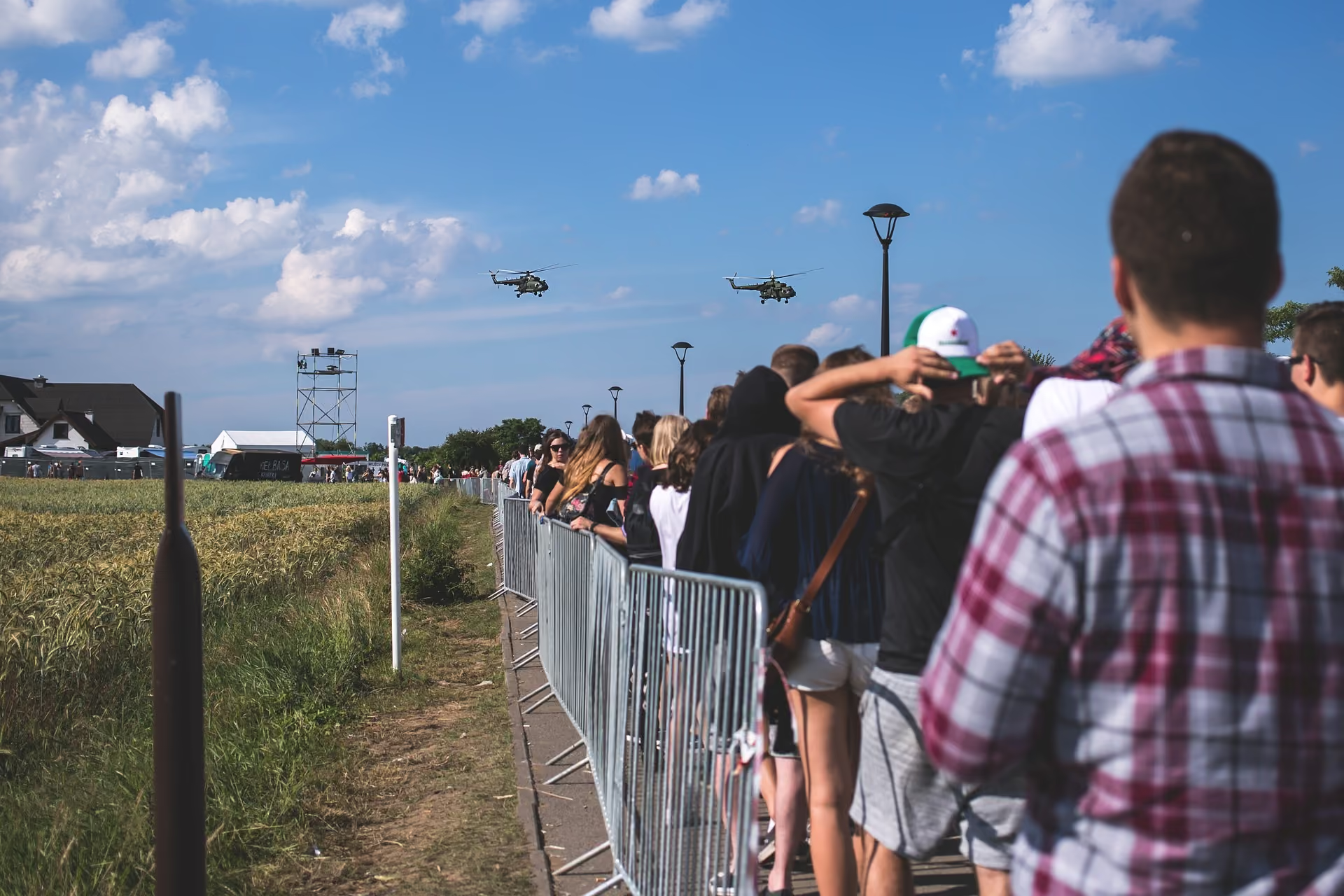
Large events move fast, with constant traffic and shifting crowds. Concerts, festivals, and other public celebrations often gather thousands of people into concentrated spaces, creating serious logistical challenges and hazards. While ground teams have a limited perspective, helicopters can provide an unobstructed bird’s-eye view of everything happening below.
This blog explores how helicopter-based aerial surveillance strengthens event security, improves crowd management, and enables emergency response coordination. Discover the benefits these aircraft provide and learn how to choose an operator who understands risk tracking and how to prevent incidents before they escalate.
How Helicopter-Based Surveillance Supports Event Security and Crowd Management
Crowds at major events shift and expand throughout the day, traffic flows continuously, and emergencies happen without warning. Helicopters offer continuous aerial views so observers can identify potential issues and direct security teams more efficiently.
Enhanced visibility is especially valuable during high-attendance events, including:
- Sporting events
- Concerts
- Music festivals
- Parades
- Public celebrations
- Conventions and expos
Below, we share the specific ways in which helicopters help detect overcrowding, traffic pattern issues, and security threats while aiding emergency response efforts—all of which keep attendees safe.
Event Security and Perimeter Surveillance
Helicopters offer clear views of entrances, perimeters, staging areas, and restricted zones for precise event monitoring.
They can be mounted with aerial surveillance technology that enables personnel to:
- Identify Unauthorized Access: Surveyors can track individuals attempting to bypass security or enter restricted areas.
- Assess Threats Quickly: Overhead views assist in evaluating suspicious activity and vehicles before risk escalates.
- Guide Ground Patrols: Helicopter-based observers can direct officers on foot to the exact location of a security threat to boost response time.
- Monitor Entry Points: Crews can oversee multiple gates at once to spot irregularities and ensure smooth entry.
Crowd Management
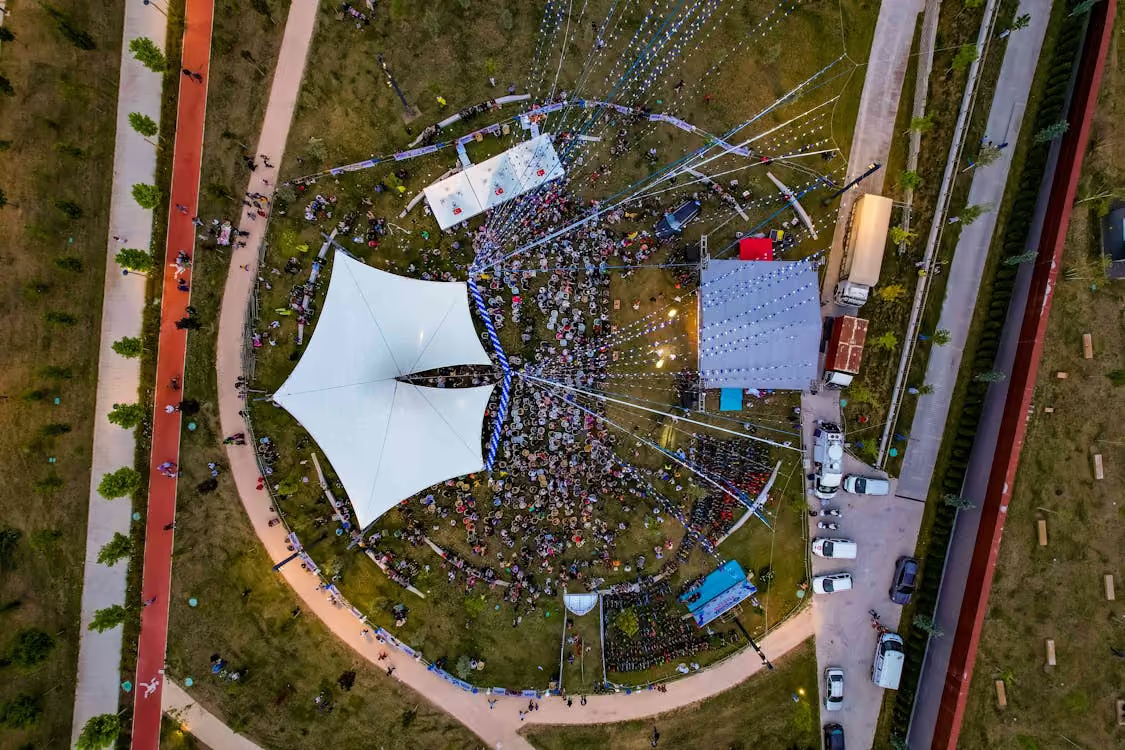
Crowds shift quickly and may concentrate in a single area, like near a stage, refreshments, or narrow walkways. Crowd density patterns are much easier to see and identify from an aerial perspective.
Overhead views help observers:
- Spot Disturbances: Crews can identify fights, stampedes, and medical issues to alert and guide ground security and emergency responders.
- Monitor Crowd Density: Aerial monitoring reveals where crowds are creating bottlenecks, surging, or reaching unsafe capacity levels. With this knowledge, staff can redirect foot traffic appropriately, open additional pathways, or make critical announcements.
- Prevent Safety Incidents: A bird’s-eye view improves detection of suspicious behavior and unattended items that could be dangerous to eventgoers.
Traffic Monitoring
Congestion around stadiums, arenas, and downtown districts creates delays for attendees, security personnel, and emergency vehicles.
The extensive range and hover capabilities of rotorcraft allow them to:
- Watch Parking Areas: Helicopters can scan large parking lots for suspicious activity or stalled vehicles.
- Track Traffic Conditions: Aerial observers can monitor access roads, parking lots, rideshare pickup zones, and transit hubs to identify areas where traffic has stalled.
- Deliver Timely Reports: Police officers and security staff rely on real-time traffic reports from helicopter-based surveyors to adjust routing or implement lane control when necessary.
Emergency Response Coordination
When emergencies occur during large events, quick response times and seamless collaboration between responding agencies are essential.
Helicopters are invaluable for:
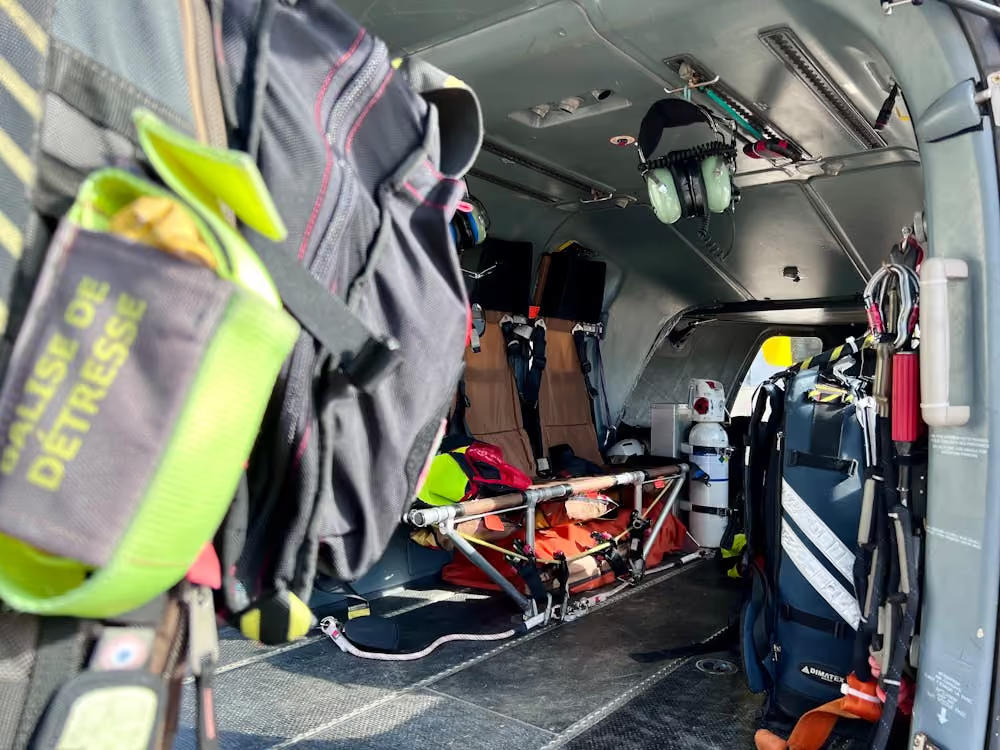
- Providing Live Visuals: Aerial crews and technology can transmit real-time videos to police and security command centers that aid rapid decision-making. This is particularly useful during medical emergencies, fires, weather-related hazards, active threats, or missing person situations.
- Quickly Identifying Medical Emergencies: Overhead views help crews spot individuals in need of assistance and guide responders to their locations via the quickest routes.
- Guiding Evacuations: During inclement weather events or emergencies, aerial teams can identify safe evacuation routes and blocked or overcrowded escape paths to direct crowds away from danger.
- Facilitating Multi-Agency Response: Helicopter teams can communicate with police, fire, EMS, and event security to manage complex situations.
Learn more about what it takes to save lives from the sky, including the strategies that support multi-helicopter emergency response operations and the systems required for smooth communication.
Advantages of Helicopters Over Drones (and How the Platforms Can Work Together)
While drones are increasingly called upon for localized monitoring, helicopters remain essential for large-scale events. That’s because helicopters offer higher payloads, more endurance, and better command integration than smaller unmanned systems.
Benefits of rotorcraft for event security and crowd management include:
- Longer Range: Helicopters can stay airborne for long periods, covering large venues without requiring frequent landings.
- Onboard Personnel: Whereas drones are unmanned, rotorcraft can carry a pilot, tactical observer, and camera operator to refine monitoring accuracy and communication.
- Advanced Equipment Capacity: Helicopters are built to carry heavy, advanced equipment such as cameras, sensors, and communication systems.
- Multi-Agency Coordination: Aerial crews can communicate directly with law enforcement, EMS, SWAT, and other emergency management teams.
- Operational Capabilities: Rotorcraft are often best suited for large surveillance missions that take place in dense cities or across multiple venues.
- Airspace Flexibility: With proper clearances, helicopters can operate in controlled or restricted airspace around major venues in urban environments.
Drones may be cheaper and quieter, but helicopters are often ideal for large or widespread events requiring collaboration between multiple agencies or a manned platform with enhanced endurance.
In many cases, helicopters and drones work together rather than competing. While drones handle close-range monitoring, helicopters cover event perimeters and provide broader oversight.
Potential Limitations of Helicopters (Plus Mitigation Strategies)
Helicopters are capable and flexible. However, they’re often most effective for security when working alongside ground teams, CCTV, and traffic control.
Here are the most common concerns event organizers have when hiring helicopter operators for surveillance, as well as the strategies operators use to address them:
- Noise: Helicopters can be loud, so operators work with event organizers to plan strategic flight paths. Rotor designs, propulsion systems, sound dampening materials, and advanced flight techniques are constantly progressing to reduce helicopter noise.
- Weather: High winds, storms, and low visibility can impact helicopter operations. Experienced operators with advanced weather detection tools can deliver timely insights that help crews maintain safe surveillance operations.
- Fuel Endurance: Crews plan strategic refueling schedules that allow them to maintain continuous coverage during large-scale or long-duration events.
- Urban Airspace Restrictions: Major cities may require permits or coordination with aviation authorities. An experienced helicopter operator can help you navigate airspace restrictions and requirements and apply for permits.
- Privacy Concerns: Event organizers can mitigate privacy concerns by providing transparent surveillance policies and ensuring all captured data is used and secured properly.
How to Choose the Best Helicopter Operator for Aerial Surveillance
Selecting the right operator is vital for safe and effective security, crowd management, and emergency response. But not every helicopter company is equipped for large-event surveillance.
We recommend looking for companies that can offer proof of:
- Documented Experience: Operators and pilots should have a track record showing experience with missions like aerial surveillance, event broadcasting, and emergency response. These operations require stable hovering and clear communication with ground teams, which is more extensive than sightseeing or charter work.
- Required Aircraft Capabilities: Their fleet should support camera systems, communication equipment, sensor packages, and all other operational needs.
- Strong Safety Standards: Maintenance procedures, insurance coverage, crew training, and safety records should be easily verified.
Don’t hesitate to ask for references, examples of previous missions, and documentation of maintenance and safety practices. A reputable operator should provide these without hesitation.
Planning your first helicopter-assisted project? Discover what preliminary information to gather, how to evaluate potential partners, and how the right team keeps your operation safe and efficient.
Why Work With Helicopter Express for Reliable Event Monitoring and Security
Helicopter Express has partnered with event organizers across Georgia, the United States, and international locations for dependable aerial surveillance with a focus on safety. Our elite pilots, modern fleet, and commitment to customer satisfaction make us a trusted partner for large-scale events requiring clear visibility and precise coordination.
Whether you need wide-area monitoring, traffic management, or emergency response assistance, we can help. Our experts will work closely with you to develop a custom strategy tailored to your venue, crowd size, security needs, and goals.
Contact Helicopter Express today. Let’s discuss your project requirements and scheduling needs to determine how aerial support can strengthen the safety and security of your event.