
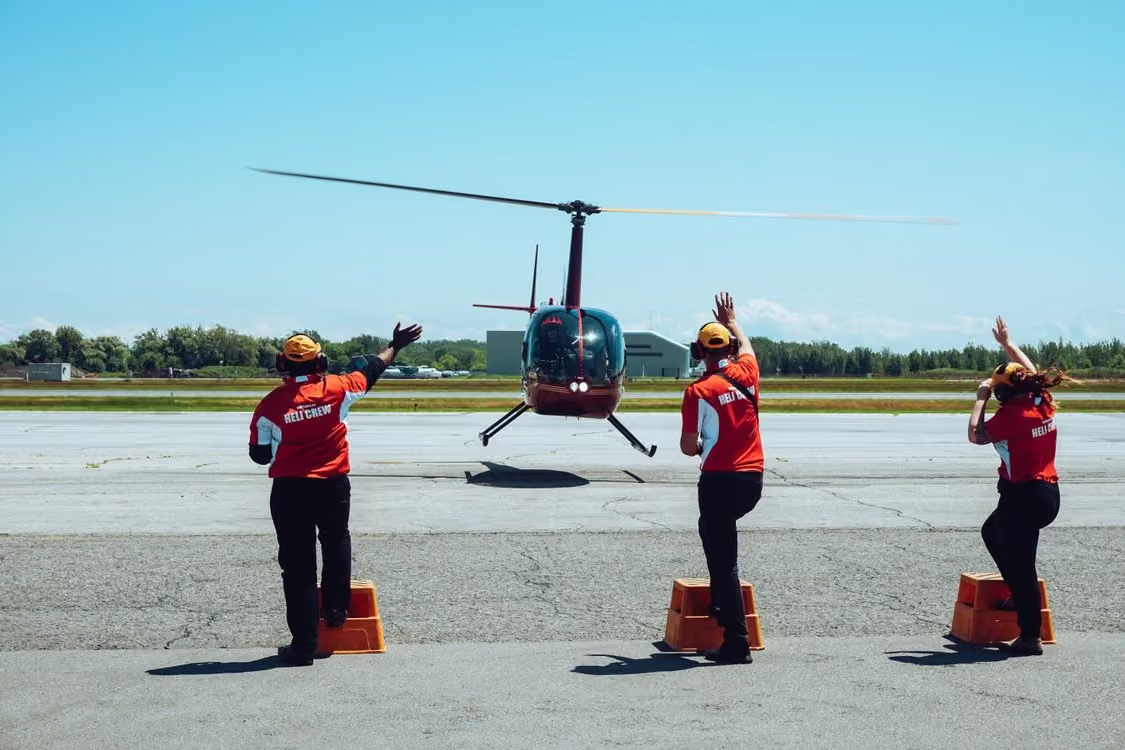
Thorough preparation protects safety and efficiency during fast-moving helicopter projects. A single missed communication, loose object, or poorly managed landing zone can introduce unnecessary risks to personnel on the ground. That’s why every team member needs a clear grasp of their role long before the rotors start turning.
Learn about the logistical planning needed to coordinate flight crews and ground support during helicopter operations. Discover personnel and equipment requirements, communication protocols, safety zone procedures, and more.
Precise Logistical Planning
Coordination of airborne crews and ground support starts with precise logistical planning. This preparation helps ground crews manage cargo loading, aircraft servicing, fueling, and safe landings.
Key elements of logistical planning for helicopter-assisted work include:
- Landing Zone (LZ) Management: Clearing obstacles, implementing dust prevention protocols, and marking boundaries when building or designating a safe zone for landings and departures
- Aircraft Servicing: Coordinating rotorcraft servicing requirements, such as ground power, fueling, hydraulic servicing, and other maintenance activities
- Load Rigging: Checking that cargo is loaded correctly and that rigging systems are properly maintained
These planning steps help ground teams support safer and more efficient helicopter missions.
Discover how multi-helicopter operations are coordinated during emergency response efforts.
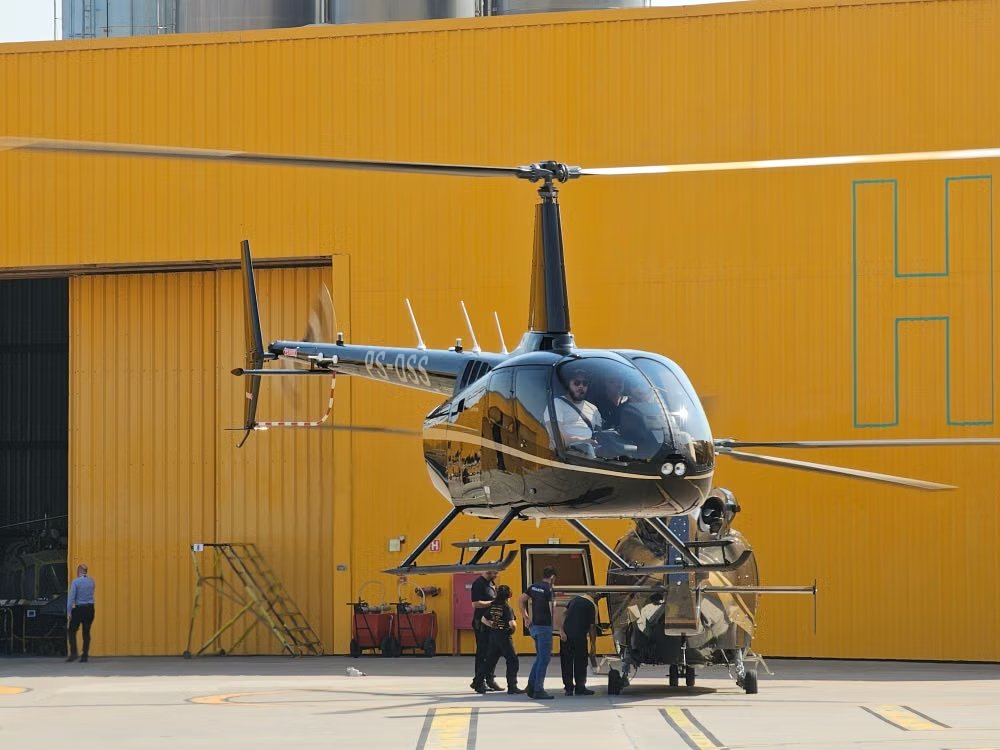
Personnel Requirements
Helicopter projects have unique requirements based on goals, the planned operating environment, and the aircraft selected for the job.
Variables That Impact Staffing
Ground staffing needs and responsibilities vary from one operation to the next.
Planners must account for all contributing variables, including:
- Mission
- Day or night operation
- Site-specific and local procedures
- Weather
- Aircraft
- Fuel
- Passengers
- Cargo
These factors help planners determine staffing needs.
Key Roles and Responsibilities
A staffing plan assigns qualified personnel to each critical support task. The planner should define each team member’s role and make sure everyone understands their responsibilities and how they will interact with the flight crew. Clear role assignments help prevent confusion and keep information consistent.
Common ground-support roles and responsibilities include:
- LZ Coordinator/Ground Operations Lead: Selects and manages the landing zone, establishes aircraft communications, briefs the pilot, and coordinates ground activity
- Radio Operator or Communications Contact: Maintains designated communication between air and ground teams and relays coordinates, wind conditions, hazards, and operational changes (these responsibilities are sometimes assigned to the LZ coordinator)
- Perimeter and Traffic Control Personnel: Keep spectators, vehicles, and nonessential personnel outside the designated exclusion area
- Fire/Rescue Crew: Needed in some scenarios to provide fire protection and remain on standby for emergency response
- Loading or Patient-Handling Team: Moves patients, stretchers, baggage, or cargo when directed to by the flight crew or according to established procedures
- Fueling and Maintenance Workers: Perform fueling, ground power, towing, servicing, or maintenance when trained and authorized for the specific aircraft and task
- Ground Guide/Marshaller: Provides visual guidance when requested or authorized by the pilot or operator
Ground personnel support the mission, but pilots retain final authority over aircraft movement and the decision to land, reposition, or depart.
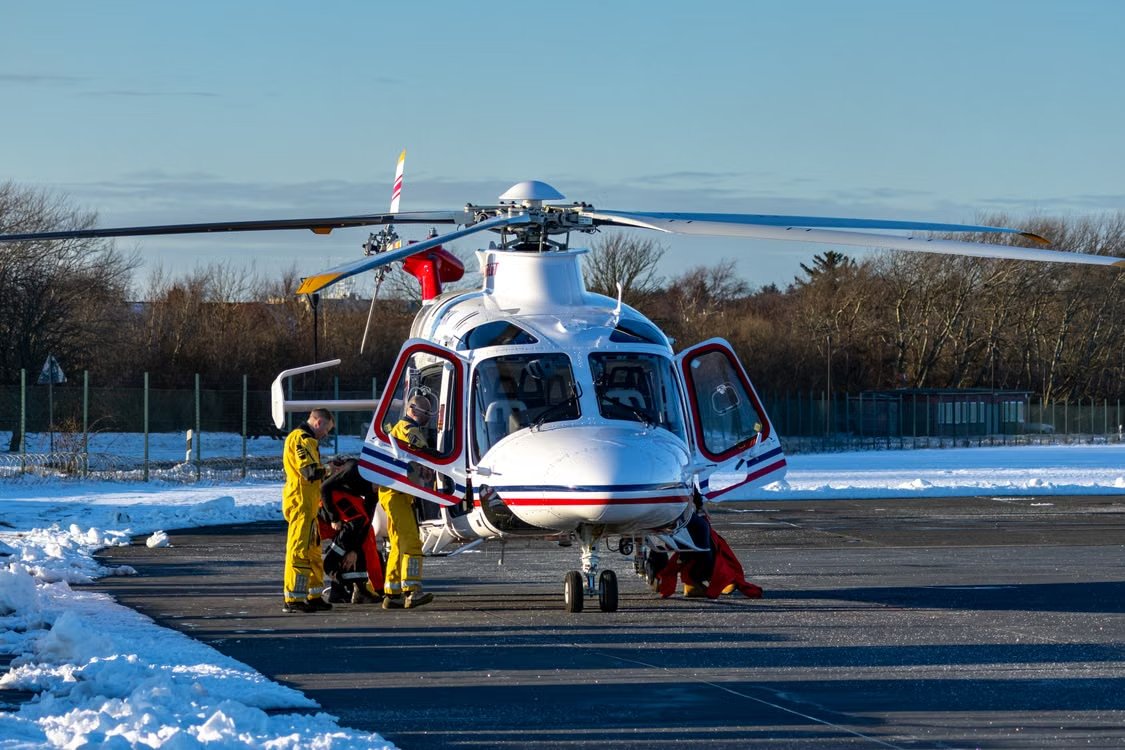
Required Equipment for Helicopter Ground Support
Equipment requirements vary by mission, site, aircraft, and operating conditions. Ground teams must prepare equipment for four primary needs: communications, landing zone marking and lighting, PPE and loose-object control, and specialized ground-support equipment.
Communications
Reliable communication is needed to transfer vital information from the ground crew to the flight team before and during the operation.
Common communication equipment includes:
- Air-ground radio compatible with the operator’s designated frequency
- Backup method, like a second radio or telephone
- GPS or other navigation device capable of providing accurate LZ coordinates
- Device for measuring variables like wind speed and temperature
- Site map or checklist identifying hazards (wires, towers, cranes, poles, trees, buildings, roads, slopes, etc.)
A standardized briefing process ensures pilots have the information they need to accurately assess landing zone and operating conditions prior to arrival.
Landing Zone Marking and Lighting
LZ marking and lighting help pilots identify the landing area and understand its boundaries — especially during nighttime flights.
Depending on the mission and operator procedures, useful equipment may include:
- Cones or other approved perimeter markers
- Approved lighting or illumination for night marking
- Vehicle lighting configured to helicopter operator instructions
- Barriers, tape, or staff to control LZ access
- Reflective clothing or markings for personnel
Personnel should follow the helicopter operator’s specified lighting procedures to identify the landing area without creating additional hazards or interfering with the pilot’s vision.
PPE and Loose-Object Control
Appropriate personal protective equipment (PPE) should be worn during helicopter landings. Loose-object control is also essential to prevent items from becoming hazards when exposed to rotor wash.
Generally, personnel working near an operating helicopter should wear:
- Vision and hearing protection
- Secure head protection
- Gloves and protective footwear
- Properly-secured, high-visibility clothing
- Secured radios, straps, medical equipment, and blankets
These precautions help protect ground workers and prevent loose items from interfering with helicopter operations.
Fire, Dust, and Specialized Ground-Support Equipment
Some projects require additional equipment to help manage fire risks, fueling, dust, aircraft positioning, or targeted ground activities.
Specialized equipment sometimes includes:
- Water, hose, fire extinguishers, or other methods of fire and dust suppression
- Spill-control materials for fueling
- Approved aircraft tie-downs for parked helicopters
- Ground power units, ladders, tugs, and other equipment (for fixed facilities)
- Patient stretchers and restraints for transporting patients around the aircraft
- Barriers or security vehicles for perimeter control
Preparing all required equipment in advance helps reduce avoidable hazards around the aircraft.
Safety Zones and Protocols
Safety zones establish clear boundaries while safety procedures help protect crews, passengers, aircraft, and equipment during helicopter operations.
Safe Landing Zone Distances
FAA landing zone guidance includes these general recommendations:
- Spectators should stand at least 200 feet away
- Emergency vehicles should park at least 100 feet away
- Fire suppression equipment should be on standby for emergencies (if available)
- Landing zones should be level, firm, and clear of people, hazards, and loose debris
However, numerous factors influence LZ personnel requirements, safe LZ distances, required markings, and equipment, including aircraft size, rotor wash, darkness, dust, wind, surrounding structures, and slope. Therefore, ground teams should defer to applicable regulations and the helicopter operator’s own established procedures.
Approach Zone Guidelines
The approach zone is the area around a helicopter where personnel may be exposed to hazards from rotating blades. OSHA generally recommends that ground teams remain at least 50 feet from a helicopter with rotating blades, unless their duties require them to enter the area.
When an approach is necessary, they should follow the helicopter operator’s procedures.
They should also:
- Avoid the area from the cockpit or cabin rearward (unless given operator authorization)
- Stay in a crouched position within the pilot’s full view
- Carry objects below shoulder height
Following these practices helps crews stay visible to the pilot while reducing exposure to rotor and tail-rotor hazards.
Permanent Heliports
Permanent heliports have specific requirements regarding design, obstacle clearance, marking, and lighting. However, requirements can vary by aircraft and facility type, so ground teams should follow applicable heliport design standards and operator procedures instead of applying a generic 100- or 200-foot rule.
Vehicle Limits
All cars and trucks should stay outside the active landing area unless they’re actively servicing the aircraft or have received entry authorization. Establishing vehicle limits prior to arrival helps keep traffic predictable. It also prevents vehicles from becoming obstacles during approach, landing, or departure.
Proper PPE
Personnel working near active rotors should wear appropriate eye and ear protection, along with task-specific PPE required by their employer and the helicopter operator. Clothing, radios, medical equipment, and loose items must be secured against rotor wash.
Emergency Signals
Each crew member should have a thorough understanding of designated emergency signals and know how to communicate with the flight crew if radio communication fails. Establishing these signals during the pre-mission briefing gives each individual a method for communicating if conditions change, radios fail, or an immediate stop is necessary.
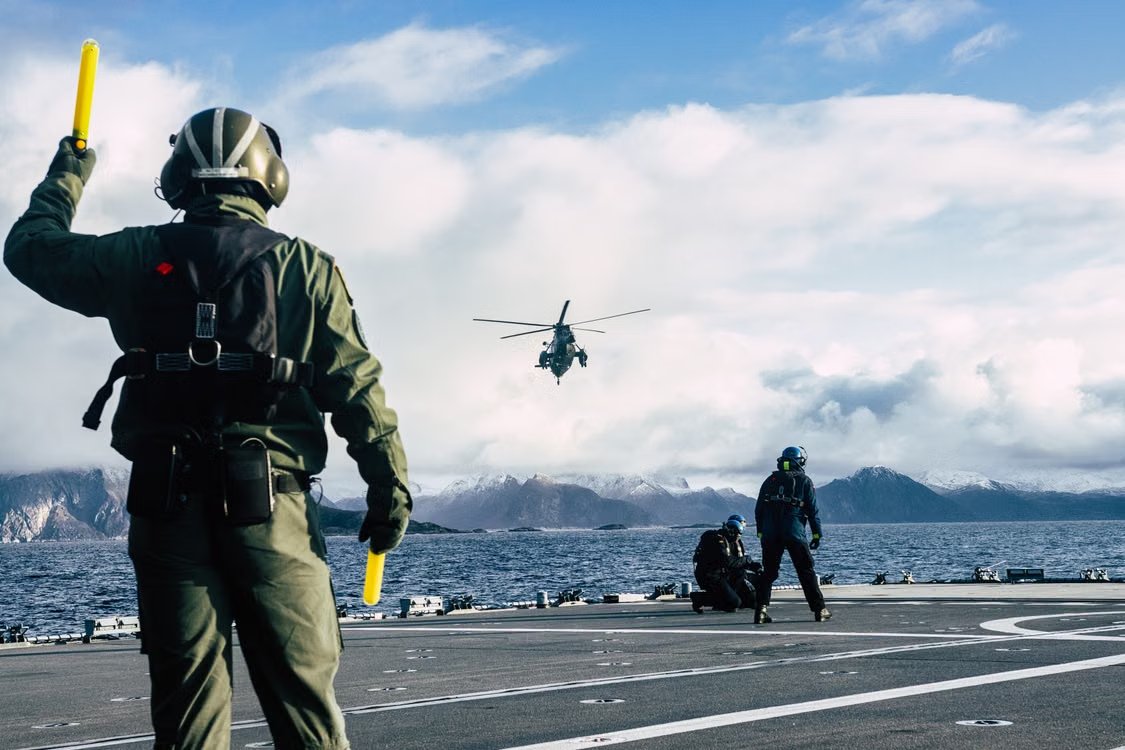
Importance of Clear and Direct Communication
Using direct radio talk, standard aviation terminology, and simple clock positions from the pilot’s perspective can help reduce misunderstandings. Designate a single point of contact on the ground to communicate with the helicopter crew regarding landing zone conditions, hazards, and operational changes.
A pre-mission briefing is important to ensure everyone is working from the same information.
This briefing should cover:
- Radio frequency
- Communication protocols and terminology
- Expected approach and departure routes
- Emergency stop procedures
- Rotor and tail-rotor hazards
- Loose-object control and PPE
- Landing zone entry authorization
Clear and direct communication reduces the risk of conflicting information reaching the pilot, particularly during high-stress or emergency situations.
First time hiring a helicopter service company? Read our step-by-step helicopter project planning guide to learn how to evaluate potential partners.

Importance of Documented Protocols and Ongoing Training
For recurring or complex work, ground-support procedures should be formalized and documented through:
- Standard operating procedure (SOP)
- Written communication plan
- Site diagram
- Training program
Documented protocols and ongoing training are especially important for helicopter work that involves offshore facilities, emergency medical transportation, or other frequent coordination.
Partner With Helicopter Express and Take Control of Your Project
Executing complex aerial work requires dependable equipment and seamless coordination between flight crews and ground support. Helicopter Express has the pilots, aircraft, planning experts, and experience to handle every operational detail so your mission stays on schedule and within scope.
Contact us to discuss your project and find the right solution.