
Building a Helicopter Landing Zone: Requirements, Permits, and Best Practices

Building a helicopter landing zone requires extensive planning. Learn what it takes to design, construct, and operate a helipad that meets compliance and safety standards.

Building a helicopter landing zone requires much more than just pouring a concrete foundation and painting a visible “H.” A landing zone is a critical piece of aviation infrastructure that supports life-saving rescue missions, delivers access to remote areas, and more. Whether for emergency medical services or corporate transportation, the helipad is where every mission begins and ends safely.

Let’s walk through everything you need to know to build a safe and compliant helicopter landing area, from design fundamentals to federal regulations (and everything in between). We’ll also show you how working with a professional heavy-lift helicopter construction company like Helicopter Express helps you meet your project deadline and ensure you’re ready for lift-off.

What Is a Helicopter Landing Zone?

A helicopter landing zone is a designated area where rotorcraft can safely take off and land. These zones may be temporary or permanent. They may be as complex as a fully designed heliport complete with a private fueling station, or as simple as an open field or concrete slab cleared for takeoff.
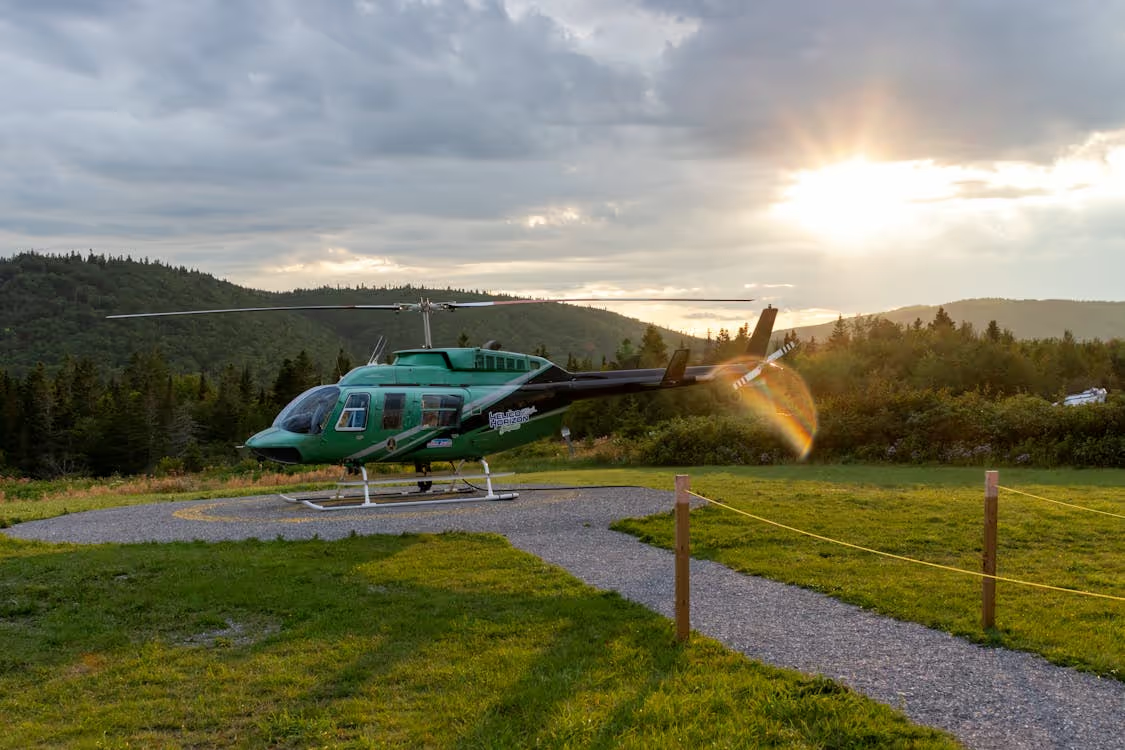
green and black helicopter on a landing pad surrounded by forested mountains at sunset
Photo by Anthony Desrochers from Pexels

Helipad vs. Heliport: What’s the Difference?

A helipad is a single landing surface. Ground-level helipads are designated regions of ground, while rooftop helipads are often built on hospital rooftops, skyscrapers, and other private or commercial buildings.

Heliports are much more than just a designated landing zone—they’re complete aviation facilities with their own unique infrastructure. Heliports frequently offer:

  • Multiple helipads
  • Maintenance facilities
  • Passenger terminals
  • Fueling stations
  • Control towers
  • Hangars

Building a Landing Zone: Site Evaluation and Planning

Choosing a helicopter landing site or building a permanent helipad requires careful site assessment and in-depth planning. 

Here are the key evaluation criteria:

Surface and Terrain

A helicopter landing zone must be level and firm. A slope of less than 10 degrees is necessary to ensure stability upon landing.

Size

The ideal minimum landing zone size for most rotorcraft operations is 100 by 100 feet. For night operations, you may need a larger landing area of up to 200 by 200 feet.

Wind Direction

It’s important to consider wind direction when designing and constructing a helipad. Pilots retain maximum control of the aircraft when they land and take off into the wind.

Free of Obstacles and Debris

The landing zone must be cleared of all obstacles, including people, vehicles, trees, stumps, brush, poles, fences, and overhead wires. It must also be free of debris, such as large rocks, gravel, litter, other loose materials, and anything over 18 inches in height.

Why is this clearing essential? Once debris is exposed to the aircraft’s rotor wash, it could become a hazardous—or even deadly—airborne projectile. A medium-sized helicopter can generate wind velocities of 60–80 miles per hour upon takeoff and landing, which is about the same as a tropical storm transforming into a hurricane. 

Any obstructions that can’t be cleared should be reported to the helicopter crew during initial radio contact.

Accessible

The landing zone location must be easily accessible for ground-based crews. Helipads built for emergency service choppers and firefighting helicopters should be as close to the rescue scene as possible, without jeopardizing the safety of emergency responders on the ground. 

What Goes Into Helipad Design

Designing a helicopter landing zone requires you to account for aircraft size, downwash, load-bearing capacity, approach angles, materials, and more. Here are four key considerations for safe and effective helipad design:

Size and Shape

Helipads aren’t one-size-fits-all. The dimensions of your landing surface must reflect:

  • The type of helicopter using it
  • How often the landing zone will be used
  • The environment where it’s located
    For example, its surface needs to accommodate the rotor diameter, give clearance around the blades, and allow personnel to move safely on all sides.

Load-Bearing Capacity

A helipad must be engineered to support the full dynamic weight of the aircraft—without cracking or degrading over time. You’ll need to account for the weight of:

  • The aircraft
  • Internal cargo
  • External loads
  • Onboard passengers
  • Fuel
  • Potential emergency loads

For rooftop helipads, structural integrity is even more crucial since the helicopter’s weight and forces need to be properly distributed through the building’s framework and foundation.

Surface Material and Finish

Selecting the right material for a helipad is essential to ensure durability, safety, and performance. Reinforced concrete and aluminum decking systems are popular material choices due to their weather resistance and ability to support dynamic loads. 

The material you choose must:

  • Resist corrosion
  • Withstand inclement weather
  • Provide a non-slip surface for pilots, flight crews, and equipment
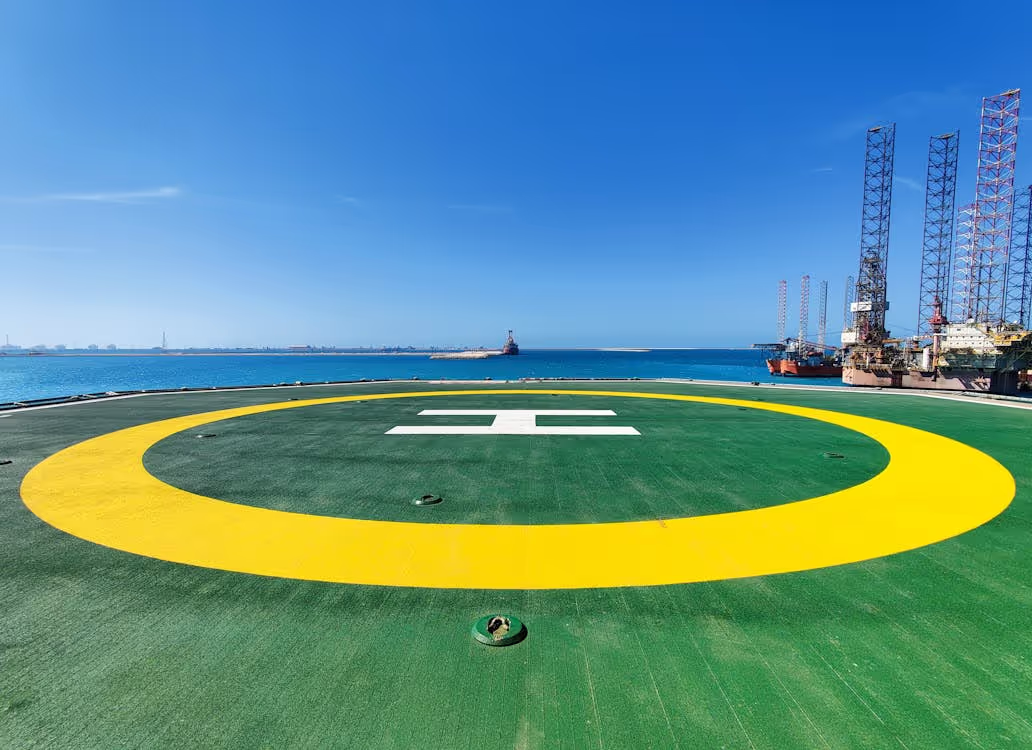
green and yellow helicopter landing zone beside the ocean under blue skies
Photo by Anoop VS from Pexels

Lighting and Markings

Your helipad needs clear visual aids to enhance safety, particularly at night or during periods of poor visibility. These include:

  • Perimeter lines
  • Glare-free approach lighting
  • Bold letter “H” markings

These elements help pilots orient themselves and land with confidence and ease.

Helicopter Landing Zone Permits and Regulations

Building or operating a helicopter landing zone requires you to follow all rules and regulations designed to keep aircraft operations predictable and safe. This includes complying with international safety standards, Federal Aviation Administration (FAA) guidelines, and even local building codes.

In most cases, you must notify the FAA of your plans to build a helipad before construction begins—especially if it’s a commercial landing zone, rooftop installation, or located near a flight path. You must also fully comply with the FAA’s Advisory Circular, which is the organization’s criteria for planning, designing, constructing, and legally operating a landing site.

Here are a few key highlights of the Advisory Circular to keep in mind:

Planning and Site Selection

To ensure regulatory compliance when selecting a heliport site, you must:

  • Carefully evaluate location, airspace, wind direction, and land-use compatibility
  • Properly map approach and departure paths
  • Assess and remove obstacles and debris
  • File required FAA forms

Design and Construction Standards

Heliport design must include clearly defined operational areas that match dimensions and load capacities to the specific helicopter that will be using it. Construction must ensure:

  • Safe surfaces
  • Effective drainage
  • Proper markings and lighting

Note that there may be additional requirements for elevated or instrument-capable facilities.

Legal and Operational Compliance

FAA approval and notification are required for new or modified heliports, especially if federal funds are involved. Organizations must also:

  • Meet local zoning, land-use, and building regulations
  • Maintain updated layout plans
  • Operate the heliport in accordance with its certified design and safety parameters

FAA and Local Inspections

Once construction is complete, it may be subject to local and federal inspections. This process often involves a visit from an FAA representative who will ensure your site follows all regulations. This representative will issue an airspace determination letter and enter the helipad into a national database.

The Helicopter Landing Zone Construction Process

Once you’ve established your site design and secured your permits, the construction phase brings your helipad to life. Here’s a breakdown of critical steps:

Site Preparation

After completing your site evaluation, clear all obstacles and debris well beyond the landing area to prevent rotor wash hazards. Then, level the site to ensure safe aerial operations.

This may include:

  • Grading the surface to prevent pooling water
  • Compacting the soil
  • Installing a base layer to add strength to the foundation
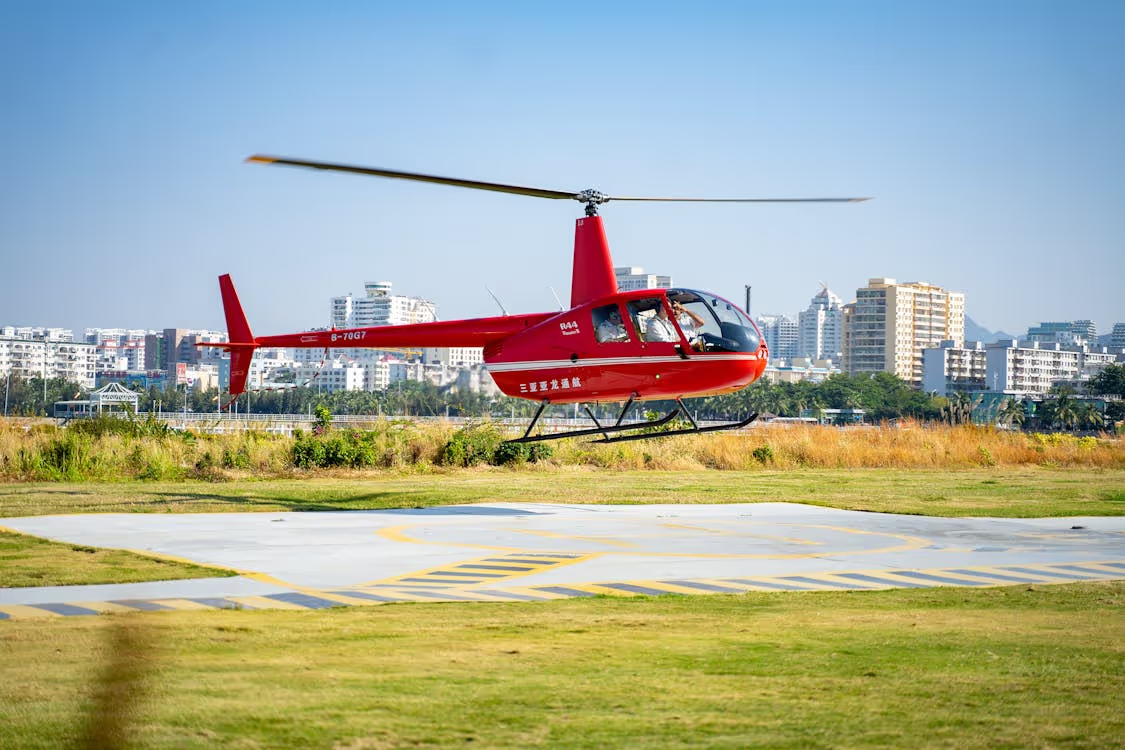
red helicopter hovering over a helicopter landing zone with city buildings in the background
Photo by evan from Pexels

Foundation and Surface Construction

A strong foundation is the backbone of any helipad. The surface must be built from reinforced concrete, aluminum decking, or another load-bearing material capable of handling a helicopter’s dynamic weight. 

For rooftop installations, engineers must ensure that loads are properly transferred through the building’s structure to maintain long-term safety and integrity.

Addition of Markings and Lighting

Proper markings and lighting are critical for pilot orientation and visibility, particularly in the dark or in low-visibility conditions. These include:

  • A clearly defined “H” marking
  • Perimeter and approach markings
  • Glare-free lighting positioned to guide pilots without interfering with their vision or causing distractions

Installation of Safety Systems

Safety systems depend on the type of heliport you’re building. Potential safety measures to consider include:

  • Firefighting systems
  • Drainage for fuel spills
  • Non-slip surface coatings
  • Safety nets or perimeter fencing for rooftop helipads

Inspections and Approvals

After final FAA and local inspections confirm compliance, your helicopter landing zone can be approved for operations.

From Planning to Launch: How Long It Takes to Build a Helicopter Landing Zone

Building a helicopter landing zone can take anywhere from a few months to a year or two. Your timeline will depend on a variety of factors, such as design complexity, material procurement, and the process of securing local and FAA permits.

Helicopter Express can accelerate the construction process with premier heavy-lift services that include:

  • A commitment to transparent communication and client satisfaction
  • Elite pilots with in-depth knowledge of handling heavy loads, maneuvering in tight spaces, and ensuring crew and cargo safety
  • Customized solutions that account for your project scope, location, timeline, and budget
  • Access to the latest technologies and equipment
  • Rigorous maintenance protocols and unwavering safety standards

Why Partner With Helicopter Express for Your Next Operation

If your operation requires a landing zone, don’t worry—you don’t have to go it alone. At Helicopter Express, we offer aviation industry expertise, construction knowledge, heavy-lift capabilities, regulatory familiarity, and operational experience to support your mission. Our helicopter lifting services can help clear your landing zone construction site, transport and place heavy materials with precision, and build your helipad to your exact specifications. 

Our skilled pilots and crews also support post-construction operations, from heavy lifting and utility construction to aerial firefighting and disaster response. As a trusted partner for clients across diverse sectors, you can rely on our aerial crane services whenever and wherever they are needed. Contact us to request a quote and get your helipad project off the ground.

Building a Helicopter Landing Zone: Requirements, Permits, and Best Practices

Building a helicopter landing zone requires much more than just pouring a concrete foundation and painting a visible “H.” A landing zone is a critical piece of aviation infrastructure that supports life-saving rescue missions, delivers access to remote areas, and more. Whether for emergency medical services or corporate transportation, the helipad is where every mission begins and ends safely.

Let’s walk through everything you need to know to build a safe and compliant helicopter landing area, from design fundamentals to federal regulations (and everything in between). We’ll also show you how working with a professional heavy-lift helicopter construction company like Helicopter Express helps you meet your project deadline and ensure you’re ready for lift-off.

What Is a Helicopter Landing Zone?

A helicopter landing zone is a designated area where rotorcraft can safely take off and land. These zones may be temporary or permanent. They may be as complex as a fully designed heliport complete with a private fueling station, or as simple as an open field or concrete slab cleared for takeoff.

green and black helicopter on a landing pad surrounded by forested mountains at sunset
Photo by Anthony Desrochers from Pexels

Helipad vs. Heliport: What’s the Difference?

A helipad is a single landing surface. Ground-level helipads are designated regions of ground, while rooftop helipads are often built on hospital rooftops, skyscrapers, and other private or commercial buildings.

Heliports are much more than just a designated landing zone—they’re complete aviation facilities with their own unique infrastructure. Heliports frequently offer:

  • Multiple helipads
  • Maintenance facilities
  • Passenger terminals
  • Fueling stations
  • Control towers
  • Hangars

Building a Landing Zone: Site Evaluation and Planning

Choosing a helicopter landing site or building a permanent helipad requires careful site assessment and in-depth planning. 

Here are the key evaluation criteria:

Surface and Terrain

A helicopter landing zone must be level and firm. A slope of less than 10 degrees is necessary to ensure stability upon landing.

Size

The ideal minimum landing zone size for most rotorcraft operations is 100 by 100 feet. For night operations, you may need a larger landing area of up to 200 by 200 feet.

Wind Direction

It’s important to consider wind direction when designing and constructing a helipad. Pilots retain maximum control of the aircraft when they land and take off into the wind.

Free of Obstacles and Debris

The landing zone must be cleared of all obstacles, including people, vehicles, trees, stumps, brush, poles, fences, and overhead wires. It must also be free of debris, such as large rocks, gravel, litter, other loose materials, and anything over 18 inches in height.

Why is this clearing essential? Once debris is exposed to the aircraft’s rotor wash, it could become a hazardous—or even deadly—airborne projectile. A medium-sized helicopter can generate wind velocities of 60–80 miles per hour upon takeoff and landing, which is about the same as a tropical storm transforming into a hurricane. 

Any obstructions that can’t be cleared should be reported to the helicopter crew during initial radio contact.

Accessible

The landing zone location must be easily accessible for ground-based crews. Helipads built for emergency service choppers and firefighting helicopters should be as close to the rescue scene as possible, without jeopardizing the safety of emergency responders on the ground. 

What Goes Into Helipad Design

Designing a helicopter landing zone requires you to account for aircraft size, downwash, load-bearing capacity, approach angles, materials, and more. Here are four key considerations for safe and effective helipad design:

Size and Shape

Helipads aren’t one-size-fits-all. The dimensions of your landing surface must reflect:

  • The type of helicopter using it
  • How often the landing zone will be used
  • The environment where it’s located
    For example, its surface needs to accommodate the rotor diameter, give clearance around the blades, and allow personnel to move safely on all sides.

Load-Bearing Capacity

A helipad must be engineered to support the full dynamic weight of the aircraft—without cracking or degrading over time. You’ll need to account for the weight of:

  • The aircraft
  • Internal cargo
  • External loads
  • Onboard passengers
  • Fuel
  • Potential emergency loads

For rooftop helipads, structural integrity is even more crucial since the helicopter’s weight and forces need to be properly distributed through the building’s framework and foundation.

Surface Material and Finish

Selecting the right material for a helipad is essential to ensure durability, safety, and performance. Reinforced concrete and aluminum decking systems are popular material choices due to their weather resistance and ability to support dynamic loads. 

The material you choose must:

  • Resist corrosion
  • Withstand inclement weather
  • Provide a non-slip surface for pilots, flight crews, and equipment
green and yellow helicopter landing zone beside the ocean under blue skies
Photo by Anoop VS from Pexels

Lighting and Markings

Your helipad needs clear visual aids to enhance safety, particularly at night or during periods of poor visibility. These include:

  • Perimeter lines
  • Glare-free approach lighting
  • Bold letter “H” markings

These elements help pilots orient themselves and land with confidence and ease.

Helicopter Landing Zone Permits and Regulations

Building or operating a helicopter landing zone requires you to follow all rules and regulations designed to keep aircraft operations predictable and safe. This includes complying with international safety standards, Federal Aviation Administration (FAA) guidelines, and even local building codes.

In most cases, you must notify the FAA of your plans to build a helipad before construction begins—especially if it’s a commercial landing zone, rooftop installation, or located near a flight path. You must also fully comply with the FAA’s Advisory Circular, which is the organization’s criteria for planning, designing, constructing, and legally operating a landing site.

Here are a few key highlights of the Advisory Circular to keep in mind:

Planning and Site Selection

To ensure regulatory compliance when selecting a heliport site, you must:

  • Carefully evaluate location, airspace, wind direction, and land-use compatibility
  • Properly map approach and departure paths
  • Assess and remove obstacles and debris
  • File required FAA forms

Design and Construction Standards

Heliport design must include clearly defined operational areas that match dimensions and load capacities to the specific helicopter that will be using it. Construction must ensure:

  • Safe surfaces
  • Effective drainage
  • Proper markings and lighting

Note that there may be additional requirements for elevated or instrument-capable facilities.

Legal and Operational Compliance

FAA approval and notification are required for new or modified heliports, especially if federal funds are involved. Organizations must also:

  • Meet local zoning, land-use, and building regulations
  • Maintain updated layout plans
  • Operate the heliport in accordance with its certified design and safety parameters

FAA and Local Inspections

Once construction is complete, it may be subject to local and federal inspections. This process often involves a visit from an FAA representative who will ensure your site follows all regulations. This representative will issue an airspace determination letter and enter the helipad into a national database.

The Helicopter Landing Zone Construction Process

Once you’ve established your site design and secured your permits, the construction phase brings your helipad to life. Here’s a breakdown of critical steps:

Site Preparation

After completing your site evaluation, clear all obstacles and debris well beyond the landing area to prevent rotor wash hazards. Then, level the site to ensure safe aerial operations.

This may include:

  • Grading the surface to prevent pooling water
  • Compacting the soil
  • Installing a base layer to add strength to the foundation
red helicopter hovering over a helicopter landing zone with city buildings in the background
Photo by evan from Pexels

Foundation and Surface Construction

A strong foundation is the backbone of any helipad. The surface must be built from reinforced concrete, aluminum decking, or another load-bearing material capable of handling a helicopter’s dynamic weight. 

For rooftop installations, engineers must ensure that loads are properly transferred through the building’s structure to maintain long-term safety and integrity.

Addition of Markings and Lighting

Proper markings and lighting are critical for pilot orientation and visibility, particularly in the dark or in low-visibility conditions. These include:

  • A clearly defined “H” marking
  • Perimeter and approach markings
  • Glare-free lighting positioned to guide pilots without interfering with their vision or causing distractions

Installation of Safety Systems

Safety systems depend on the type of heliport you’re building. Potential safety measures to consider include:

  • Firefighting systems
  • Drainage for fuel spills
  • Non-slip surface coatings
  • Safety nets or perimeter fencing for rooftop helipads

Inspections and Approvals

After final FAA and local inspections confirm compliance, your helicopter landing zone can be approved for operations.

From Planning to Launch: How Long It Takes to Build a Helicopter Landing Zone

Building a helicopter landing zone can take anywhere from a few months to a year or two. Your timeline will depend on a variety of factors, such as design complexity, material procurement, and the process of securing local and FAA permits.

Helicopter Express can accelerate the construction process with premier heavy-lift services that include:

  • A commitment to transparent communication and client satisfaction
  • Elite pilots with in-depth knowledge of handling heavy loads, maneuvering in tight spaces, and ensuring crew and cargo safety
  • Customized solutions that account for your project scope, location, timeline, and budget
  • Access to the latest technologies and equipment
  • Rigorous maintenance protocols and unwavering safety standards

Why Partner With Helicopter Express for Your Next Operation

If your operation requires a landing zone, don’t worry—you don’t have to go it alone. At Helicopter Express, we offer aviation industry expertise, construction knowledge, heavy-lift capabilities, regulatory familiarity, and operational experience to support your mission. Our helicopter lifting services can help clear your landing zone construction site, transport and place heavy materials with precision, and build your helipad to your exact specifications. 

Our skilled pilots and crews also support post-construction operations, from heavy lifting and utility construction to aerial firefighting and disaster response. As a trusted partner for clients across diverse sectors, you can rely on our aerial crane services whenever and wherever they are needed. Contact us to request a quote and get your helipad project off the ground.

Make us your go-to team.

Our highly skilled pilots have the experience and equipment needed to rise to any challenge. When you need experts you can trust, give us a call.