A Quick Guide to Contracting Helicopter Medical Evacuation Services

Learn how helicopter medical evacuation contracts work, when medevac flights are most beneficial, key contract models, and how to evaluate providers.

Imagine a utility worker who’s been injured at a remote worksite. The nearest trauma center is 90 minutes away by ambulance, and a recent natural disaster has washed out surrounding roads. In a life-or-death situation like this one, every second counts.

When time, distance, or terrain make ground transportation impractical, hospitals and agencies often turn to helicopter medical evacuation (medevac) services. Arranging a contract with an experienced provider in advance can reduce the time it takes to arrange suitable aircraft and trained crew members, potentially saving lives.

This guide walks you through what helicopter medical evacuation involves, when it’s most beneficial, common contract models, and how to properly vet providers before signing a contract.

What Is Helicopter Medical Evacuation?

Helicopter medical evacuation is the emergency transport of an injured or seriously ill person to a facility equipped to provide the care they need. It may be appropriate when roads are inaccessible or a patient needs to reach a specialized medical facility quickly. Rotorcraft are capable of skipping road closures and traffic, avoiding rough terrain, and hovering as needed.

But the emergency medical helicopter is only one part of a successful evacuation. Helicopter medevac also requires an appropriate aircraft, a qualified flight crew, and a comprehensive plan that reflects the mission requirements and resources available. Depending on the service and operation, onboard medical personnel may provide care during transport. Their training, along with the aircraft's medical equipment, determines what level of care is available in flight.

Not every helicopter contractor operates a dedicated air ambulance service. Some providers supply aircraft and flight crews, while medical personnel and clinical equipment are supplied by a hospital or another partner. Before signing an agreement, confirm which services the operator provides and which responsibilities remain with your organization.
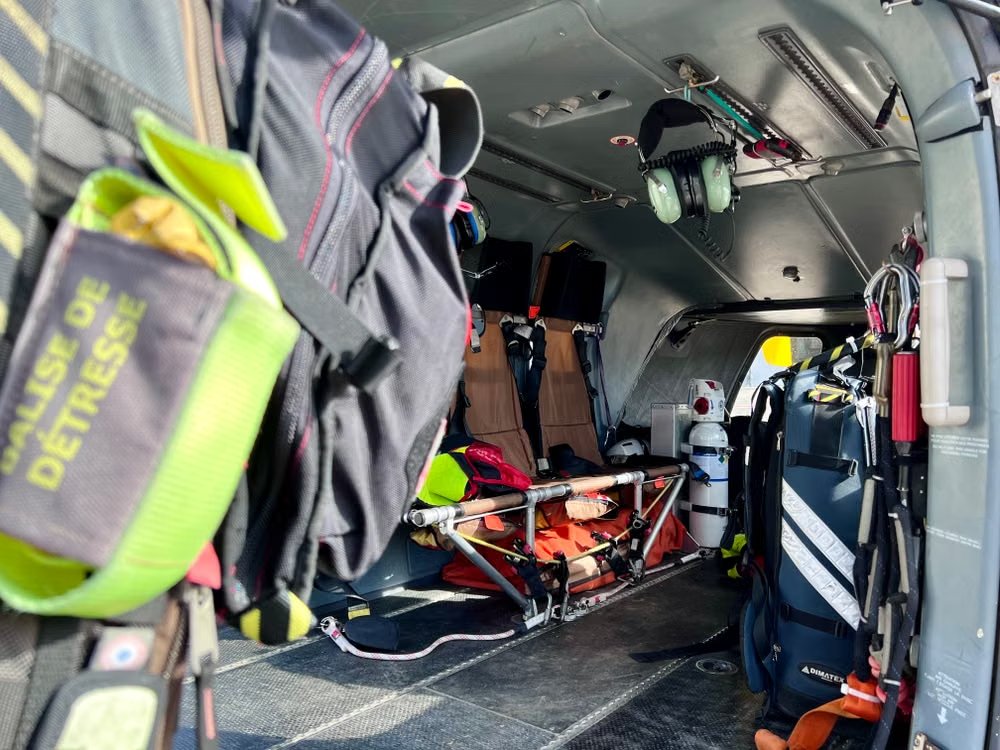
inside view of an emergency medical helicopter equipped for emergency rescues
Photo by Arnauld van Wambeke from Pexels

When Is Helicopter Medical Evacuation Appropriate?

Requesting a helicopter makes sense in scenarios where ground transportation would be too slow or risky. Here are three situations when helicopter medevac may be essential.

Natural Disasters

Earthquakes, hurricanes, storms, and floods can block or destroy roads, cutting entire communities off from the critical care they need. Downed cell towers can make communication difficult, and victims may be trapped beneath collapsed buildings and rubble. An influx of patients can overwhelm nearby hospitals, making it necessary to transport patients to alternative or specialty medical facilities that are often far away.

In the aftermath of a natural disaster, when ground routes are blocked, having an emergency helicopter service with skilled pilots and a suitable aircraft on standby can help you evacuate patients and move medical personnel or supplies faster.

Rural Patient Transport

Demand for helicopter emergency medical services (HEMS) has grown by more than 50% over the past decade. 16.7% of the U.S. population lives in rural areas where the closest trauma center may be an hour or more away, making evacuation to the nearest adequate facility especially crucial.

Depending on the aircraft and site conditions, helicopter operators may be able to land without permanent helipads or reach patients using specialized extraction equipment. They can also bypass mountains, forests, poor road conditions, and traffic to provide faster medical care to critically ill and injured patients in rural communities.

Paramedics, nurses, and doctors can use their skills and equipment to stabilize patients while the helicopter is still airborne, preparing them for admission to a trauma facility or intensive care unit if needed. Several studies show increased survival rates in cases where trauma patients are transported by helicopter rather than by ground ambulance.

Search and Rescue

Helicopter-based search and rescue teams can locate survivors after natural disasters, aircraft accidents, maritime incidents, and other emergencies. They may assist when people are trapped beneath collapsed structures, awaiting evacuation from raging wildfires, or missing in the wilderness or in complex cave systems. Locating and extracting patients in a timely manner can be the deciding factor between life and death.

Helicopters are ideal for search and rescue for a number of reasons. They can cover hundreds of miles in a single flight to reach remote locations that are difficult to access via other means. They can fly slowly, hover, and use specialized equipment to aid certain rescues. Their power and agility enable them to work in isolated locations, at high altitudes, in extreme heat, and in elevated atmospheric pressure.

blue search and rescue helicopter hovering with its long line extended with forested mountains in the background
Photo by Tim Dennert from Unsplash

How Contracted Aviation Providers Support Medevac

Here’s how an aviation provider like Helicopter Express enables patient transport, aircraft readiness, medical team coordination, and access to remote areas.

  • Standby Availability: Provide access to reserved aircraft, flight crews, and operational support so clients can request deployment without arranging every detail from scratch.

  • Aircraft Configuration and Equipment: Provide or coordinate aircraft configured for the mission, with appropriate space, power, communications, and other required equipment.

  • Medical Crew Coordination: Coordinate with flight nurses, paramedics, physicians, and other specialists who can assess patients, provide care during flight, and help stabilize them for arrival.

  • Access and Patient Extraction: Help reach people in locations with limited ground access using appropriate equipment, such as hoists, winches, or rappelling systems.

  • Rapid Patient Transport: Transport patients from accident scenes, remote worksites, disaster zones, or inadequate hospitals to trauma centers and specialized medical facilities.

  • Hospital-to-Hospital Transfers: Transport patients between medical facilities for specialized treatment, such as in trauma, burn, cardiac, neurosurgical, or pediatric cases.

  • Personnel and Supply Transport: Move medical personnel, supplies, and equipment to staging areas or isolated locations during disasters and other emergencies.

Learn how multi-helicopter operations are coordinated during emergency response.

Who Benefits From Contracted Helicopter Evacuation Services?

Organizations that need reliable access to distant locations or that support time-sensitive emergencies may benefit from contracted helicopter support.

Common examples include:

  • Hospitals and Health Systems: Arrange critical-care transfers between facilities or secure backup helicopter capacity when existing resources are unavailable.

  • Government and Defense Agencies: Establish standby evacuation services for field operations and coordinate training and response procedures.

  • Remote Industrial Operators: Prepare to evacuate injured personnel from mines, caves, energy sites, vessels, and other hard-to-reach locations.

  • Disaster Response Agencies: Aid patient evacuations, search and rescue, and the delivery of medical personnel and supplies to communities cut off by disasters.
orange emergency medical helicopter on the helipad of a hospital building in Merano, Italy
Photo by Joerg Hartmann from Pexels

How Medical Evacuation Contracts Work

A contract establishes how an organization accesses helicopter services, who is responsible for each critical function, and how helicopter emergency medical evacuation is coordinated. Before accepting a mission, the operator must assess whether flight is safe and a helicopter is the right tool for the job. They evaluate several factors to make this determination, such as weather, terrain, patient condition, landing access, and receiving facility capabilities.

Once the request is approved and the availability of critical resources is confirmed, helicopter medevac operations generally follow a coordinated cycle:

  1. Request and dispatch
  2. Aircraft and crew activation
  3. Safety assessment and flight planning
  4. Flight to the pickup location
  5. Patient loading and preparation for transport
  6. Transport to the receiving facility, with in-flight treatment as necessary
  7. Patient handover

Essentially, commercial rotorcraft operators handle flight, safety, navigation, maintenance, and regulatory compliance while the medical team manages patient care. Medical personnel must be trained in flight physiology, aircraft equipment, patient loading and unloading, aviation terminology, and crew resource management.

Common Contract Models

Contracting helicopter medical evacuation services gives you reliable access to capable aircraft and trained crews. But contracts differ in who owns the aircraft, who staffs the medical team, and how services are billed. Below is a high-level overview of four common contract structures.

Hospital Aviation Services Contract

The hospital supplies the medical team and clinical oversight, and an aviation provider supplies aircraft, pilots, and maintenance. The hospital pays the operator under a service agreement. Transport fees are billed to patients or insurers.

close up of a red and blue emergency medical Lifeline helicopter with blurred green trees in the background
Photo by Arnauld van Wambeke from Pexels

Independent or Community-Based Contract

A private company owns and runs the service, often employing both flight and medical crews. Payment typically takes one of two forms:

  • Fee for Service: The operator is paid per completed transport, with charges based on aircraft, mileage, medical level, and crew.

  • Membership or Subscription Coverage: Some programs charge recurring fees in exchange for specified transport benefits or financial protections.

Government or Military Contract

A public agency may fly its own aircraft or hire a commercial operator for guaranteed coverage, standby availability, or scheduled transfers. This is common when governments prefer not to operate helicopters themselves.

Hybrid Contract

A hospital and aviation provider may share responsibilities through a formal partnership. The agreement should clearly define who supplies the aircraft and flight crew, who provides medical personnel and equipment, how missions are coordinated, and how costs are allocated.

How to Evaluate Helicopter Aviation Providers

Choosing the right aviation partner requires more than just confirming that an aircraft is available.

You’ll need to evaluate several key factors:

  • Company History: Ask how long they’ve been in business, how their business is structured, and how many clients they’ve served or successful projects they’ve completed.

  • Experience: Look for trained pilots and crews with search and rescue and medical evacuation expertise. The team you work with should be experienced in locating survivors, performing hoist operations in challenging conditions, and ensuring patient safety. Ask about industries served, flight hours, and certifications.

  • Safety Record: Reputable helicopter operators are transparent about their safety and training protocols. Ask about their track record, incident history, and emergency preparedness plans.

  • Maintenance Procedures: The operator should be able to explain how they maintain their aircraft to guarantee reliable performance and minimal downtime.

  • Regulatory Compliance: Confirm that the operator holds the authorizations required for the contracted service and that the aircraft meets applicable Federal Aviation Administration (FAA) requirements. Ask which operating rules apply to the proposed missions and request documentation as needed.

  • Insurance: Review the operator's aviation liability coverage and confirm that its limits, covered activities, and applicable passenger or cargo provisions meet the contract's requirements.

  • Client Testimonials: References and testimonials from former clients can help you gauge the efficiency of the organization and how well they communicate.

  • Timeline: Make sure you’re aligned on your contract start date and how long your agreement lasts. They must be able to deploy with little notice.

See tips for planning your first helicopter-assisted project.

Plan for Medevac Support Before You Need It

Planning ahead is essential for organizations that support lifesaving medical evacuations. Before signing a contract, understand when helicopter medevac is ideal, how to choose the right contract model, and how to vet your operator.

At Helicopter Express, we’ve handled the aviation side of medical evacuations with elite pilots, a well-maintained fleet, and rigorous safety standards over a period of nearly three decades. Our dedicated staff works closely with your medical team to tailor each flight to your location, timeline, and budget to ensure optimal performance.

Learn more about our emergency helicopter services or contact us today to discuss your requirements.

A Quick Guide to Contracting Helicopter Medical Evacuation Services

Imagine a utility worker who’s been injured at a remote worksite. The nearest trauma center is 90 minutes away by ambulance, and a recent natural disaster has washed out surrounding roads. In a life-or-death situation like this one, every second counts.

When time, distance, or terrain make ground transportation impractical, hospitals and agencies often turn to helicopter medical evacuation (medevac) services. Arranging a contract with an experienced provider in advance can reduce the time it takes to arrange suitable aircraft and trained crew members, potentially saving lives.

This guide walks you through what helicopter medical evacuation involves, when it’s most beneficial, common contract models, and how to properly vet providers before signing a contract.

What Is Helicopter Medical Evacuation?

Helicopter medical evacuation is the emergency transport of an injured or seriously ill person to a facility equipped to provide the care they need. It may be appropriate when roads are inaccessible or a patient needs to reach a specialized medical facility quickly. Rotorcraft are capable of skipping road closures and traffic, avoiding rough terrain, and hovering as needed.

But the emergency medical helicopter is only one part of a successful evacuation. Helicopter medevac also requires an appropriate aircraft, a qualified flight crew, and a comprehensive plan that reflects the mission requirements and resources available. Depending on the service and operation, onboard medical personnel may provide care during transport. Their training, along with the aircraft's medical equipment, determines what level of care is available in flight.

Not every helicopter contractor operates a dedicated air ambulance service. Some providers supply aircraft and flight crews, while medical personnel and clinical equipment are supplied by a hospital or another partner. Before signing an agreement, confirm which services the operator provides and which responsibilities remain with your organization.

inside view of an emergency medical helicopter equipped for emergency rescues
Photo by Arnauld van Wambeke from Pexels

When Is Helicopter Medical Evacuation Appropriate?

Requesting a helicopter makes sense in scenarios where ground transportation would be too slow or risky. Here are three situations when helicopter medevac may be essential.

Natural Disasters

Earthquakes, hurricanes, storms, and floods can block or destroy roads, cutting entire communities off from the critical care they need. Downed cell towers can make communication difficult, and victims may be trapped beneath collapsed buildings and rubble. An influx of patients can overwhelm nearby hospitals, making it necessary to transport patients to alternative or specialty medical facilities that are often far away.

In the aftermath of a natural disaster, when ground routes are blocked, having an emergency helicopter service with skilled pilots and a suitable aircraft on standby can help you evacuate patients and move medical personnel or supplies faster.

Rural Patient Transport

Demand for helicopter emergency medical services (HEMS) has grown by more than 50% over the past decade. 16.7% of the U.S. population lives in rural areas where the closest trauma center may be an hour or more away, making evacuation to the nearest adequate facility especially crucial.

Depending on the aircraft and site conditions, helicopter operators may be able to land without permanent helipads or reach patients using specialized extraction equipment. They can also bypass mountains, forests, poor road conditions, and traffic to provide faster medical care to critically ill and injured patients in rural communities.

Paramedics, nurses, and doctors can use their skills and equipment to stabilize patients while the helicopter is still airborne, preparing them for admission to a trauma facility or intensive care unit if needed. Several studies show increased survival rates in cases where trauma patients are transported by helicopter rather than by ground ambulance.

Search and Rescue

Helicopter-based search and rescue teams can locate survivors after natural disasters, aircraft accidents, maritime incidents, and other emergencies. They may assist when people are trapped beneath collapsed structures, awaiting evacuation from raging wildfires, or missing in the wilderness or in complex cave systems. Locating and extracting patients in a timely manner can be the deciding factor between life and death.

Helicopters are ideal for search and rescue for a number of reasons. They can cover hundreds of miles in a single flight to reach remote locations that are difficult to access via other means. They can fly slowly, hover, and use specialized equipment to aid certain rescues. Their power and agility enable them to work in isolated locations, at high altitudes, in extreme heat, and in elevated atmospheric pressure.

blue search and rescue helicopter hovering with its long line extended with forested mountains in the background
Photo by Tim Dennert from Unsplash

How Contracted Aviation Providers Support Medevac

Here’s how an aviation provider like Helicopter Express enables patient transport, aircraft readiness, medical team coordination, and access to remote areas.

  • Standby Availability: Provide access to reserved aircraft, flight crews, and operational support so clients can request deployment without arranging every detail from scratch.

  • Aircraft Configuration and Equipment: Provide or coordinate aircraft configured for the mission, with appropriate space, power, communications, and other required equipment.

  • Medical Crew Coordination: Coordinate with flight nurses, paramedics, physicians, and other specialists who can assess patients, provide care during flight, and help stabilize them for arrival.

  • Access and Patient Extraction: Help reach people in locations with limited ground access using appropriate equipment, such as hoists, winches, or rappelling systems.

  • Rapid Patient Transport: Transport patients from accident scenes, remote worksites, disaster zones, or inadequate hospitals to trauma centers and specialized medical facilities.

  • Hospital-to-Hospital Transfers: Transport patients between medical facilities for specialized treatment, such as in trauma, burn, cardiac, neurosurgical, or pediatric cases.

  • Personnel and Supply Transport: Move medical personnel, supplies, and equipment to staging areas or isolated locations during disasters and other emergencies.

Learn how multi-helicopter operations are coordinated during emergency response.

Who Benefits From Contracted Helicopter Evacuation Services?

Organizations that need reliable access to distant locations or that support time-sensitive emergencies may benefit from contracted helicopter support.

Common examples include:

  • Hospitals and Health Systems: Arrange critical-care transfers between facilities or secure backup helicopter capacity when existing resources are unavailable.

  • Government and Defense Agencies: Establish standby evacuation services for field operations and coordinate training and response procedures.

  • Remote Industrial Operators: Prepare to evacuate injured personnel from mines, caves, energy sites, vessels, and other hard-to-reach locations.

  • Disaster Response Agencies: Aid patient evacuations, search and rescue, and the delivery of medical personnel and supplies to communities cut off by disasters.
orange emergency medical helicopter on the helipad of a hospital building in Merano, Italy
Photo by Joerg Hartmann from Pexels

How Medical Evacuation Contracts Work

A contract establishes how an organization accesses helicopter services, who is responsible for each critical function, and how helicopter emergency medical evacuation is coordinated. Before accepting a mission, the operator must assess whether flight is safe and a helicopter is the right tool for the job. They evaluate several factors to make this determination, such as weather, terrain, patient condition, landing access, and receiving facility capabilities.

Once the request is approved and the availability of critical resources is confirmed, helicopter medevac operations generally follow a coordinated cycle:

  1. Request and dispatch
  2. Aircraft and crew activation
  3. Safety assessment and flight planning
  4. Flight to the pickup location
  5. Patient loading and preparation for transport
  6. Transport to the receiving facility, with in-flight treatment as necessary
  7. Patient handover

Essentially, commercial rotorcraft operators handle flight, safety, navigation, maintenance, and regulatory compliance while the medical team manages patient care. Medical personnel must be trained in flight physiology, aircraft equipment, patient loading and unloading, aviation terminology, and crew resource management.

Common Contract Models

Contracting helicopter medical evacuation services gives you reliable access to capable aircraft and trained crews. But contracts differ in who owns the aircraft, who staffs the medical team, and how services are billed. Below is a high-level overview of four common contract structures.

Hospital Aviation Services Contract

The hospital supplies the medical team and clinical oversight, and an aviation provider supplies aircraft, pilots, and maintenance. The hospital pays the operator under a service agreement. Transport fees are billed to patients or insurers.

close up of a red and blue emergency medical Lifeline helicopter with blurred green trees in the background
Photo by Arnauld van Wambeke from Pexels

Independent or Community-Based Contract

A private company owns and runs the service, often employing both flight and medical crews. Payment typically takes one of two forms:

  • Fee for Service: The operator is paid per completed transport, with charges based on aircraft, mileage, medical level, and crew.

  • Membership or Subscription Coverage: Some programs charge recurring fees in exchange for specified transport benefits or financial protections.

Government or Military Contract

A public agency may fly its own aircraft or hire a commercial operator for guaranteed coverage, standby availability, or scheduled transfers. This is common when governments prefer not to operate helicopters themselves.

Hybrid Contract

A hospital and aviation provider may share responsibilities through a formal partnership. The agreement should clearly define who supplies the aircraft and flight crew, who provides medical personnel and equipment, how missions are coordinated, and how costs are allocated.

How to Evaluate Helicopter Aviation Providers

Choosing the right aviation partner requires more than just confirming that an aircraft is available.

You’ll need to evaluate several key factors:

  • Company History: Ask how long they’ve been in business, how their business is structured, and how many clients they’ve served or successful projects they’ve completed.

  • Experience: Look for trained pilots and crews with search and rescue and medical evacuation expertise. The team you work with should be experienced in locating survivors, performing hoist operations in challenging conditions, and ensuring patient safety. Ask about industries served, flight hours, and certifications.

  • Safety Record: Reputable helicopter operators are transparent about their safety and training protocols. Ask about their track record, incident history, and emergency preparedness plans.

  • Maintenance Procedures: The operator should be able to explain how they maintain their aircraft to guarantee reliable performance and minimal downtime.

  • Regulatory Compliance: Confirm that the operator holds the authorizations required for the contracted service and that the aircraft meets applicable Federal Aviation Administration (FAA) requirements. Ask which operating rules apply to the proposed missions and request documentation as needed.

  • Insurance: Review the operator's aviation liability coverage and confirm that its limits, covered activities, and applicable passenger or cargo provisions meet the contract's requirements.

  • Client Testimonials: References and testimonials from former clients can help you gauge the efficiency of the organization and how well they communicate.

  • Timeline: Make sure you’re aligned on your contract start date and how long your agreement lasts. They must be able to deploy with little notice.

See tips for planning your first helicopter-assisted project.

Plan for Medevac Support Before You Need It

Planning ahead is essential for organizations that support lifesaving medical evacuations. Before signing a contract, understand when helicopter medevac is ideal, how to choose the right contract model, and how to vet your operator.

At Helicopter Express, we’ve handled the aviation side of medical evacuations with elite pilots, a well-maintained fleet, and rigorous safety standards over a period of nearly three decades. Our dedicated staff works closely with your medical team to tailor each flight to your location, timeline, and budget to ensure optimal performance.

Learn more about our emergency helicopter services or contact us today to discuss your requirements.

Make us your go-to team.

Our highly skilled pilots have the experience and equipment needed to rise to any challenge. When you need experts you can trust, give us a call.