
Understanding Helicopter Vibration: Causes, Effects, and Solutions

Discover what causes helicopter vibration, how it impacts passenger comfort and safety, and the systems used to manage this rhythmic shaking for safer, smoother flight.

If you’ve ever flown in a helicopter, you may have noticed something beyond the extraordinary views and cabin noise; intense vibrations are part of the experience. The aircraft hums, the floor vibrates under your feet, and the seat rattles against your back. This vibration occurs because rotor blades spin at high speeds in a constantly changing environment.

While some vibration is natural and necessary, too much can degrade components, exhaust pilots, and even compromise flight safety. Controlling these movements is essential for reliable operations across a variety of industries, from heavy-lift construction to medical evacuation (and everything in between).

In this guide, you’ll learn what this vibration actually is, where it comes from, how it affects passengers and aircraft, and the strategies providers like Helicopter Express use to reduce its impact. Whether you’re a project manager, aspiring maintenance technician, or simply curious about how rotorcraft work, this breakdown will provide the insights you’re seeking.

What Is Helicopter Vibration?

Helicopter vibration is the rhythmic shaking that occurs as the aircraft’s rotating components cut through uneven and dynamic airflow. Helicopters naturally experience more intense vibrations than airplanes due to their construction and aerodynamics. In fact, vibration levels are typically five times higher in rotorcraft than in fixed-wing aircraft.

While some level of rattling is inevitable, keeping it within predictable limits helps ensure safe and comfortable flight.

What Causes Helicopter Vibration?

These oscillations result from a combination of mechanical interactions and aerodynamic forces. The most common sources of vibration include:

  • Main Rotor: Blade imbalance and aerodynamic changes
  • Tail Rotor: Imbalance or misalignment in high-speed components
  • Powerplant and Transmission Systems: Quickly rotating engines, gears, and fans
  • Transient Influences: Controls, wind gusts, and more

Three Key Types of Rotorcraft Vibrations

Understanding the three main categories of vibrations—frequency, lateral/vertical, and ground resonance—helps maintenance teams diagnose issues, fix them promptly, and keep everything running optimally.

Frequency Vibrations

Frequency vibrations are caused by certain types of equipment malfunctions. They’re categorized as low, medium, or high depending on how fast they occur.

  • Low Frequency: These are typically tied to issues with the main rotor. They may indicate an imbalance or aerodynamic disturbances during rotation.

  • Medium Frequency: Mid-level vibrations typically point to loose or worn components that affect the primary lifting system.

  • High Frequency: These can occur when components like gears, engines, or fans rotate quicker than the tail rotor.

Regular aircraft maintenance is necessary to prevent frequency vibrations from occurring in the first place.

Lateral and Vertical Vibrations

Vibrations are also described by the direction of their movement. Lateral and vertical vibrations result from misaligned or impaired parts associated with the aircraft’s main rotor.

  • Lateral: This side-to-side movement is caused by an imbalance or cracked, loose, or worn components.

  • Vertical: Up-and-down movement typically points to blade misalignment. 

Even small deviations in blade alignment or minimal part damage can amplify these vibrations. That’s why proactive maintenance is crucial to balance blades and ensure they remain in good working condition. 

Ground Resonance Vibrations

These occur only when the aircraft is on the ground. Because they have the potential to destroy the helicopter, ground resonance vibrations are the most serious type. 

They can occur when:

  • Rotor components are imbalanced
  • Tire pressure is uneven
  • Landing gear is improperly adjusted
  • Dampeners are worn or defective

Because these vibrations can escalate quickly, strict maintenance protocols and immediate corrective action are required.
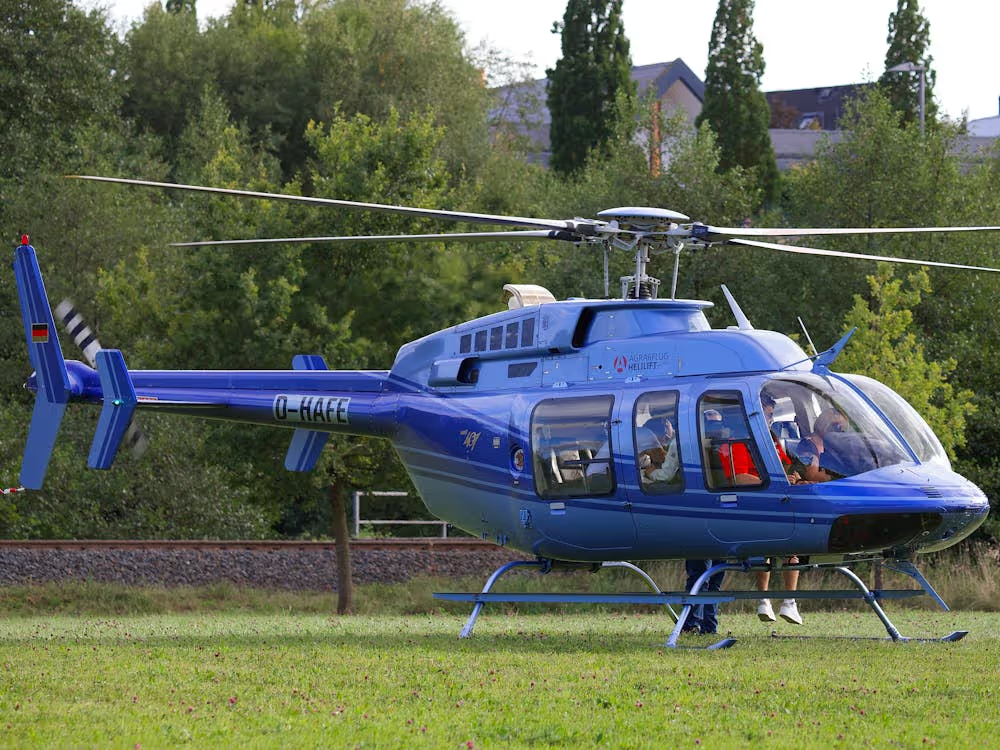
blue helicopter with passengers inside parked on grass in front of trees
Photo by Viktor Färber from Pexels

How Vibration Impacts Passenger Comfort

Rattling that radiates through the cabin can do more than just make flight uncomfortable. It can have very real effects on the human body based on intensity, frequency, and duration. 

  • Lower Frequencies: Cause stomach discomfort
  • Medium Frequencies: Affect the neck and shoulders
  • High Frequencies: Experienced in the skull, eyes, and jaw

These effects mean that discomfort and fatigue are not uncommon among passengers on lengthy flights.

passengers in a helicopter cockpit with high-rise buildings of Seattle out the window
Photo by Patrick Perkins from Unsplash

During long-duration flights or emergency helicopter missions—such as medical evacuation and disaster response—minimizing vibration becomes especially important, as maintaining comfort and reducing passenger stress are vital.

How Vibration Impacts Aircraft Safety

Sustained oscillation has direct safety implications for both crews and aircraft that go beyond just comfort considerations.

Effects on Pilots

  • Increased fatigue
  • Reduced focus and reaction time
  • Greater risk of pilot error during complex operations

Studies have determined that excessive vibration, noise, and pilot fatigue are a possible cause of helicopter accidents resulting from pilot error.

Effects on Aircraft Systems

  • Decreased lifespan of flight-critical hardware
  • Oil leaks, cracks, and other sudden damage to parts
  • Abrasive wear, fretting, or galling between surfaces
  • Malfunction of electronic instruments and equipment (like flight data and navigation systems) resulting in inaccurate readings or total failure

Even modern avionics and advanced navigation systems are vulnerable to sustained vibrations, and malfunctions or failure of critical equipment can be deadly. That’s why regular scheduled maintenance and strict safety protocols are essential.
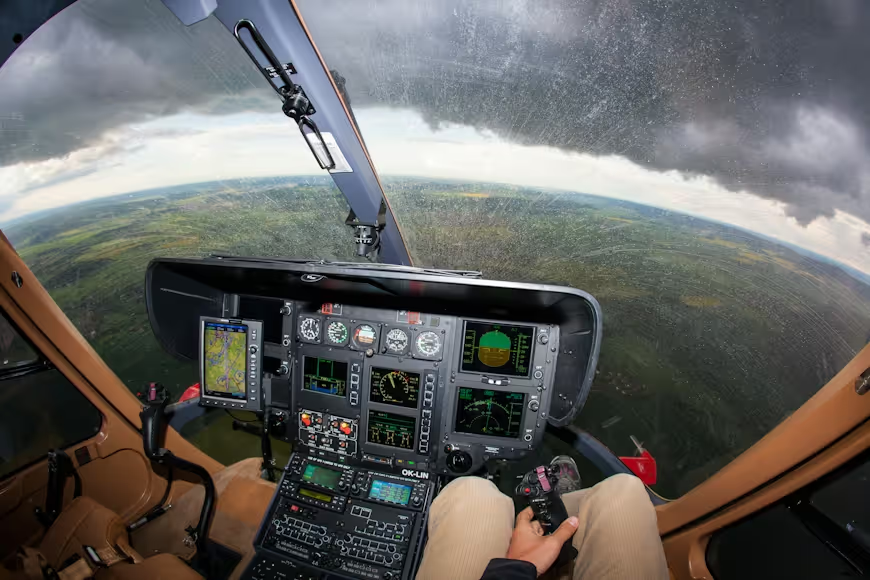
man flying a helicopter over green fields on a rainy day
Photo by Ivo Lukacovic from Unsplash

Maintenance Implications of Sustained Movement

Managing vibration is a core aspect of helicopter maintenance. Technicians must first identify the type and severity so they can promptly address any issues. A vibration analysis helps them pinpoint the sources of any problems. 

While extremely high vibration levels are considered dangerous, even moderate levels contribute to long-term damage when ignored. That’s why effective management supports:

  • Longer life of aircraft components
  • Reduced maintenance costs
  • Improved safety and reliability

Solutions for Managing and Reducing Vibration

Some helicopter vibrations are unavoidable and can only be minimized—never fully eliminated. Aside from maintenance work to remedy specific issues, this rhythmic movement can also be addressed through:

  • Improved aircraft design
  • Installation of vibrational filtering and dampening equipment
  • Use of active devices for reduction

Improved Aircraft Design

Design enhancements like improved blade design and shape (possibly including flaps) and reduction of aerodynamic excitation can yield lower vibration levels. 
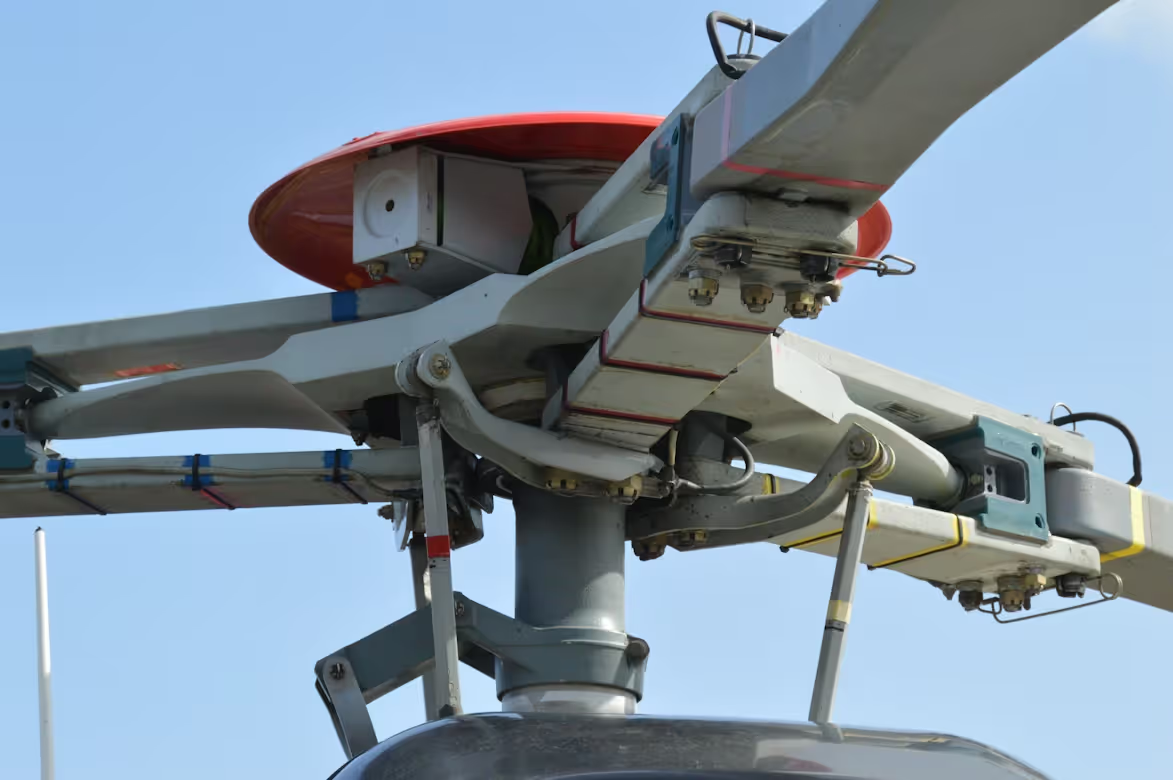
close up of a white and red helicopter rotor flying in blue skies
Photo by Guillaume from Unsplash 

Installation of Filtering and Dampening Equipment

The other approach is to filter vibrations by installing:

  • Tuned vibration absorbers (TVAs) and tuned mass dampers (TMDs)
  • Dynamic rotor system absorbers or isolators
  • An active control vibration reduction system
  • Fuselage dynamics optimizations

Use of Active Devices

There are also several active devices that help manage and reduce vibrations, including:

  • Sensors that measure frequency and intensity
  • Software that determines ideal counteractions
  • Actuators that perform the desirable actions
  • Adaptive tuned vibration absorbers (ATVAs), which allow computers to change resonant frequency during flight based on measurements and algorithms

Final Thoughts: Importance of Vibrational Management and Reduction

In modern aviation, controlling unwanted vibrations is more important than ever for several reasons:

Operators with deep experience understand how aircraft configuration, load dynamics, weather, and other flight aspects interact. This knowledge helps crews like Helicopter Express anticipate vibrational challenges and adjust plans before issues arise.

Helicopter Express: Stable Aircraft. Reliable Operations.

Vibration management is more than just a small detail in aviation. It directly influences mission reliability and precision, aircraft longevity, maintenance costs, passenger comfort, pilot performance, and flight safety.

Whether supporting construction projects, capturing cinematic footage from above, fighting wildfires from the skies, or assisting with disaster response, stable aircraft performance matters. At Helicopter Express, operational integrity and proactive maintenance are central to everything we do. 

Our commitment to safety and reliability shows up in several key ways:

  • Rigorous Maintenance Oversight: Our technicians protect critical systems and reduce downtime through proactive inspections, vibration monitoring, and strict maintenance protocols.
  • Experienced Pilots: Our elite pilots and crews understand how to navigate complex environments with extreme precision and a deep commitment to safety.
  • Well-Maintained Fleet: We continuously invest in our fleet to support smoother, more stable flight.
  • Thorough Project Planning: We work closely with clients to align safety, timing, budgets, and performance expectations.

If your project requires professional aerial services backed by disciplined maintenance protocols and elite crews, contact us today. Helicopter Express supports missions across Georgia, the United States, and abroad. Let’s get to work.

Understanding Helicopter Vibration: Causes, Effects, and Solutions

If you’ve ever flown in a helicopter, you may have noticed something beyond the extraordinary views and cabin noise; intense vibrations are part of the experience. The aircraft hums, the floor vibrates under your feet, and the seat rattles against your back. This vibration occurs because rotor blades spin at high speeds in a constantly changing environment.

While some vibration is natural and necessary, too much can degrade components, exhaust pilots, and even compromise flight safety. Controlling these movements is essential for reliable operations across a variety of industries, from heavy-lift construction to medical evacuation (and everything in between).

In this guide, you’ll learn what this vibration actually is, where it comes from, how it affects passengers and aircraft, and the strategies providers like Helicopter Express use to reduce its impact. Whether you’re a project manager, aspiring maintenance technician, or simply curious about how rotorcraft work, this breakdown will provide the insights you’re seeking.

What Is Helicopter Vibration?

Helicopter vibration is the rhythmic shaking that occurs as the aircraft’s rotating components cut through uneven and dynamic airflow. Helicopters naturally experience more intense vibrations than airplanes due to their construction and aerodynamics. In fact, vibration levels are typically five times higher in rotorcraft than in fixed-wing aircraft.

While some level of rattling is inevitable, keeping it within predictable limits helps ensure safe and comfortable flight.

What Causes Helicopter Vibration?

These oscillations result from a combination of mechanical interactions and aerodynamic forces. The most common sources of vibration include:

  • Main Rotor: Blade imbalance and aerodynamic changes
  • Tail Rotor: Imbalance or misalignment in high-speed components
  • Powerplant and Transmission Systems: Quickly rotating engines, gears, and fans
  • Transient Influences: Controls, wind gusts, and more

Three Key Types of Rotorcraft Vibrations

Understanding the three main categories of vibrations—frequency, lateral/vertical, and ground resonance—helps maintenance teams diagnose issues, fix them promptly, and keep everything running optimally.

Frequency Vibrations

Frequency vibrations are caused by certain types of equipment malfunctions. They’re categorized as low, medium, or high depending on how fast they occur.

  • Low Frequency: These are typically tied to issues with the main rotor. They may indicate an imbalance or aerodynamic disturbances during rotation.

  • Medium Frequency: Mid-level vibrations typically point to loose or worn components that affect the primary lifting system.

  • High Frequency: These can occur when components like gears, engines, or fans rotate quicker than the tail rotor.

Regular aircraft maintenance is necessary to prevent frequency vibrations from occurring in the first place.

Lateral and Vertical Vibrations

Vibrations are also described by the direction of their movement. Lateral and vertical vibrations result from misaligned or impaired parts associated with the aircraft’s main rotor.

  • Lateral: This side-to-side movement is caused by an imbalance or cracked, loose, or worn components.

  • Vertical: Up-and-down movement typically points to blade misalignment. 

Even small deviations in blade alignment or minimal part damage can amplify these vibrations. That’s why proactive maintenance is crucial to balance blades and ensure they remain in good working condition. 

Ground Resonance Vibrations

These occur only when the aircraft is on the ground. Because they have the potential to destroy the helicopter, ground resonance vibrations are the most serious type. 

They can occur when:

  • Rotor components are imbalanced
  • Tire pressure is uneven
  • Landing gear is improperly adjusted
  • Dampeners are worn or defective

Because these vibrations can escalate quickly, strict maintenance protocols and immediate corrective action are required.

blue helicopter with passengers inside parked on grass in front of trees
Photo by Viktor Färber from Pexels

How Vibration Impacts Passenger Comfort

Rattling that radiates through the cabin can do more than just make flight uncomfortable. It can have very real effects on the human body based on intensity, frequency, and duration. 

  • Lower Frequencies: Cause stomach discomfort
  • Medium Frequencies: Affect the neck and shoulders
  • High Frequencies: Experienced in the skull, eyes, and jaw

These effects mean that discomfort and fatigue are not uncommon among passengers on lengthy flights.

passengers in a helicopter cockpit with high-rise buildings of Seattle out the window
Photo by Patrick Perkins from Unsplash

During long-duration flights or emergency helicopter missions—such as medical evacuation and disaster response—minimizing vibration becomes especially important, as maintaining comfort and reducing passenger stress are vital.

How Vibration Impacts Aircraft Safety

Sustained oscillation has direct safety implications for both crews and aircraft that go beyond just comfort considerations.

Effects on Pilots

  • Increased fatigue
  • Reduced focus and reaction time
  • Greater risk of pilot error during complex operations

Studies have determined that excessive vibration, noise, and pilot fatigue are a possible cause of helicopter accidents resulting from pilot error.

Effects on Aircraft Systems

  • Decreased lifespan of flight-critical hardware
  • Oil leaks, cracks, and other sudden damage to parts
  • Abrasive wear, fretting, or galling between surfaces
  • Malfunction of electronic instruments and equipment (like flight data and navigation systems) resulting in inaccurate readings or total failure

Even modern avionics and advanced navigation systems are vulnerable to sustained vibrations, and malfunctions or failure of critical equipment can be deadly. That’s why regular scheduled maintenance and strict safety protocols are essential.

man flying a helicopter over green fields on a rainy day
Photo by Ivo Lukacovic from Unsplash

Maintenance Implications of Sustained Movement

Managing vibration is a core aspect of helicopter maintenance. Technicians must first identify the type and severity so they can promptly address any issues. A vibration analysis helps them pinpoint the sources of any problems. 

While extremely high vibration levels are considered dangerous, even moderate levels contribute to long-term damage when ignored. That’s why effective management supports:

  • Longer life of aircraft components
  • Reduced maintenance costs
  • Improved safety and reliability

Solutions for Managing and Reducing Vibration

Some helicopter vibrations are unavoidable and can only be minimized—never fully eliminated. Aside from maintenance work to remedy specific issues, this rhythmic movement can also be addressed through:

  • Improved aircraft design
  • Installation of vibrational filtering and dampening equipment
  • Use of active devices for reduction

Improved Aircraft Design

Design enhancements like improved blade design and shape (possibly including flaps) and reduction of aerodynamic excitation can yield lower vibration levels. 

close up of a white and red helicopter rotor flying in blue skies
Photo by Guillaume from Unsplash 

Installation of Filtering and Dampening Equipment

The other approach is to filter vibrations by installing:

  • Tuned vibration absorbers (TVAs) and tuned mass dampers (TMDs)
  • Dynamic rotor system absorbers or isolators
  • An active control vibration reduction system
  • Fuselage dynamics optimizations

Use of Active Devices

There are also several active devices that help manage and reduce vibrations, including:

  • Sensors that measure frequency and intensity
  • Software that determines ideal counteractions
  • Actuators that perform the desirable actions
  • Adaptive tuned vibration absorbers (ATVAs), which allow computers to change resonant frequency during flight based on measurements and algorithms

Final Thoughts: Importance of Vibrational Management and Reduction

In modern aviation, controlling unwanted vibrations is more important than ever for several reasons:

Operators with deep experience understand how aircraft configuration, load dynamics, weather, and other flight aspects interact. This knowledge helps crews like Helicopter Express anticipate vibrational challenges and adjust plans before issues arise.

Helicopter Express: Stable Aircraft. Reliable Operations.

Vibration management is more than just a small detail in aviation. It directly influences mission reliability and precision, aircraft longevity, maintenance costs, passenger comfort, pilot performance, and flight safety.

Whether supporting construction projects, capturing cinematic footage from above, fighting wildfires from the skies, or assisting with disaster response, stable aircraft performance matters. At Helicopter Express, operational integrity and proactive maintenance are central to everything we do. 

Our commitment to safety and reliability shows up in several key ways:

  • Rigorous Maintenance Oversight: Our technicians protect critical systems and reduce downtime through proactive inspections, vibration monitoring, and strict maintenance protocols.
  • Experienced Pilots: Our elite pilots and crews understand how to navigate complex environments with extreme precision and a deep commitment to safety.
  • Well-Maintained Fleet: We continuously invest in our fleet to support smoother, more stable flight.
  • Thorough Project Planning: We work closely with clients to align safety, timing, budgets, and performance expectations.

If your project requires professional aerial services backed by disciplined maintenance protocols and elite crews, contact us today. Helicopter Express supports missions across Georgia, the United States, and abroad. Let’s get to work.

Make us your go-to team.

Our highly skilled pilots have the experience and equipment needed to rise to any challenge. When you need experts you can trust, give us a call.