The Ripple Effect: How Helicopter Services Boost Local Economies

Learn how helicopter services create jobs, drive tourism revenue, strengthen critical infrastructure, and reduce healthcare costs while boosting local economies.

High above city skylines and remote mountain ranges, helicopters are hard at work. They place HVAC systems on rooftops, rescue stranded hikers, and deliver aid to regions decimated by natural disasters. These operations represent more than just feats of aviation; they set off a chain reaction of economic benefits for local communities and individuals across the globe.

Helicopter services create jobs, help build vital infrastructure, and save money by preventing financial losses during critical system failures and large-scale emergencies. Whether operating in bustling urban centers or navigating rural areas, these versatile aircraft serve as catalysts of economic growth.

In this blog, we’ll explore the ripple effect helicopter services have on the economy, from the generation of tourism revenue to the mitigation of financial devastation during natural disasters.

Creating Employment Opportunities

Helicopter operations are powerful job creators, supporting a diverse workforce in the air and on the ground. Every flight relies on a network of skilled professionals who ensure safety and reliability, including pilots, maintenance technicians, dispatchers, and ground crews. 

Beyond these direct roles, rotorcraft activity stimulates employment across sectors like fuel supply, hospitality, and ground transportation. As the demand for helicopter services continues to expand, so does the need for trained personnel. By 2038, the global aviation industry is expected to face a shortage of over 60,000 helicopter pilots, revealing significant job opportunities and ongoing sector growth. 

And in the U.S. alone, the helicopter pilot job market is projected to expand by 6% from 2018–2028, reflecting the need for aerial services in adjacent industries like tourism and transportation.

Sectors like railroads, mining, and agriculture are also increasingly turning to rotorcraft to improve efficiency and safety, creating additional employment opportunities and reinforcing aviation’s role as an economic catalyst.

Driving Tourism and Local Revenue

Beyond employment, helicopter sightseeing is a major prosperity driver. This is especially true in vibrant urban centers like New York City or remote areas that boast scenic views, like the volcanoes of Hawaii or the Grand Canyon in Arizona. In 2024, the helicopter tourism market was valued at $5.7 billion, and it shows no signs of slowing down. In fact, the industry is anticipated to reach $11.8 billion by 2033. 

Over 2 million tourists take helicopter tours annually in the U.S. This generates over $500 million in yearly revenue, with visitors spending money on local accommodations, dining, attractions, and events as well. This money pours into the economy, boosting job creation and supporting neighborhood businesses that rely on the influx of tourist dollars.

happy young couple looking into each other's eyes as they climb out of a blue helicopter
Photo by Anna Panchenko from Pexels 

Beyond traditional sightseeing, helicopters also enable sports event coverage that attracts spectators and private charters that bring high-value business travelers to local communities for meetings, conferences, and events.

Accelerating Construction and Infrastructure Development

Aerial services enhance business connectivity by providing rapid access to remote or congested areas. This accessibility attracts new investments and fuels the growth of local industries. But the economic impact of helicopter services on major construction projects extends beyond the construction site itself, creating ripple effects throughout the economy. 

One of the most visible examples of this impact can be seen in aerial lifting operations. Heavy-lift aircraft services accelerate construction project timelines by:

  • Quickly transporting crews and equipment
  • Lifting and placing heavy materials more efficiently
  • Reducing the potential for costly mistakes

By streamlining these tasks, helicopter operations don’t just make construction faster—they make it more profitable. This increased efficiency directly translates into economic benefits, as projects that are completed faster result in quicker returns on investment and reduced financing costs. Whether building a skyscraper or developing smart city infrastructure, helicopters enable ambitious projects that support development and stimulate local economies. 

Heavy-lift construction helicopters also assist with the building of roads, bridges, and other crucial infrastructure that increases available transportation options. This leads to the revitalization of underserved areas as well as increased property values, which further drive fiscal growth. 

Powering Energy and Utility Systems

The energy and utility sectors rely heavily on the helicopter industry as well. Helicopters facilitate the construction, inspection, maintenance, and emergency repairs of crucial infrastructure, like bridges, power lines, cell towers, and more. These operations keep travelers and power flowing to homes and businesses, preventing costly outages and catastrophic failures that can harm the market.
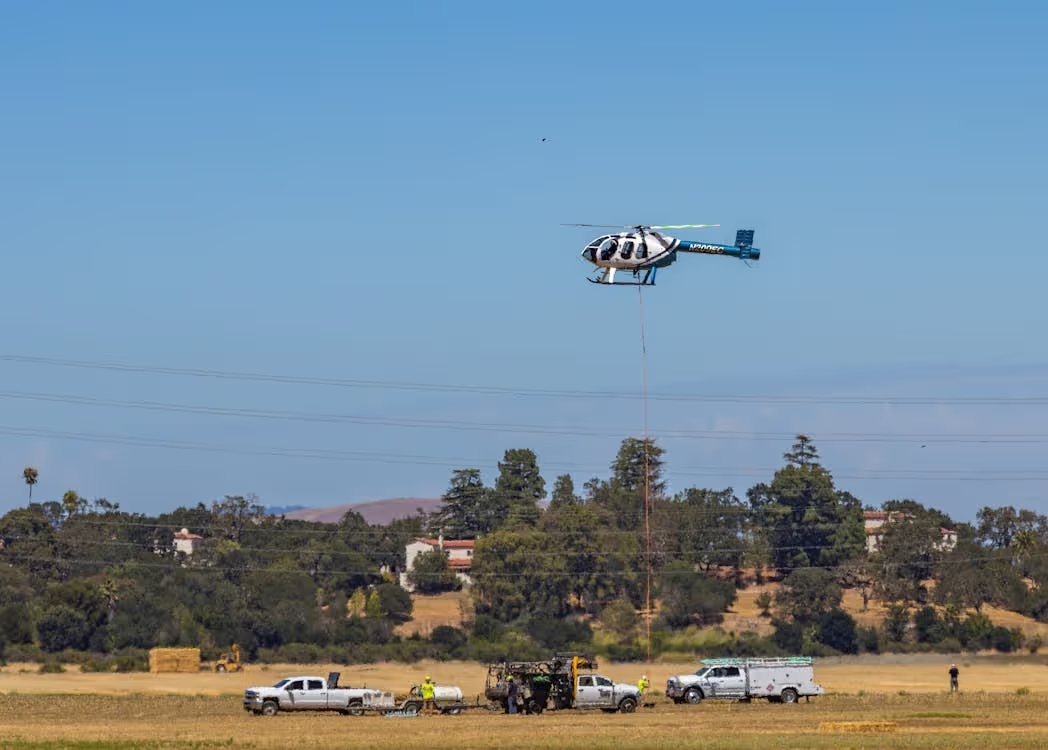
blue and white helicopter hovering over a power line providing support to utility workers on the ground below
Photo by Robert So from Pexels

When power lines fail or transmission towers require maintenance and repairs, helicopters can easily reach remote areas, navigate rough terrain, gather precise data, and inspect and fix vast networks in record time. They reduce safety risks for workers, improve reliability for customers, and provide cost savings for utility providers—all while minimizing downtime and economic disruption.

Saving Lives and Reducing Costs During Emergencies

Aerial services are also valuable tools for emergency response operations. They support medical transport, law enforcement, disaster response, and firefighting missions, reducing financial losses from delays and crises.

Helicopter Emergency Medical Services

Helicopter emergency medical services (HEMS) play a key role in delivering care to patients in crisis situations, like individuals suffering medical distress in remote areas where ground transportation would take far too long. Rotary aircraft can travel directly to critically ill or injured patients, bypassing roads, geographical barriers, and traffic congestion. They can also be staffed with highly trained paramedics and physicians trained to use in-flight ventilators, cardiac monitors, and other equipment to stabilize patients before they arrive at the hospital.

The speed advantage helicopters provide in emergency situations has profound economic implications. Faster response times mean increased survival rates for trauma patients, which results in:

  • Lower healthcare costs
  • Reduced hospital stays
  • Quicker returns to productivity for the ill and injured

Healthier populations are far more productive, creating local prosperity that positively impacts communities.

Law Enforcement Services

Helicopters often assist law enforcement officers by providing aerial surveillance, tracking fleeing suspects, and rapidly responding to dangerous situations that threaten residents. 

Economic benefits of law enforcement aerial operations include:

  • Reduced crime
  • Faster case resolution
  • Improved safety for officers and the communities they protect

By helping agencies operate more efficiently and effectively, helicopter support reduces the long-term costs associated with crime, enhances public safety, and fosters more stable, economically resilient communities.

Disaster Relief Missions

Natural disasters like tornadoes, earthquakes, and hurricanes can devastate local economies. In the first half of 2025, the U.S. alone experienced 14 separate weather and climate disasters costing over $100 billion in damages. Los Angeles wildfires contributed to $61.2 billion of that total, setting a new record for the highest single wildfire cost ever recorded.
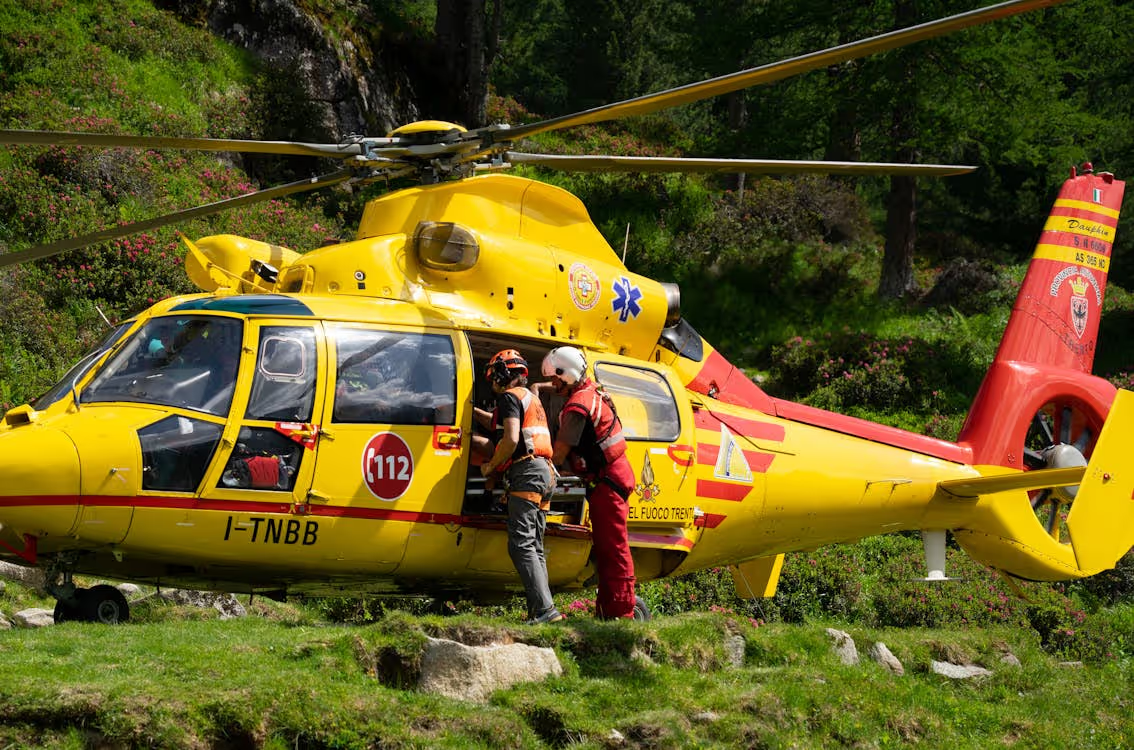
paramedic and disaster aid worker helping someone into a yellow and red rescue helicopter in the forest
Photo by Catalin Buescu from Pexels

Thankfully, emergency helicopter services are capable of mitigating damage following natural disasters by providing rapid response capabilities and accelerating recovery efforts. 

Here’s how they help:

  • Transportation of emergency aid workers to crisis zones
  • Supply delivery
  • Evacuation of victims to nearby hospitals
  • Damage surveys and assessments
  • Reconstruction support in areas with impassable roads and destroyed infrastructure

Multi-helicopter emergency response systems and strategies maximize efficiency during large-scale disasters, mitigating economic devastation and restoring foundational operations faster.

Search and Rescue Operations

Search and rescue helicopters save lives in situations where terrain is tough and time is critical. Whether uncovering a lost hiker from a dense forest or rescuing individuals from a capsized boat at sea, aerial search and rescue teams pull off feats that ground-based teams simply can’t match.

Beyond saving lives and bringing closure to families and their communities, helicopter SAR operations prevent extended search efforts that consume public resources and reduce the need for expensive, large-scale ground search teams.

Aerial Firefighting

The United States saw nearly 65,000 wildfires in 2024 alone, which collectively burned almost 9 million acres across the country. In areas where wildfires threaten the surrounding land and economy, firefighting helicopters protect lives, property, and natural resources. 

Using specialized equipment like Bambi Buckets, rotorcraft can accurately target hot spots and extinguish wildfires with solid columns of fire retardant or water, containing fires before they spread to populated areas or critical infrastructure.
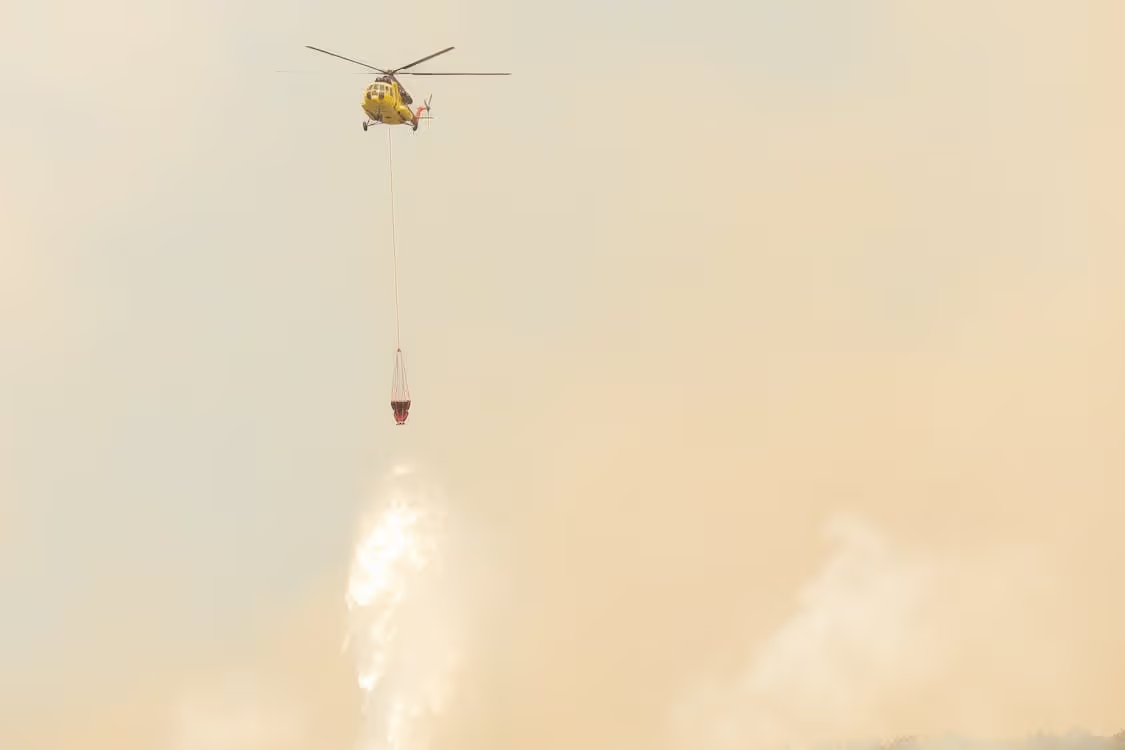
yellow aerial firefighting helicopter using a Bambi Bucket to drop water onto a wildfire below
Photo by Aydın Photography from Pexels

The economic impact of aerial firefighting is significant; by extinguishing fires and preventing their spread, helicopter operations protect homes, businesses, power lines, roads, and other infrastructure that would cost millions to replace. They also preserve forests and recreational areas that support tourism and natural resource industries.

Elevate Your Project and Invest in Your Community’s Growth With Helicopter Express

The benefits of helicopters ripple through communities, boosting the economy in countless ways. These services create jobs, enhance cities, strengthen tourism, prevent costly outages, and save lives. 

At Helicopter Express, we’re proud to help communities thrive, from our base in North Georgia to the regions we serve across the globe. Whether you need construction support, emergency response operations, or another specialized service, we bring the expertise and equipment that your project demands. 

Ready to Get to Work?

If you’re interested in learning how our aerial services can benefit your operation and stimulate your local economy, give us a call or send us a message. We’ll show you how Helicopter Express can help you achieve your goals on time and on budget.

The Ripple Effect: How Helicopter Services Boost Local Economies

High above city skylines and remote mountain ranges, helicopters are hard at work. They place HVAC systems on rooftops, rescue stranded hikers, and deliver aid to regions decimated by natural disasters. These operations represent more than just feats of aviation; they set off a chain reaction of economic benefits for local communities and individuals across the globe.

Helicopter services create jobs, help build vital infrastructure, and save money by preventing financial losses during critical system failures and large-scale emergencies. Whether operating in bustling urban centers or navigating rural areas, these versatile aircraft serve as catalysts of economic growth.

In this blog, we’ll explore the ripple effect helicopter services have on the economy, from the generation of tourism revenue to the mitigation of financial devastation during natural disasters.

Creating Employment Opportunities

Helicopter operations are powerful job creators, supporting a diverse workforce in the air and on the ground. Every flight relies on a network of skilled professionals who ensure safety and reliability, including pilots, maintenance technicians, dispatchers, and ground crews. 

Beyond these direct roles, rotorcraft activity stimulates employment across sectors like fuel supply, hospitality, and ground transportation. As the demand for helicopter services continues to expand, so does the need for trained personnel. By 2038, the global aviation industry is expected to face a shortage of over 60,000 helicopter pilots, revealing significant job opportunities and ongoing sector growth. 

And in the U.S. alone, the helicopter pilot job market is projected to expand by 6% from 2018–2028, reflecting the need for aerial services in adjacent industries like tourism and transportation.

Sectors like railroads, mining, and agriculture are also increasingly turning to rotorcraft to improve efficiency and safety, creating additional employment opportunities and reinforcing aviation’s role as an economic catalyst.

Driving Tourism and Local Revenue

Beyond employment, helicopter sightseeing is a major prosperity driver. This is especially true in vibrant urban centers like New York City or remote areas that boast scenic views, like the volcanoes of Hawaii or the Grand Canyon in Arizona. In 2024, the helicopter tourism market was valued at $5.7 billion, and it shows no signs of slowing down. In fact, the industry is anticipated to reach $11.8 billion by 2033. 

Over 2 million tourists take helicopter tours annually in the U.S. This generates over $500 million in yearly revenue, with visitors spending money on local accommodations, dining, attractions, and events as well. This money pours into the economy, boosting job creation and supporting neighborhood businesses that rely on the influx of tourist dollars.

happy young couple looking into each other's eyes as they climb out of a blue helicopter
Photo by Anna Panchenko from Pexels 

Beyond traditional sightseeing, helicopters also enable sports event coverage that attracts spectators and private charters that bring high-value business travelers to local communities for meetings, conferences, and events.

Accelerating Construction and Infrastructure Development

Aerial services enhance business connectivity by providing rapid access to remote or congested areas. This accessibility attracts new investments and fuels the growth of local industries. But the economic impact of helicopter services on major construction projects extends beyond the construction site itself, creating ripple effects throughout the economy. 

One of the most visible examples of this impact can be seen in aerial lifting operations. Heavy-lift aircraft services accelerate construction project timelines by:

  • Quickly transporting crews and equipment
  • Lifting and placing heavy materials more efficiently
  • Reducing the potential for costly mistakes

By streamlining these tasks, helicopter operations don’t just make construction faster—they make it more profitable. This increased efficiency directly translates into economic benefits, as projects that are completed faster result in quicker returns on investment and reduced financing costs. Whether building a skyscraper or developing smart city infrastructure, helicopters enable ambitious projects that support development and stimulate local economies. 

Heavy-lift construction helicopters also assist with the building of roads, bridges, and other crucial infrastructure that increases available transportation options. This leads to the revitalization of underserved areas as well as increased property values, which further drive fiscal growth. 

Powering Energy and Utility Systems

The energy and utility sectors rely heavily on the helicopter industry as well. Helicopters facilitate the construction, inspection, maintenance, and emergency repairs of crucial infrastructure, like bridges, power lines, cell towers, and more. These operations keep travelers and power flowing to homes and businesses, preventing costly outages and catastrophic failures that can harm the market.

blue and white helicopter hovering over a power line providing support to utility workers on the ground below
Photo by Robert So from Pexels

When power lines fail or transmission towers require maintenance and repairs, helicopters can easily reach remote areas, navigate rough terrain, gather precise data, and inspect and fix vast networks in record time. They reduce safety risks for workers, improve reliability for customers, and provide cost savings for utility providers—all while minimizing downtime and economic disruption.

Saving Lives and Reducing Costs During Emergencies

Aerial services are also valuable tools for emergency response operations. They support medical transport, law enforcement, disaster response, and firefighting missions, reducing financial losses from delays and crises.

Helicopter Emergency Medical Services

Helicopter emergency medical services (HEMS) play a key role in delivering care to patients in crisis situations, like individuals suffering medical distress in remote areas where ground transportation would take far too long. Rotary aircraft can travel directly to critically ill or injured patients, bypassing roads, geographical barriers, and traffic congestion. They can also be staffed with highly trained paramedics and physicians trained to use in-flight ventilators, cardiac monitors, and other equipment to stabilize patients before they arrive at the hospital.

The speed advantage helicopters provide in emergency situations has profound economic implications. Faster response times mean increased survival rates for trauma patients, which results in:

  • Lower healthcare costs
  • Reduced hospital stays
  • Quicker returns to productivity for the ill and injured

Healthier populations are far more productive, creating local prosperity that positively impacts communities.

Law Enforcement Services

Helicopters often assist law enforcement officers by providing aerial surveillance, tracking fleeing suspects, and rapidly responding to dangerous situations that threaten residents. 

Economic benefits of law enforcement aerial operations include:

  • Reduced crime
  • Faster case resolution
  • Improved safety for officers and the communities they protect

By helping agencies operate more efficiently and effectively, helicopter support reduces the long-term costs associated with crime, enhances public safety, and fosters more stable, economically resilient communities.

Disaster Relief Missions

Natural disasters like tornadoes, earthquakes, and hurricanes can devastate local economies. In the first half of 2025, the U.S. alone experienced 14 separate weather and climate disasters costing over $100 billion in damages. Los Angeles wildfires contributed to $61.2 billion of that total, setting a new record for the highest single wildfire cost ever recorded.

paramedic and disaster aid worker helping someone into a yellow and red rescue helicopter in the forest
Photo by Catalin Buescu from Pexels

Thankfully, emergency helicopter services are capable of mitigating damage following natural disasters by providing rapid response capabilities and accelerating recovery efforts. 

Here’s how they help:

  • Transportation of emergency aid workers to crisis zones
  • Supply delivery
  • Evacuation of victims to nearby hospitals
  • Damage surveys and assessments
  • Reconstruction support in areas with impassable roads and destroyed infrastructure

Multi-helicopter emergency response systems and strategies maximize efficiency during large-scale disasters, mitigating economic devastation and restoring foundational operations faster.

Search and Rescue Operations

Search and rescue helicopters save lives in situations where terrain is tough and time is critical. Whether uncovering a lost hiker from a dense forest or rescuing individuals from a capsized boat at sea, aerial search and rescue teams pull off feats that ground-based teams simply can’t match.

Beyond saving lives and bringing closure to families and their communities, helicopter SAR operations prevent extended search efforts that consume public resources and reduce the need for expensive, large-scale ground search teams.

Aerial Firefighting

The United States saw nearly 65,000 wildfires in 2024 alone, which collectively burned almost 9 million acres across the country. In areas where wildfires threaten the surrounding land and economy, firefighting helicopters protect lives, property, and natural resources. 

Using specialized equipment like Bambi Buckets, rotorcraft can accurately target hot spots and extinguish wildfires with solid columns of fire retardant or water, containing fires before they spread to populated areas or critical infrastructure.

yellow aerial firefighting helicopter using a Bambi Bucket to drop water onto a wildfire below
Photo by Aydın Photography from Pexels

The economic impact of aerial firefighting is significant; by extinguishing fires and preventing their spread, helicopter operations protect homes, businesses, power lines, roads, and other infrastructure that would cost millions to replace. They also preserve forests and recreational areas that support tourism and natural resource industries.

Elevate Your Project and Invest in Your Community’s Growth With Helicopter Express

The benefits of helicopters ripple through communities, boosting the economy in countless ways. These services create jobs, enhance cities, strengthen tourism, prevent costly outages, and save lives. 

At Helicopter Express, we’re proud to help communities thrive, from our base in North Georgia to the regions we serve across the globe. Whether you need construction support, emergency response operations, or another specialized service, we bring the expertise and equipment that your project demands. 

Ready to Get to Work?

If you’re interested in learning how our aerial services can benefit your operation and stimulate your local economy, give us a call or send us a message. We’ll show you how Helicopter Express can help you achieve your goals on time and on budget.

Make us your go-to team.

Our highly skilled pilots have the experience and equipment needed to rise to any challenge. When you need experts you can trust, give us a call.