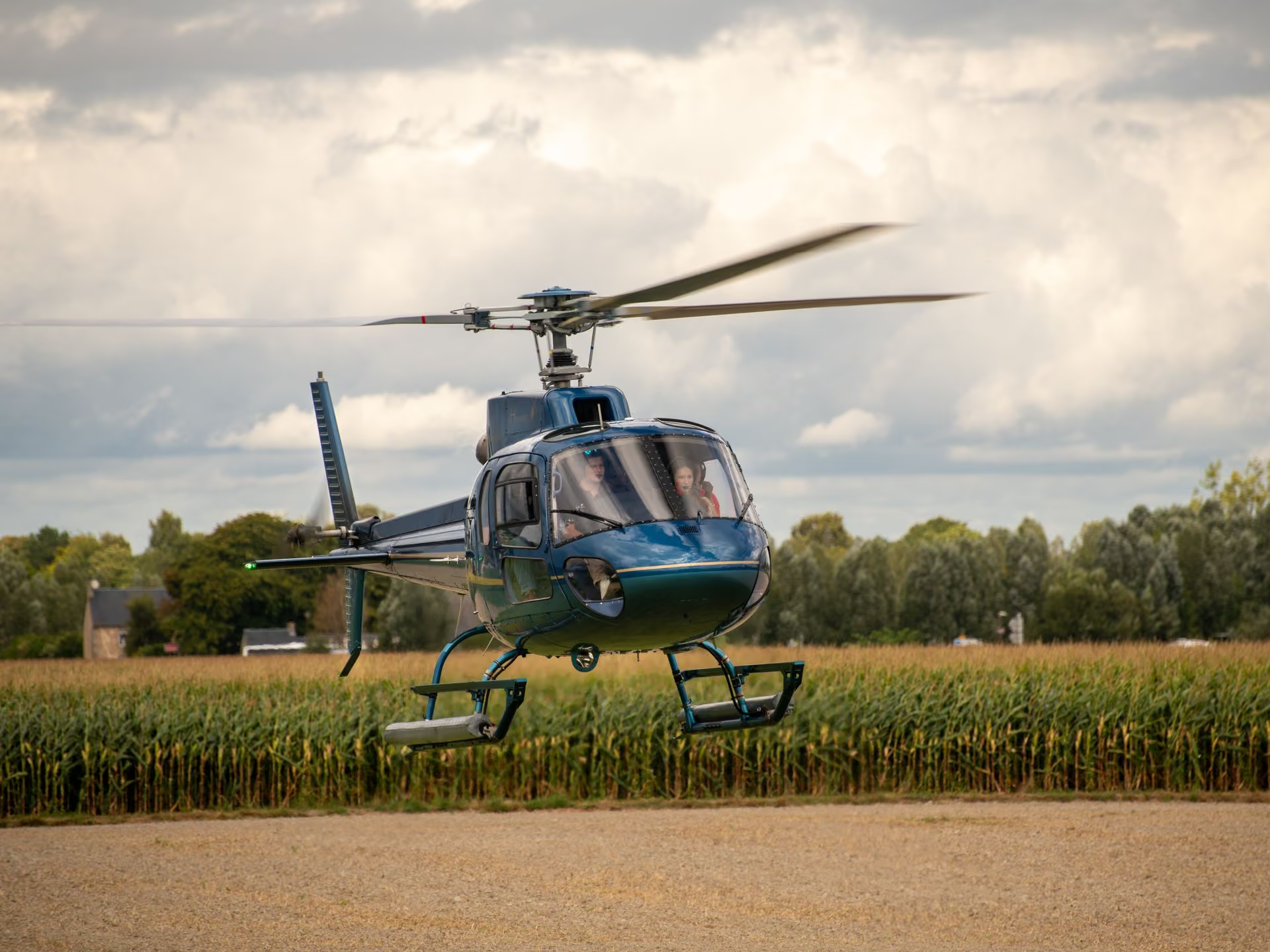
Precision Agriculture Tools: Helicopter-Mounted Spray Systems Explained

Learn what helicopter-mounted spray systems are, how they support precision agriculture, and the benefits of helicopter-based systems over more traditional methods.

Every agricultural season, farmers face similar challenges: too many acres, too little time, and frustratingly narrow windows for taking action to protect crops. The effort and money farmers pour into maintaining farmland means a lot is at stake. If a frost rolls in overnight or a pest outbreak starts to spread too quickly, yield losses may follow.

A helicopter-mounted spray system offers quick, accurate coverage and access to fields with challenging terrain that ground-based systems can’t match. That’s why this powerful tool has become so crucial for the targeted application of fertilizers, pesticides, herbicides, and frost treatments.

Below, we explain how helicopter sprayers work, the elements that make them so effective, the key ways they support precision agriculture, and the benefits they provide over more traditional methods. By the end of this blog, you’ll be able to make an informed decision about whether helicopter support is right for your operation.

What Are Helicopter-Mounted Spray Systems?

Helicopter-mounted spray systems enable trained helicopter crews to distribute pesticides, herbicides, and fertilizers over specific areas of farmland with increased precision. While tractor-mounted and hand-held sprayers were the go-to application strategy for decades, helicopter-mounted crop spraying is often the most effective way to deliver product to large areas in a short period— like when frost is imminent or crop diseases are spreading quickly.

How Helicopter-Based Crop Spraying Works

These spray systems use a tank to store products such as pesticides, herbicides, fungicides, or fertilizers. A pump delivers the selected treatment to the boom and nozzles. Nozzles transform liquid treatments into droplets.

A key advantage of hiring a rotorcraft team is that the helicopter’s rotor downwash pushes droplets of product deeper into the crop canopy, improving penetration. This enables the pesticide, herbicide, or fertilizer to reach the underside of leaves where pests and disease are often concentrated.

Helicopters are often equipped with a global positioning system (GPS) and flow-control systems so aerial crews can adjust application in real time. This helps the pilot maintain a consistent rate despite varying field shapes and changes in external factors like wind speed.
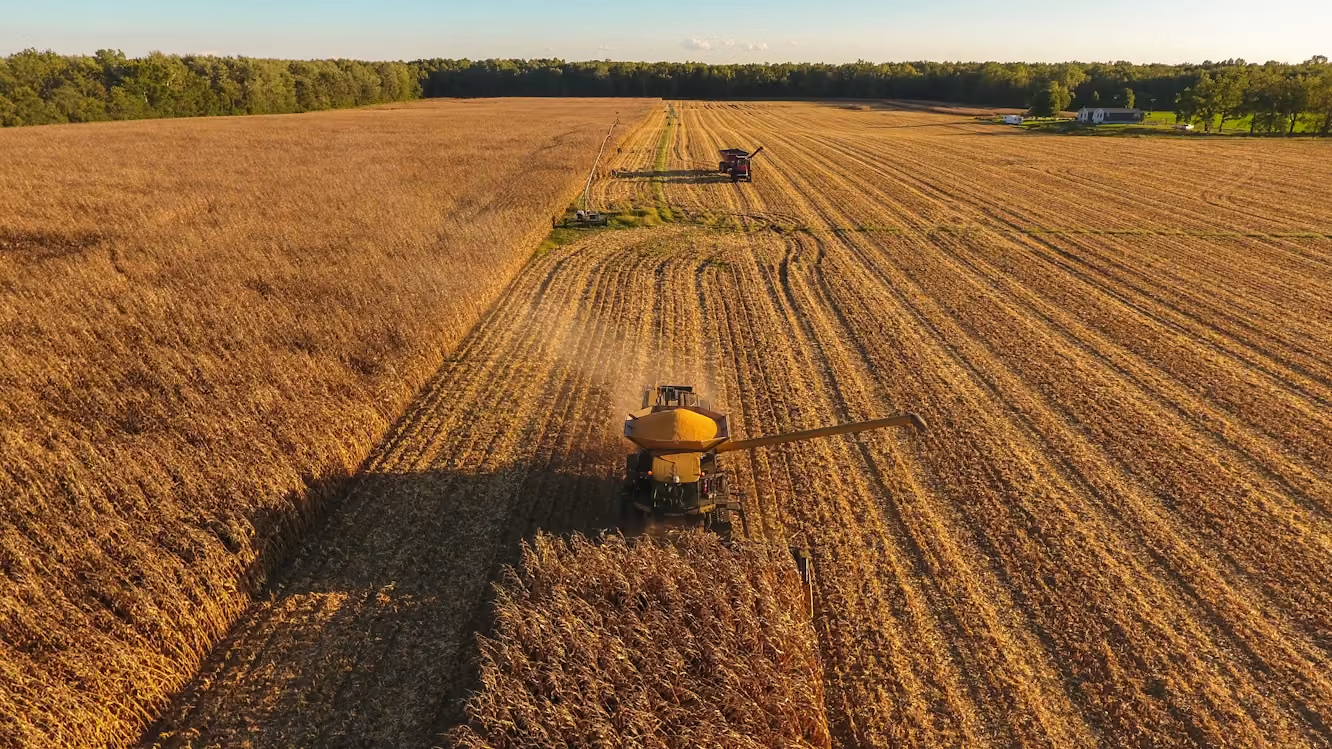
low aerial view of a tractor plowing a large field
Photo by Loren King from Unsplash

Key Components of Helicopter-Mounted Spray Systems

The core elements of any helicopter application system include:

Spray Nozzles

Spray nozzles are the heart of the spray system. They determine droplet size, spray pattern, and flow rate. Nozzles can be flat, cone-shaped, or streaming, depending on the required application. Helicopter-based nozzles are designed for higher flow rates than ground-based nozzles to maintain effective coverage at faster operating speeds.

When uniform droplets and clog resistance are essential to a mission, some operators choose rotary atomizing nozzles like Micronair-style units. These rotary-centrifugal nozzles spin liquid treatments into droplets for finer control.

Spray Booms

These are the long arms that extend from the helicopter to distribute treatment. Spray booms can be equipped with multiple spray nozzles to provide steady, even coverage over widespread areas.

Spray Tank

The tank stores the selected product. They are available in a variety of sizes to accommodate different flight durations and avoid the need to refill product during lengthy operations.

Centrifugal Pump

A pump delivers the selected treatment to the system’s nozzles. It must be capable of handling the flow rate and pressure that the product and nozzle type demand. Some operators use hydraulic drive systems and electrically operated pumps. Many helicopter systems rely on two centrifugal pumps to keep treatment flowing at the required rate.

GPS and Guidance Systems

Modern helicopter-mounted spray systems often include GPS navigation and guidance systems for more accurate application. This technology helps reduce the risk of over-application or under-application. Some systems even record application data that crews can review to optimize operations.

Check Valves

Check valves provide positive shutoff of the nozzles and prevent them from dripping. They also help match product output to speed and coverage width.
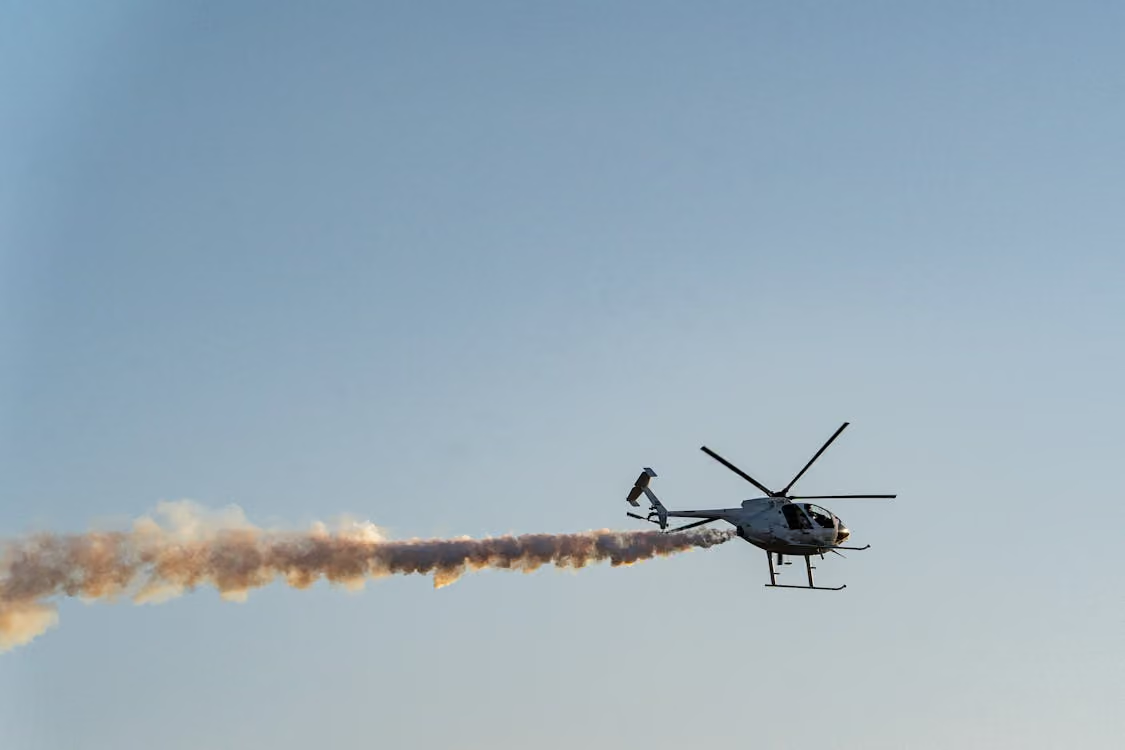
helicopter flying through blue skies while spraying an agricultural treatment
Photo by Edu Raw from Pexels

4 Ways Helicopter Spraying Supports Precision Agriculture

Helicopter spraying is most useful when agriculture demands rapid, targeted treatment over large or hard-to-reach areas—especially where terrain, obstacles, or crop sensitivity limit ground equipment.

Here are four common uses:

Seeding

Helicopters support the planting of new crops, trees, and vegetation through aerial seeding. This process involves dropping seeds from the aircraft to establish new crops or vegetation.

One benefit of aerial seeding is that it gives farmers a way to establish cover crops before they harvest cash crops in the early fall. Early planting gives cover crops time to accumulate biomass before cold winter temperatures arrive, helping prevent nutrient leaching and run-off.

Another advantage is that aerial seeding supports the establishment of multispecies cover crops. These are diverse, integrated blends of crop species from different plant families—such as clovers and certain grasses—that protect and boost soil health and help prepare for the next crop. Multispecies crops work together to manage weeds, fix atmospheric nitrogen levels, and support microbial diversity.

Pollination

Rotorcraft help farmers pollinate crops more efficiently by dispersing pollen during optimal flowering times. Helicopters are quicker for large-scale operations and in urgent situations where timing is crucial and weather conditions are variable. They also enable farmers to apply specific types of pollen that enhance cross-pollination. This is crucial for many high-value fruit and nut crops.
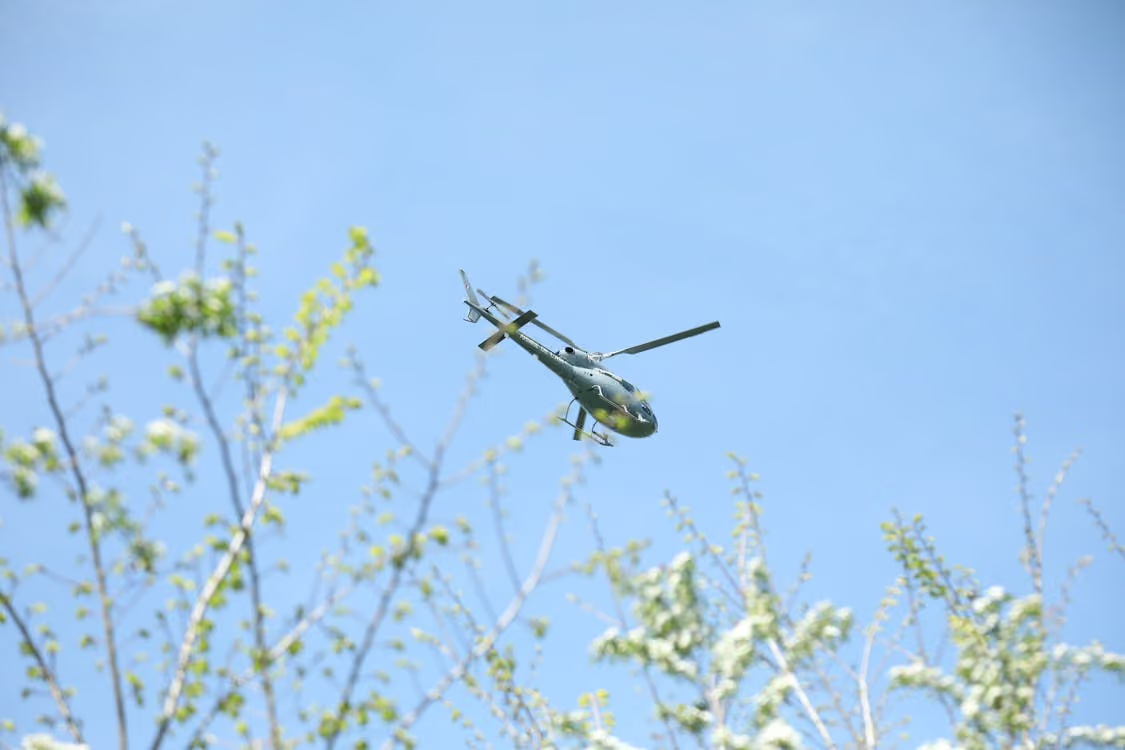
green helicopter flying through clear blue skies over spring foliage
Photo by Clement Lepetit from Pexels

Invasive Species Management

One of the quickest ways to eliminate or reduce invasive species across large or heavily infested areas of farmland is through helicopter-based chemical control. Spray booms and buckets are used to apply chemicals such as herbicides, pesticides, fungicides, and insecticides across regions that would be slow or impractical to access through ground-based methods. This accelerates treatment and decreases labor costs.

Chemical control is effective, but careful application is crucial for limiting the method’s environmental impact. In the case of individual invasive plants, high-precision treatments like Herbicide Ballistic Technology are capable of targeting specific trees and shrubs without affecting native plants. This strategy involves firing herbicide-containing gelatin capsules at invasive plant species from a helicopter.

Frost Protection

Helicopters help farmers protect crops against frost damage in several ways. They can be equipped with sensors and cameras to gather data that enables farmers to intervene before a frost. In colder months and during sensitive growth periods, helicopters can mix warmer and cooler air currents to raise temperatures near the ground and help prevent frost from accumulating.

Helicopters can also fly over fields, using spray systems to apply an even layer of anti-frost chemicals on the leaves of specific crops. This creates a protective film and reduces water loss from leaves so plants can better withstand cold temperatures and frost. Chemical application can be more expensive than other methods, but protection of high-yield crops during critical growth stages often justifies the investment.

close up of a crop in a field covered with ice
Photo by Jack Blueberry from Unsplash

Learn more about the transformative role of helicopters in agriculture, from crop monitoring and pollination to frost protection and cattle management.

Benefits of Helicopter-Mounted Spray Systems

Helicopters are a strong fit for fields that are waterlogged, uneven, broken into smaller sections, or bordered by obstacles like power lines and trees. They’re often chosen for agricultural projects where quick access, consistent coverage, and precision matter more than minimizing per-acre cost.

Here are several advantages of helicopter-mounted spray systems:

  • Enhanced Accessibility: Navigating challenging terrain and reaching farmland set within steep hills or regions of dense vegetation can be difficult using ground-based equipment. Rotorcraft can easily reach these locations and operate in wet or muddy conditions where ground vehicles might get stuck.

  • Improved Precision: Advanced technology like GPS guidance and automated flow control enhance accuracy, helping reduce missed areas and overlap while ensuring application aligns with each crop’s specific needs.

  • Cost Efficiency: While hiring a helicopter is expensive, the cost is often comparable to ground spraying once the absence of damaged crops is considered. Helicopter-mounted spraying may be the right choice if an abundance of high-yield crops would justify the monetary investment.

  • Quick and Adaptive Application: Helicopters can cover large fields quickly during narrow application windows and critical growth stages. Mounted aerial spraying technology also allows for the adjustment of product rates based on crop conditions and needs. Improved application boosts efficiency, supports healthier yields, and limits unnecessary product use.

  • Deeper Spray Penetration: Downwash from helicopter rotor blades pushes products deeper into crop and vegetation canopies for more effective penetration. Rotor-tip vortices help distribute product to the undersides of leaves, which can be difficult to achieve with traditional application methods.

  • Mitigated Damage: Heavy ground sprayers often crush crops and leave ruts in fields. Helicopters minimize crop and field damage by hovering overhead and using advanced systems to control spray patterns.

  • Limited Chemical Exposure: Chronic pesticide exposure is harmful to farmers. Helicopters can be equipped with specialized ventilation systems that protect crews from exposure to dangerous chemicals.

  • Minimal Waste: Enhanced precision also helps reduce waste.

Helicopter Express: Precision Crop Spraying Backed by Experience

Modern helicopter-mounted spray systems have transformed the way farmers manage crops and vegetation. They can reach areas of farmland that are difficult to access and apply treatments with greater precision. They also limit field damage and allow for quick response times when conditions threaten crops.

But consistent results require more than just the right equipment. You’ll also need experienced pilots, thorough planning, and the right aircraft for the job. 

Helicopter Express provides all three:

  • Experienced Pilots: Our elite pilots have extensive field experience and know how to account for variables with strategic in-flight adjustments

  • Thorough Planning: Our team will collaborate with you to plan and execute efficient spraying missions that consider your property conditions, application requirements, and unique goals

  • The Right Aircraft: We can equip our advanced fleet with high-performance spraying technology

Whether you need support for aerial seeding, crop protection, frost mitigation, or another aerial application, our experts can help you achieve your goals with safe and dependable systems. 

Contact Helicopter Express today. When your crops can’t wait, we’re ready to step in.

Precision Agriculture Tools: Helicopter-Mounted Spray Systems Explained

Every agricultural season, farmers face similar challenges: too many acres, too little time, and frustratingly narrow windows for taking action to protect crops. The effort and money farmers pour into maintaining farmland means a lot is at stake. If a frost rolls in overnight or a pest outbreak starts to spread too quickly, yield losses may follow.

A helicopter-mounted spray system offers quick, accurate coverage and access to fields with challenging terrain that ground-based systems can’t match. That’s why this powerful tool has become so crucial for the targeted application of fertilizers, pesticides, herbicides, and frost treatments.

Below, we explain how helicopter sprayers work, the elements that make them so effective, the key ways they support precision agriculture, and the benefits they provide over more traditional methods. By the end of this blog, you’ll be able to make an informed decision about whether helicopter support is right for your operation.

What Are Helicopter-Mounted Spray Systems?

Helicopter-mounted spray systems enable trained helicopter crews to distribute pesticides, herbicides, and fertilizers over specific areas of farmland with increased precision. While tractor-mounted and hand-held sprayers were the go-to application strategy for decades, helicopter-mounted crop spraying is often the most effective way to deliver product to large areas in a short period— like when frost is imminent or crop diseases are spreading quickly.

How Helicopter-Based Crop Spraying Works

These spray systems use a tank to store products such as pesticides, herbicides, fungicides, or fertilizers. A pump delivers the selected treatment to the boom and nozzles. Nozzles transform liquid treatments into droplets.

A key advantage of hiring a rotorcraft team is that the helicopter’s rotor downwash pushes droplets of product deeper into the crop canopy, improving penetration. This enables the pesticide, herbicide, or fertilizer to reach the underside of leaves where pests and disease are often concentrated.

Helicopters are often equipped with a global positioning system (GPS) and flow-control systems so aerial crews can adjust application in real time. This helps the pilot maintain a consistent rate despite varying field shapes and changes in external factors like wind speed.

low aerial view of a tractor plowing a large field
Photo by Loren King from Unsplash

Key Components of Helicopter-Mounted Spray Systems

The core elements of any helicopter application system include:

Spray Nozzles

Spray nozzles are the heart of the spray system. They determine droplet size, spray pattern, and flow rate. Nozzles can be flat, cone-shaped, or streaming, depending on the required application. Helicopter-based nozzles are designed for higher flow rates than ground-based nozzles to maintain effective coverage at faster operating speeds.

When uniform droplets and clog resistance are essential to a mission, some operators choose rotary atomizing nozzles like Micronair-style units. These rotary-centrifugal nozzles spin liquid treatments into droplets for finer control.

Spray Booms

These are the long arms that extend from the helicopter to distribute treatment. Spray booms can be equipped with multiple spray nozzles to provide steady, even coverage over widespread areas.

Spray Tank

The tank stores the selected product. They are available in a variety of sizes to accommodate different flight durations and avoid the need to refill product during lengthy operations.

Centrifugal Pump

A pump delivers the selected treatment to the system’s nozzles. It must be capable of handling the flow rate and pressure that the product and nozzle type demand. Some operators use hydraulic drive systems and electrically operated pumps. Many helicopter systems rely on two centrifugal pumps to keep treatment flowing at the required rate.

GPS and Guidance Systems

Modern helicopter-mounted spray systems often include GPS navigation and guidance systems for more accurate application. This technology helps reduce the risk of over-application or under-application. Some systems even record application data that crews can review to optimize operations.

Check Valves

Check valves provide positive shutoff of the nozzles and prevent them from dripping. They also help match product output to speed and coverage width.

helicopter flying through blue skies while spraying an agricultural treatment
Photo by Edu Raw from Pexels

4 Ways Helicopter Spraying Supports Precision Agriculture

Helicopter spraying is most useful when agriculture demands rapid, targeted treatment over large or hard-to-reach areas—especially where terrain, obstacles, or crop sensitivity limit ground equipment.

Here are four common uses:

Seeding

Helicopters support the planting of new crops, trees, and vegetation through aerial seeding. This process involves dropping seeds from the aircraft to establish new crops or vegetation.

One benefit of aerial seeding is that it gives farmers a way to establish cover crops before they harvest cash crops in the early fall. Early planting gives cover crops time to accumulate biomass before cold winter temperatures arrive, helping prevent nutrient leaching and run-off.

Another advantage is that aerial seeding supports the establishment of multispecies cover crops. These are diverse, integrated blends of crop species from different plant families—such as clovers and certain grasses—that protect and boost soil health and help prepare for the next crop. Multispecies crops work together to manage weeds, fix atmospheric nitrogen levels, and support microbial diversity.

Pollination

Rotorcraft help farmers pollinate crops more efficiently by dispersing pollen during optimal flowering times. Helicopters are quicker for large-scale operations and in urgent situations where timing is crucial and weather conditions are variable. They also enable farmers to apply specific types of pollen that enhance cross-pollination. This is crucial for many high-value fruit and nut crops.

green helicopter flying through clear blue skies over spring foliage
Photo by Clement Lepetit from Pexels

Invasive Species Management

One of the quickest ways to eliminate or reduce invasive species across large or heavily infested areas of farmland is through helicopter-based chemical control. Spray booms and buckets are used to apply chemicals such as herbicides, pesticides, fungicides, and insecticides across regions that would be slow or impractical to access through ground-based methods. This accelerates treatment and decreases labor costs.

Chemical control is effective, but careful application is crucial for limiting the method’s environmental impact. In the case of individual invasive plants, high-precision treatments like Herbicide Ballistic Technology are capable of targeting specific trees and shrubs without affecting native plants. This strategy involves firing herbicide-containing gelatin capsules at invasive plant species from a helicopter.

Frost Protection

Helicopters help farmers protect crops against frost damage in several ways. They can be equipped with sensors and cameras to gather data that enables farmers to intervene before a frost. In colder months and during sensitive growth periods, helicopters can mix warmer and cooler air currents to raise temperatures near the ground and help prevent frost from accumulating.

Helicopters can also fly over fields, using spray systems to apply an even layer of anti-frost chemicals on the leaves of specific crops. This creates a protective film and reduces water loss from leaves so plants can better withstand cold temperatures and frost. Chemical application can be more expensive than other methods, but protection of high-yield crops during critical growth stages often justifies the investment.

close up of a crop in a field covered with ice
Photo by Jack Blueberry from Unsplash

Learn more about the transformative role of helicopters in agriculture, from crop monitoring and pollination to frost protection and cattle management.

Benefits of Helicopter-Mounted Spray Systems

Helicopters are a strong fit for fields that are waterlogged, uneven, broken into smaller sections, or bordered by obstacles like power lines and trees. They’re often chosen for agricultural projects where quick access, consistent coverage, and precision matter more than minimizing per-acre cost.

Here are several advantages of helicopter-mounted spray systems:

  • Enhanced Accessibility: Navigating challenging terrain and reaching farmland set within steep hills or regions of dense vegetation can be difficult using ground-based equipment. Rotorcraft can easily reach these locations and operate in wet or muddy conditions where ground vehicles might get stuck.

  • Improved Precision: Advanced technology like GPS guidance and automated flow control enhance accuracy, helping reduce missed areas and overlap while ensuring application aligns with each crop’s specific needs.

  • Cost Efficiency: While hiring a helicopter is expensive, the cost is often comparable to ground spraying once the absence of damaged crops is considered. Helicopter-mounted spraying may be the right choice if an abundance of high-yield crops would justify the monetary investment.

  • Quick and Adaptive Application: Helicopters can cover large fields quickly during narrow application windows and critical growth stages. Mounted aerial spraying technology also allows for the adjustment of product rates based on crop conditions and needs. Improved application boosts efficiency, supports healthier yields, and limits unnecessary product use.

  • Deeper Spray Penetration: Downwash from helicopter rotor blades pushes products deeper into crop and vegetation canopies for more effective penetration. Rotor-tip vortices help distribute product to the undersides of leaves, which can be difficult to achieve with traditional application methods.

  • Mitigated Damage: Heavy ground sprayers often crush crops and leave ruts in fields. Helicopters minimize crop and field damage by hovering overhead and using advanced systems to control spray patterns.

  • Limited Chemical Exposure: Chronic pesticide exposure is harmful to farmers. Helicopters can be equipped with specialized ventilation systems that protect crews from exposure to dangerous chemicals.

  • Minimal Waste: Enhanced precision also helps reduce waste.

Helicopter Express: Precision Crop Spraying Backed by Experience

Modern helicopter-mounted spray systems have transformed the way farmers manage crops and vegetation. They can reach areas of farmland that are difficult to access and apply treatments with greater precision. They also limit field damage and allow for quick response times when conditions threaten crops.

But consistent results require more than just the right equipment. You’ll also need experienced pilots, thorough planning, and the right aircraft for the job. 

Helicopter Express provides all three:

  • Experienced Pilots: Our elite pilots have extensive field experience and know how to account for variables with strategic in-flight adjustments

  • Thorough Planning: Our team will collaborate with you to plan and execute efficient spraying missions that consider your property conditions, application requirements, and unique goals

  • The Right Aircraft: We can equip our advanced fleet with high-performance spraying technology

Whether you need support for aerial seeding, crop protection, frost mitigation, or another aerial application, our experts can help you achieve your goals with safe and dependable systems. 

Contact Helicopter Express today. When your crops can’t wait, we’re ready to step in.

Make us your go-to team.

Our highly skilled pilots have the experience and equipment needed to rise to any challenge. When you need experts you can trust, give us a call.