
Post-Project Evaluation: Maximizing Value from Helicopter Services

Learn how to analyze helicopter-based project performance, measure costs, identify inefficiencies, and make improvements that maximize future value.

Helicopter-assisted projects can require significant time and resources. So how do you determine whether you received the expected value? And how can you use what you learned to make the next mission more efficient?

A thorough post-project evaluation enables you to look beyond basic activity metrics to understand whether the operation achieved its original objectives. This review also presents opportunities to identify what went well and make adjustments to improve future operations and maximize the value of your investment.

Below, you’ll learn how to define meaningful performance metrics, conduct an effective review, and turn lessons learned into practical improvements.

Key Metrics for Measuring the Value of Helicopter Services

A meaningful project review begins before the first flight. The contracting organization and helicopter operator should agree on objectives, success metrics, reporting expectations, and operational constraints. This ensures both parties have a shared understanding of project objectives and how helicopter service performance will be measured.

To identify the most meaningful metrics, look beyond the number of flights or hours spent in the air. Evaluate how well the helicopter service used resources to help you meet your goals.

Here are several performance metrics to consider and what each can reveal about the operation:

  • Mission Execution: Planned tasks versus completed tasks and objectives achieved show whether the project delivered its intended outcomes.

  • Productivity: Planned lifts, delivered cargo, and inspected assets per defined operating period help determine how effectively the operation converted time into finished work.

  • Schedule: Planned versus actual milestones, mobilization timing, and delay duration by reason highlight where the schedule held and where dependencies broke down.

  • Cost: Total project cost, budget variance, and cost per deliverable help you understand if the results justify the expense.

  • Quality: Work approved without revisions, rework, coverage gaps, and unusable data reveal whether completed activity met the client’s requirements.

  • Planning and Coordination: Tasks ready when scheduled, staging delays, and communication failures indicate how ground preparation and coordination affected execution.

  • Safety and Risk Management: Reported hazards, corrective-action closure, and recurring concerns indicate whether risks and weaknesses were identified and addressed.

Keep in mind that you should never proceed with helicopter operations when conditions are unsuitable. If your contracted helicopter operator determines that it isn’t safe to fly, respect that decision, even if it means delaying work or adjusting the budget. No efficiency gain is worth compromising team safety.

Preparing for your first helicopter-assisted assignment? Review our step-by-step helicopter project planning guide.

How to Measure Success Across Different Helicopter Projects

The most useful performance metrics depend on the type of helicopter service and the results your team needs to achieve.

Here are some examples:

  • Heavy-Lift Construction Work: Key construction-related metrics might include heavy lifts completed safely, reduced need for ground equipment and labor, and tasks finished on time.

  • Operational Planning: Planning efficiency could be based on how effectively aerial surveys help your team evaluate site conditions, identify potential hazards, and make informed decisions before work begins.

  • Inspection Work: For pipeline, power line, and bridge inspections, success could mean ground covered in less time, potential issues accurately identified, and reduced labor, equipment, and access challenges.

  • Scientific Research Support: Performance could be measured by the helicopter crew’s ability to collect reliable research data, reach remote or difficult-to-access areas, and complete fieldwork within applicable time and resource constraints.

  • Disaster Response: Disaster relief success indicators could include response times, damage assessment coverage, successful evacuations, and delivery of essential supplies when ground access is limited.

  • Aerial Cinematography: For film and production assignments, you could focus on whether the required footage is captured safely, creative and production requirements are met, and aerial filming is completed on time and on budget.

These are a few possible evaluation metrics — not universal industry benchmarks. The appropriate measures for your mission depend on your requirements, contract, operating environment, and aircraft capabilities.

Learn how heavy-lift construction helicopters help reduce costs and improve efficiency.

white and blue helicopter with an extended long line hovering over power lines and a construction crew in a rural field under clear blue skies
Photo by Robert So from Pexels

Conduct a Joint Review While Details Are Fresh

The most effective reviews take place as soon as possible after the project concludes to ensure the details are still fresh. Focus on identifying improvements rather than assigning blame for shortcomings and encourage input from everyone involved.

Contributors may include:

  • Your project manager
  • The helicopter operating team
  • Ground support staff
  • Technical specialists
  • Contractors

Each team member brings their own role-based knowledge and experience. Their expertise can help build a complete picture of what happened and reveal opportunities to improve future operations.
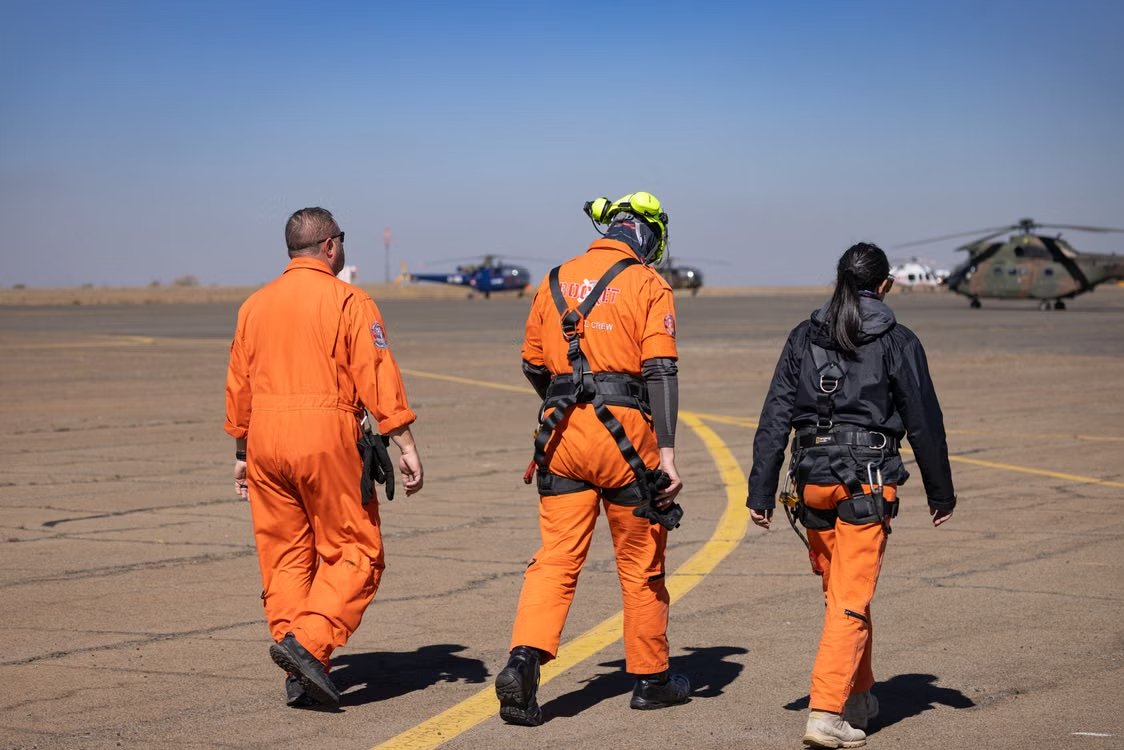
three rescue personnel in orange uniforms walking on a concrete tarmac toward helicopters under clear blue skies
Photo by Magda Ehlers from Pexels

5-Step Process for Evaluating Project Performance

Organizing your helicopter project review around five simple questions is a straightforward way to assess outcomes, resource use, and overall project performance.

1. What Was Planned?

Start by reviewing your original:

  • Objectives
  • Scope
  • Schedule
  • Budget
  • Requirements

Ask questions like: were loads expected to be ready before the aircraft arrived? Did the schedule depend on other contractors finishing their work first? These types of questions will help you evaluate your original expectations rather than redefining success based on outcomes.

2. What Actually Happened?

Then compare your original plan with the actual results. Use your records to build a complete picture of the operation.

These may include:

  • Flight logs and daily activity reports
  • Invoices and cost records
  • Task completion and acceptance records
  • Weather reports and delay notes
  • Ground crew and client observations
  • Data quality checks
  • Safety reports and corrective actions

Separate changes in scope from missed targets or unexpected delays. This will help explain cost differences and make sure you have a clear picture of what the helicopter services delivered.

3. Why Did Results Differ?

Focus on figuring out why results differed from your original plan. For example, if loading took longer than expected, ask whether materials were ready when the helicopter arrived. If the aircraft couldn’t reach certain sites as planned, consider whether access conditions changed or the original site information was incomplete.

Also consider which factors were:

  • Within the operator’s control
  • Your responsibility as the client
  • The result of outside conditions

These answers will help you identify where better planning or enhanced communication could improve the next mission.

4. How Can We Apply What We Learned?

A project review is only valuable if you turn your findings into specific actions to improve the next contract. For this step, identify which methods and procedures you want to repeat and which you need to refine.

For example, imagine that incomplete site preparation delayed helicopter operations. Next time, you could plan to introduce a readiness checklist to confirm that materials, equipment, and ground crews are in place before the aircraft arrives. You could also track readiness-related delays to see whether the changes you implemented helped.

5. How Can We Document and Track Improvements?

Finally, update your contract requirements, operational plans, responsibilities, and checklists with this information.

You might need to:

  • Set clear goals and completion requirements
  • Define client and operator responsibilities
  • Establish how costs, delays, and completed work will be recorded
  • Agree on site-readiness and coordination requirements
  • Set realistic schedules and targets
  • Schedule review points for longer assignments
  • Document who will follow up on recommended changes

Don’t replace required processes, assessments, or safety-reporting procedures. Instead, use what you learned to complement these requirements and make better decisions next time.

male construction worker in a white hard hat and reflective vest writing on a clipboard in a factory setting
Photo by Ihsan Adityawarman from Pexels

Maximize the Value of Your Next Project With Helicopter Express

Every helicopter project offers valuable lessons for making the next one more successful. Reviewing results, identifying inefficiencies, and making practical changes can help you get more from your investment without compromising safety.

For nearly three decades, Helicopter Express has provided a range of services to support construction, inspections, emergency response, scientific research, and other specialized work. We understand that each assignment calls for a different approach to planning and cost management.

No matter the type of operation you have in mind, you’ll need to start with clear objectives and an experienced team. Contact Helicopter Express to discuss your mission and find the right helicopter support to help you meet your goals.

Post-Project Evaluation: Maximizing Value from Helicopter Services

Helicopter-assisted projects can require significant time and resources. So how do you determine whether you received the expected value? And how can you use what you learned to make the next mission more efficient?

A thorough post-project evaluation enables you to look beyond basic activity metrics to understand whether the operation achieved its original objectives. This review also presents opportunities to identify what went well and make adjustments to improve future operations and maximize the value of your investment.

Below, you’ll learn how to define meaningful performance metrics, conduct an effective review, and turn lessons learned into practical improvements.

Key Metrics for Measuring the Value of Helicopter Services

A meaningful project review begins before the first flight. The contracting organization and helicopter operator should agree on objectives, success metrics, reporting expectations, and operational constraints. This ensures both parties have a shared understanding of project objectives and how helicopter service performance will be measured.

To identify the most meaningful metrics, look beyond the number of flights or hours spent in the air. Evaluate how well the helicopter service used resources to help you meet your goals.

Here are several performance metrics to consider and what each can reveal about the operation:

  • Mission Execution: Planned tasks versus completed tasks and objectives achieved show whether the project delivered its intended outcomes.

  • Productivity: Planned lifts, delivered cargo, and inspected assets per defined operating period help determine how effectively the operation converted time into finished work.

  • Schedule: Planned versus actual milestones, mobilization timing, and delay duration by reason highlight where the schedule held and where dependencies broke down.

  • Cost: Total project cost, budget variance, and cost per deliverable help you understand if the results justify the expense.

  • Quality: Work approved without revisions, rework, coverage gaps, and unusable data reveal whether completed activity met the client’s requirements.

  • Planning and Coordination: Tasks ready when scheduled, staging delays, and communication failures indicate how ground preparation and coordination affected execution.

  • Safety and Risk Management: Reported hazards, corrective-action closure, and recurring concerns indicate whether risks and weaknesses were identified and addressed.

Keep in mind that you should never proceed with helicopter operations when conditions are unsuitable. If your contracted helicopter operator determines that it isn’t safe to fly, respect that decision, even if it means delaying work or adjusting the budget. No efficiency gain is worth compromising team safety.

Preparing for your first helicopter-assisted assignment? Review our step-by-step helicopter project planning guide.

How to Measure Success Across Different Helicopter Projects

The most useful performance metrics depend on the type of helicopter service and the results your team needs to achieve.

Here are some examples:

  • Heavy-Lift Construction Work: Key construction-related metrics might include heavy lifts completed safely, reduced need for ground equipment and labor, and tasks finished on time.

  • Operational Planning: Planning efficiency could be based on how effectively aerial surveys help your team evaluate site conditions, identify potential hazards, and make informed decisions before work begins.

  • Inspection Work: For pipeline, power line, and bridge inspections, success could mean ground covered in less time, potential issues accurately identified, and reduced labor, equipment, and access challenges.

  • Scientific Research Support: Performance could be measured by the helicopter crew’s ability to collect reliable research data, reach remote or difficult-to-access areas, and complete fieldwork within applicable time and resource constraints.

  • Disaster Response: Disaster relief success indicators could include response times, damage assessment coverage, successful evacuations, and delivery of essential supplies when ground access is limited.

  • Aerial Cinematography: For film and production assignments, you could focus on whether the required footage is captured safely, creative and production requirements are met, and aerial filming is completed on time and on budget.

These are a few possible evaluation metrics — not universal industry benchmarks. The appropriate measures for your mission depend on your requirements, contract, operating environment, and aircraft capabilities.

Learn how heavy-lift construction helicopters help reduce costs and improve efficiency.

white and blue helicopter with an extended long line hovering over power lines and a construction crew in a rural field under clear blue skies
Photo by Robert So from Pexels

Conduct a Joint Review While Details Are Fresh

The most effective reviews take place as soon as possible after the project concludes to ensure the details are still fresh. Focus on identifying improvements rather than assigning blame for shortcomings and encourage input from everyone involved.

Contributors may include:

  • Your project manager
  • The helicopter operating team
  • Ground support staff
  • Technical specialists
  • Contractors

Each team member brings their own role-based knowledge and experience. Their expertise can help build a complete picture of what happened and reveal opportunities to improve future operations.

three rescue personnel in orange uniforms walking on a concrete tarmac toward helicopters under clear blue skies
Photo by Magda Ehlers from Pexels

5-Step Process for Evaluating Project Performance

Organizing your helicopter project review around five simple questions is a straightforward way to assess outcomes, resource use, and overall project performance.

1. What Was Planned?

Start by reviewing your original:

  • Objectives
  • Scope
  • Schedule
  • Budget
  • Requirements

Ask questions like: were loads expected to be ready before the aircraft arrived? Did the schedule depend on other contractors finishing their work first? These types of questions will help you evaluate your original expectations rather than redefining success based on outcomes.

2. What Actually Happened?

Then compare your original plan with the actual results. Use your records to build a complete picture of the operation.

These may include:

  • Flight logs and daily activity reports
  • Invoices and cost records
  • Task completion and acceptance records
  • Weather reports and delay notes
  • Ground crew and client observations
  • Data quality checks
  • Safety reports and corrective actions

Separate changes in scope from missed targets or unexpected delays. This will help explain cost differences and make sure you have a clear picture of what the helicopter services delivered.

3. Why Did Results Differ?

Focus on figuring out why results differed from your original plan. For example, if loading took longer than expected, ask whether materials were ready when the helicopter arrived. If the aircraft couldn’t reach certain sites as planned, consider whether access conditions changed or the original site information was incomplete.

Also consider which factors were:

  • Within the operator’s control
  • Your responsibility as the client
  • The result of outside conditions

These answers will help you identify where better planning or enhanced communication could improve the next mission.

4. How Can We Apply What We Learned?

A project review is only valuable if you turn your findings into specific actions to improve the next contract. For this step, identify which methods and procedures you want to repeat and which you need to refine.

For example, imagine that incomplete site preparation delayed helicopter operations. Next time, you could plan to introduce a readiness checklist to confirm that materials, equipment, and ground crews are in place before the aircraft arrives. You could also track readiness-related delays to see whether the changes you implemented helped.

5. How Can We Document and Track Improvements?

Finally, update your contract requirements, operational plans, responsibilities, and checklists with this information.

You might need to:

  • Set clear goals and completion requirements
  • Define client and operator responsibilities
  • Establish how costs, delays, and completed work will be recorded
  • Agree on site-readiness and coordination requirements
  • Set realistic schedules and targets
  • Schedule review points for longer assignments
  • Document who will follow up on recommended changes

Don’t replace required processes, assessments, or safety-reporting procedures. Instead, use what you learned to complement these requirements and make better decisions next time.

male construction worker in a white hard hat and reflective vest writing on a clipboard in a factory setting
Photo by Ihsan Adityawarman from Pexels

Maximize the Value of Your Next Project With Helicopter Express

Every helicopter project offers valuable lessons for making the next one more successful. Reviewing results, identifying inefficiencies, and making practical changes can help you get more from your investment without compromising safety.

For nearly three decades, Helicopter Express has provided a range of services to support construction, inspections, emergency response, scientific research, and other specialized work. We understand that each assignment calls for a different approach to planning and cost management.

No matter the type of operation you have in mind, you’ll need to start with clear objectives and an experienced team. Contact Helicopter Express to discuss your mission and find the right helicopter support to help you meet your goals.

Make us your go-to team.

Our highly skilled pilots have the experience and equipment needed to rise to any challenge. When you need experts you can trust, give us a call.