
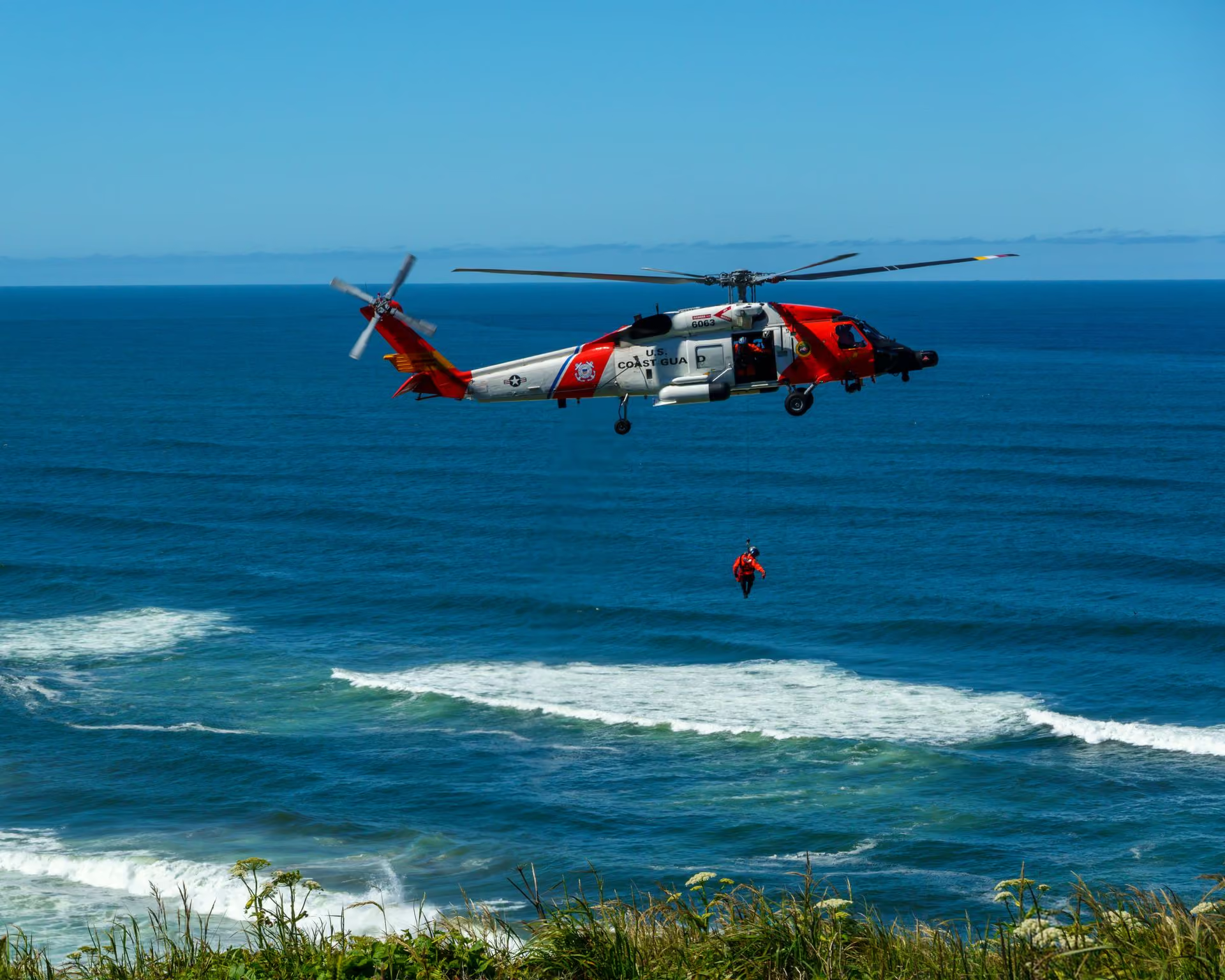
Helicopter hoist operators manage far more than one piece of equipment. They are responsible for the safety of crews, the integrity of precious cargo, and the success of lifts that take place thousands of feet in the air. Whether placing a utility tower on rugged terrain or performing a dangerous search and rescue mission at sea, hoist operators work in environments where a single mistake could put the entire operation at risk.
This precision work requires far more than technical skill. Certified hoist professionals must have specialized equipment knowledge, solid communication skills, and the ability to carry out complex lifts under immense pressure.
If you’re considering getting your hoist certification, this guide will tell you everything you need to know: job responsibilities, what the certification process looks like, and the value hoist operators bring to modern helicopter work.
What Does a Helicopter Hoist Operator Do?
Helicopter hoist operators work alongside pilots to perform all types of aerial lifts and rescues, from transportation and placement of heavy construction materials to medical evacuation. They help control the rescue or transport sequence from preparation through recovery, ensuring a safe and efficient mission.
Responsibilities typically include:
- Inspecting gear before and after flight
- Briefing the crew and passengers
- Coordinating with the pilot and ground personnel
- Operating hoist controls
- Monitoring load movement throughout the lift
- Following emergency procedures
Helicopter hoist operators are essential to disaster relief efforts, search and rescue missions, heavy-lift construction, utility work, and other industries.
Learn about the history and evolution of helicopter hoist systems, from their initial use in maritime rescue to more modern applications.
Basic Operator Requirements
Hopeful trainees are required to meet basic qualifications before enrolling in a certification training program.
- Minimum Eligibility: You must be at least 18 years old with a valid driver’s license and a high school diploma or GED.
- Physical Capabilities: Due to the physical demands of the job, you must have good manual dexterity, hand-eye coordination, and be able to work in demanding environments.
- Mental Aptitude: Situational awareness and strong decision-making skills are vital. You should also be capable of staying calm under immense pressure.
- Communication Skills: Solid communication and collaboration are a must, as you will be working within the established chain of command.
Meeting these prerequisites gives you the foundation you need to begin formal training and prepare for the responsibilities of safe hoist operations.
How Long Does It Take to Get Certified?
Certification times depend on the certification type and the specific training program you choose. General programs can often be completed in as little as 3 days. Training for construction or rescue hoist operations may take 3 to 5 days or longer.
Helicopter Construction Hoist Training
If you’re interested in performing lifts for the construction industry, the National Commission for the Certification of Crane Operators (NCCCO) is one of the most widely recognized certifications in the United States. Obtaining this credential proves that you meet federal OSHA regulations for operating a crane during construction projects. This certification process typically takes 3 to 5 days.
Discover the different types of suspension systems aerial crane helicopters rely on for heavy-lift construction work.
Helicopter Rescue Hoist Training
Helicopter rescue hoist training may take anywhere from a few days to a week or more. The exact length depends on whether you take a basic course, an emergency response course, or a full operator qualification program. For example, some training providers offer 3-day hoist emergency response programs and 5-day rescue technician courses.
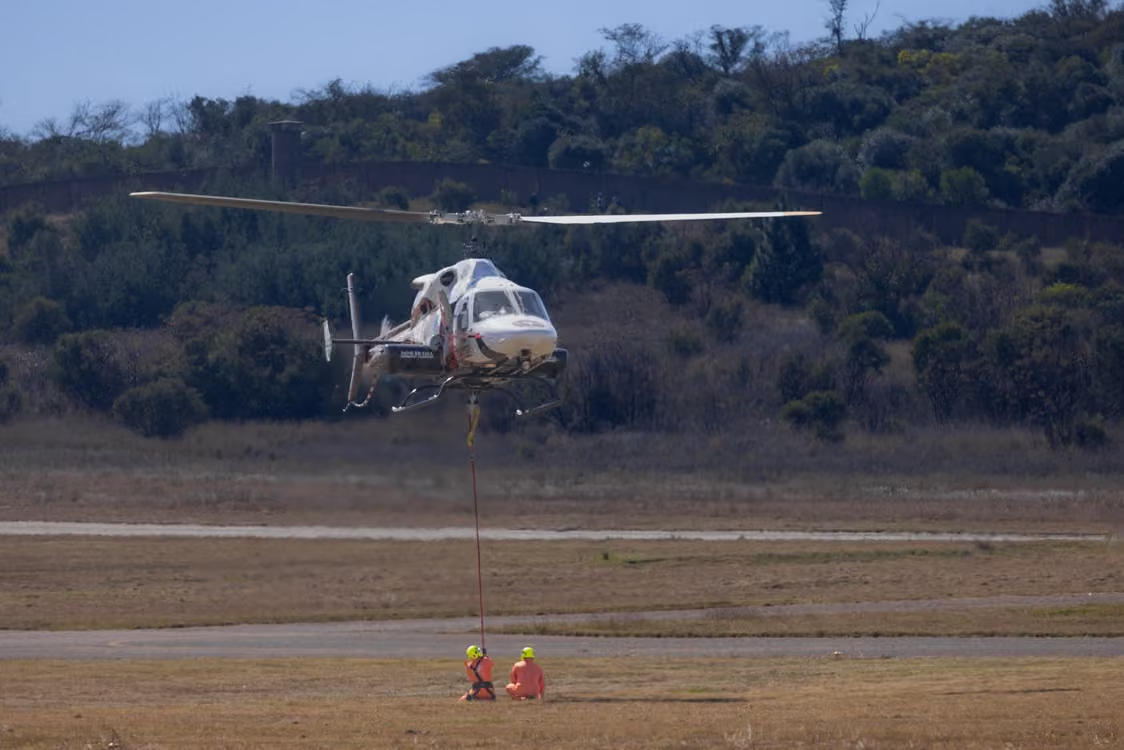
4 Steps to Getting Your Helicopter Hoist Operator Certification
Helicopter hoist training takes hard work, but the certification steps are outlined clearly.
Step 1: Enroll in a Certified Training Program
Once you meet all prerequisites, you can enroll in a training program. Look for an accredited course with experienced instructors who will teach you the mechanics, skills, and safety procedures you’ll need to perform successful hoists in the field.
Training should cover topics including:
- Aircraft and Hoist System Familiarity: Hoist controls, weight limitations, emergency release systems, load monitoring systems, and aircraft limitations
- Equipment Inspection Procedures: Daily inspections, cable condition, hooks, attachment points, electrical systems, and maintenance reporting
- Load Awareness: Weight distribution, center of gravity, dynamic loads, environmental influences, and aircraft performance
- Safety Protocols: OSHA regulations and safety checks
- Emergency Procedures: Malfunctions, cable jams, emergency load release, communication failures, weather changes, and unexpected load movement
- Flight Training: Simulated missions, live hoist operations, crew coordination, scenario-based exercises, and performance evaluations
See specialized helicopter rigging equipment and learn how aerial lifts are planned and performed.
Step 2: Develop Hands-On Experience
Technical knowledge of hoist systems is important, but the practical experience you gain through supervised training is essential. Many training programs enable you to operate hoists under the supervision of a qualified instructor.
Simulated scenarios are crucial for:
- Gaining Hands-On Experience: Learn the mechanics of electrical, hydraulic, and cable-operated hoist systems.
- Performing Safety Checks: Practice implementing safety protocols that help protect crews, aircraft, and equipment.
- Emergency Procedure Preparation: Prepare for emergencies in a controlled environment before facing real threats in the field.
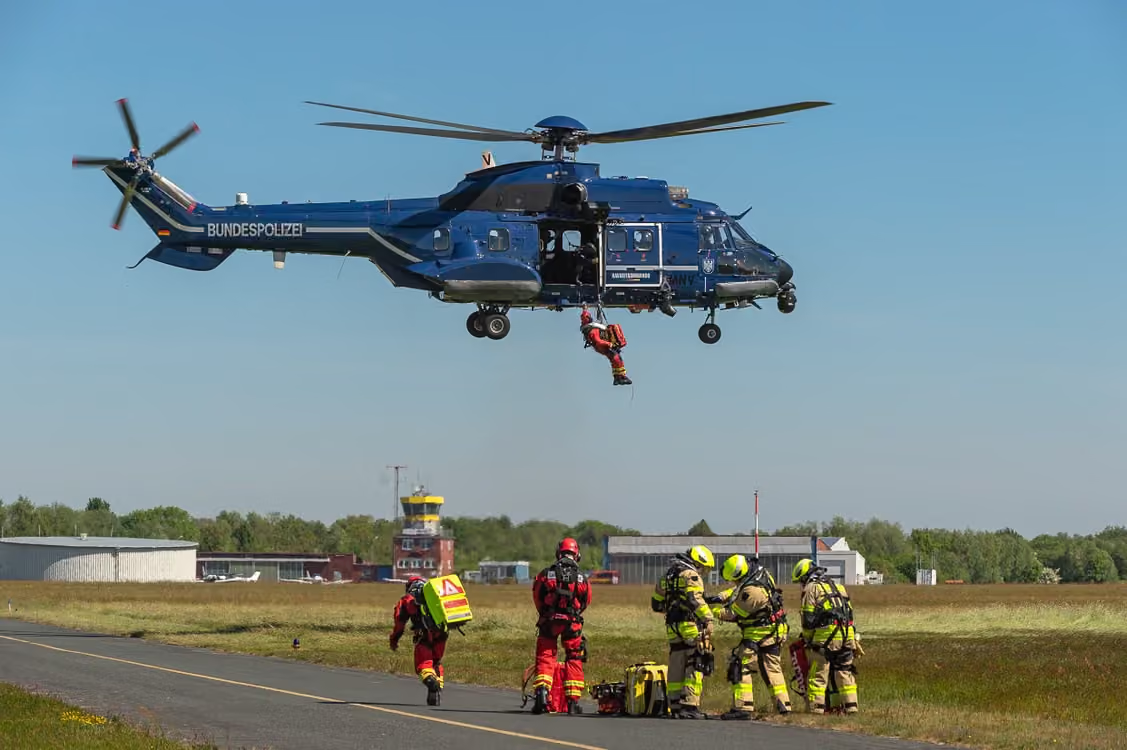
Step 3: Pass the Certification Exam
Upon completion of a training program, you will take the helicopter hoist operator (HHO) certification exam. It typically consists of two parts: a written multiple choice test and intensive practical evaluation. You must pass both parts to receive your certification.
The exam covers:
- How well you understand basic hoist operation principles
- Your knowledge of safety regulations and procedures
- Your skills and preparedness in the field
Passing the exam shows that you have the knowledge, training, and skills necessary to work safely and efficiently during live hoisting missions.

Step 4: Obtain Your License
Exact licensing requirements can vary by location. In general, you’ll need a license to legally operate a helicopter hoist and find a job with a helicopter company.
The licensing process requires you to:
- Provide proof of certification
- Submit to a background check
- Undergo a physical examination (if applicable)
Be sure to check specific requirements in your state to make sure you comply with local laws and regulations.
How Long Is Certification Valid?
NCCCO Certification is valid for five years before you need to recertify. Other HHO certifications may not have fixed expiration dates, as validity often depends on your training provider, employer, and specific role. Some training programs and helicopter companies require recertification every few years, along with annual or other periodic proficiency checks.
Why Ongoing Training Matters
Helicopter hoist operator training doesn't end after you obtain your license. Hoist operations are constantly changing as new technologies and safety protocols are introduced.
Beyond recertifying every few years, be sure to stay current on:
- Equipment updates
- New aircraft systems
- Regulatory changes
- Mission-specific training
Some operators obtain higher-level certifications to gain further expertise and advance their careers.
How Professional Hoist Operators Keep Helicopter Projects Safe and Efficient
Hoist operators improve mission reliability, protect aircrafts and personnel, and help keep schedules on track. Skilled professionals reduce operational friction in difficult environments, which greatly boosts efficiency. During high-risk work like heavy-lift construction or disaster response, this combination of safety and speed keeps projects viable.
Below are three benefits reliable hoist operators bring to aerial work.
Enhanced Safety
Hoist operations present significant safety hazards, such as:
- Dropped or falling loads
- Structural collapse from overloading
- Mechanical or electrical failures
- Electrocution (when working with damaged cords or near power lines)
- Cable entanglement
- Falls from elevated heights
The situational awareness and solid communication skills of highly trained operators help reduce these risks and enable pilots to focus on evaluating environmental cues, protecting precious cargo, and performing precision hovers and lifts.
Boosted Efficiency
Increased efficiency (and lower costs) come from:
- Fewer mistakes
- Smoother cable handling
- Better coordination between pilots and ground or rescue crews
Research comparing hoist performance between experienced and novice hoist operators found that experienced professionals demonstrated lower tension and less variable hand position. These performance improvements led to faster and more predictable missions with less hover time, fewer delays, and decreased chances of needing to abort or repeat lifts.
Improved Coordination
Professional hoist operators also support standardization and communication through meticulous briefings, clear callouts, and repeatable procedures. Solid crew collaboration and coordination are especially vital during complex jobs where terrain and weather can turn on a dime.
Explore how multi-helicopter operations are coordinated during emergency response missions.
Partner With Helicopter Express for Safer, More Efficient External Load Missions
At Helicopter Express, we help clients complete complex hoist operations safely and efficiently.
For nearly three decades, our team has provided:
- Precision lifts in challenging environments
- Highly trained pilots and crews
- A modern, well-maintained fleet
- Careful project planning
- An unwavering commitment to safety
Whether your project involves heavy construction materials, crisis response, or another specialized lifting operation, our team has the expertise and equipment to get the job done right.
Contact Helicopter Express today to request a quote or learn more about our aerial lifting services.