Bird Strike Prevention in Helicopter Operations: Technologies and Protocols

Bird strikes are a major risk in helicopter operations. Discover their impacts and learn about the technology and protocols Helicopter Express implements to keep flights safe.

If you’re planning to hire a helicopter service company for construction, utility work, firefighting, or disaster response, you need confidence that every mission will be safe and efficient. But one (often overlooked) risk of helicopter operations is bird strikes. That’s because birds can do more than just delay your project; they can damage engines, compromise safety, and ground operations unexpectedly.

The good news? You can combat these risks by finding a helicopter operator that takes bird strike prevention seriously. 

Let’s walk through the risks that bird strikes pose, the factors that increase their likelihood of occurring, and the proven strategies and technologies that professional helicopter operators use to prevent them. Discover how experienced companies like Helicopter Express build safety into every aspect of their work to protect your people, cargo, timeline, and budget.

Bird Strikes During Helicopter Missions: Risks and Realities

Bird strikes are more than just a nuisance – they’re a true safety and operational hazard. These incidents can result in serious consequences, from cracked windshields to total engine failure. Here are a few key statistics that showcase the risks of bird strikes during helicopter operations. 

Key Statistics

  • The Main Culprit: Roughly 95% of strikes involve birds. The remaining 5% involve land-based animals and take place on the ground near airports and runways.

  • Daily Occurrences: The Federal Aviation Administration (FAA) reports an average of 47 daily aircraft strikes within the U.S. airspace system.

  • Yearly Totals: Around 45,000 bird strike incidents are reported each year, showing just how widespread the problem really is.

Bird Strike Risks

Unfortunately, the risks of bird strikes are many, from broken windshields and obstruction of vision to severe helicopter damage (and even loss of engine power!). Between 2–8% of all recorded bird strikes caused aircraft damage, and 6–7% negatively impacted flight operations.

Here are some of the most common risks of bird strikes that all helicopter pilots and crews need to be aware of:

  • Broken Windshields: A third (33%) of all strikes involve the windshield, putting pilots at direct risk.

  • Shattered Helmet Visors: Even with protective gear, a bird strike can break visors and injure pilots and crew members.

  • Damage to Avionics: Pitot tubes, antennas, wiring, and sensors are especially vulnerable to bird strikes.

  • Structural Damage: Broken components and holes in fuselage can ground helicopters.

  • Main or Tail Rotor Damage: A strike to the main or tail rotor can result in holes or broken blades.

  • Loss of Engine Power: Bird strikes can shut down engines mid-flight.

  • Obstruction of Vision: A bird strike can obstruct a pilot’s vision, impair their control of the aircraft, and endanger the lives of everyone on board.

  • Flight Control Issues: Damaged aircraft systems can reduce maneuverability and make it difficult for pilots to maintain stable flight.

  • Startle Effect: Sudden impact can cause the startle effect. This is an involuntary response to an unexpected stimulus that can distract pilots during critical moments.

Factors Impacting Bird Strikes

Not all helicopter flights carry the same level of risk. There are several factors that make bird strikes more likely, such as operating near cliffs or at lower altitudes. Here are the critical factors pilots and their crews must consider when planning flight paths:

  • Bird Concentrations: Specific regions and habitats (such as lakes, wetlands, farmland, coastal areas, and ridge lines) attract large numbers of birds due to abundant food sources, nesting areas, and natural flight paths. Areas with a higher density of birds are significantly more likely to experience strikes.

  • Bird Migration: Bird strikes are more common during migration seasons. In the United States, migration periods fall between March and June in the spring and August to November in the fall.

  • Time of Day: About 68% of bird strikes occur in daylight, raising the chances of collision. Meanwhile, 19% occur at night and 13% occur at dusk, dawn, or during unknown conditions.

  • Flight Phase: 24% of bird strikes occur during take-off, 23% during approach, and 23% during landing. Only 5% occur while en route.

  • Flight Altitude: Nearly 90% of all strikes occur below 3,500 feet.
  • Relative Velocity: The faster the aircraft, the greater the impact force during flight.
birds flying beneath a helicopter at dusk
Photo by Adrian Frentescu from Pexels

Strategies for Preventing Bird Strikes During Helicopter Operations

Fortunately, there are many strategies for reducing bird strike risks during helicopter missions. Let’s dive into the actions pilots and crews can take to minimize the possibility of coming into contact with birds.

  • Training and Educating Pilots and Crews: Ongoing training ensures crews can recognize bird activity, understand threats, and apply best practices for avoidance. This foundation of knowledge enables pilots to respond quickly and make smart decisions when they spot birds mid-flight.
  • Planning Safer Routes: Pilots should consult NOTAMs, check the ATIS, and carefully review flight paths to steer clear of bird habitats – like wetlands and migratory routes – whenever possible.
  • Conducting Pre-Flight Briefings: Crews must also discuss recent bird activity, local habitats, and seasonal migration patterns before every mission. These briefings keep the team alert and aligned on potential hazards.
  • Climbing Quickly After Takeoff: Because birds tend to fly closer to the ground, gaining altitude quickly and leaving the highest-risk zone as swiftly as possible is a solid way to reduce exposure.
  • Reducing Airspeed: Slowing down in high-risk environments lessens the impact of a potential strike. Even if a collision occurs, the reduced force lowers the chance of significant damage to the aircraft.
  • Increasing Altitude: For every 1,000 feet increase in cruise altitude, there is a significant reduction in risk for a bird strike. In fact, only 1% of bird strikes occur above 2,500 feet.
  • Using Personal Protective Equipment (PPE): Helmets and visors reduce the chance of lasting injuries in case a bird breaches the windshield, adding an extra layer of protection for pilots.

Modern Helicopter Systems and Enhancements for Bird Strike Prevention

Advances in helicopter technology are helping reduce the risk of bird strikes (and lessen their impact when they do occur). From reinforced materials to visual deterrents, these innovations add layers of protection for both crews and aircrafts.

  • Bird-Resistant Windshields: Reinforced glass is designed to absorb the impact of bird collisions without shattering, protecting pilots from sudden vision loss or cockpit intrusion. Windshield heating can also make windshields more shatter resistant.
  • Bird Repellant Treatments: Special surface coatings and chemical applications can make helicopter exteriors less attractive to birds, altering their reflectivity or leaving an unpleasant (but harmless) residue. These treatments discourage birds from approaching too closely, lowering the chance of direct strikes.
  • Pulsating Lights: Birds are capable of avoiding LED lights with peaks at 470 and 630 nanometers. Specialized stroke or pulsating lighting systems can make helicopters even more visible to birds, giving them time to divert their flight path before a collision occurs.
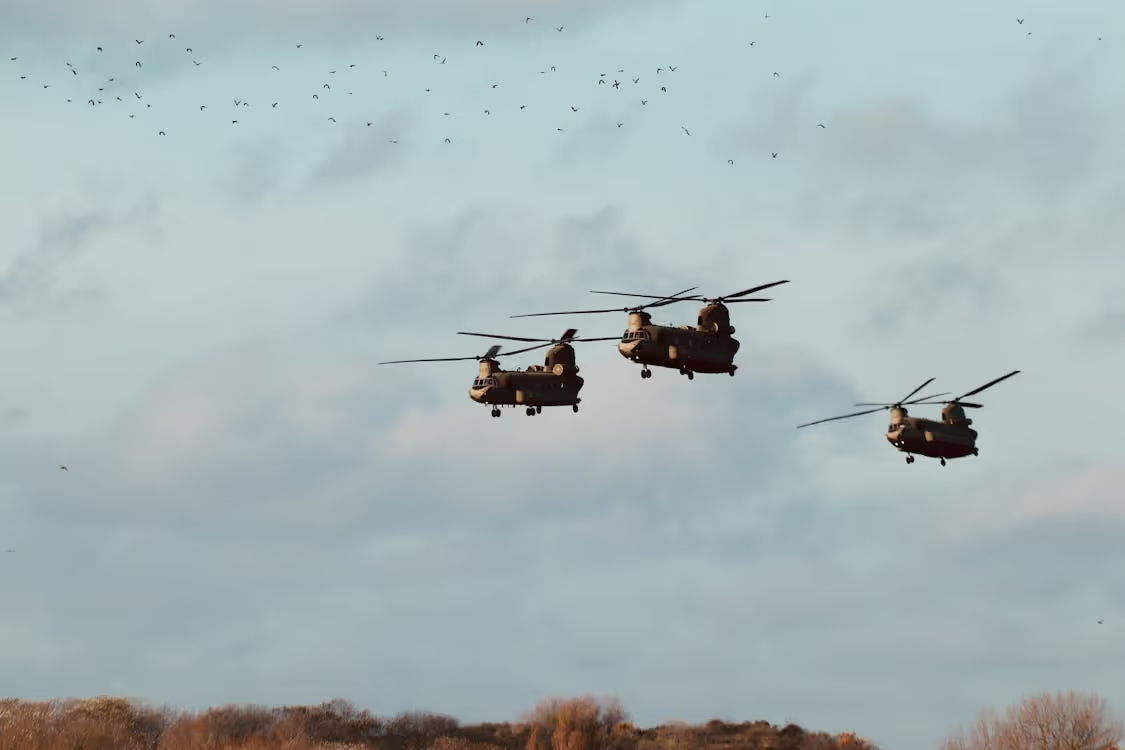
three military helicopters flying below a flock of birds in cloudy skies
Photo by Adriaan Ploegh from Pexels

Helicopter Express: Your Partner in Safe Helicopter Operations

At Helicopter Express, we understand that bird strikes impact more than just our pilots and fleets. An unexpected strike can affect your project’s safety, timeline, and budget. That’s why we’ve built layers of protection into every mission. 

Here’s how we prevent bird strikes across key industries:

  • Heavy Lifting and Construction: Our crews conduct thorough pre-flight planning to avoid bird habitats and ensure heavy-lift operations run smoothly. Reinforced windshields and protective gear help safeguard pilots and cargo during construction projects.
  • Utility and Power Line Work: Utility installations often run through rural and migratory bird zones. Our team uses route planning, altitude management, and enhanced visibility systems to reduce risk during electrical and energy construction or inspection missions.
  • Firefighting and Emergency Response: There’s no room for unexpected errors in high pressure situations, like during wildfires, disaster response operations, and search and rescue missions. Our pilots train extensively to remain focused under stress, even if bird activity arises during an emergency assignment.
  • Aerial Surveys and Environmental Projects: Aerial survey missions such as bridge inspections or conservation projects like helicopter wildlife surveys often require helicopters to fly at lower altitudes where bird strike risks are higher. Our team utilizes advanced avoidance strategies and technology like pulsating lights to protect flight crews along with their technology and data.

At Helicopter Express, we combine pilot expertise, state-of-the-art fleets, and modern technology with uncompromising safety protocols to ensure your operation stays on track without preventable setbacks.

If you’re ready to partner with a helicopter operator that prioritizes your project’s safety and success, contact Helicopter Express for a quote today.

Bird Strike Prevention in Helicopter Operations: Technologies and Protocols

If you’re planning to hire a helicopter service company for construction, utility work, firefighting, or disaster response, you need confidence that every mission will be safe and efficient. But one (often overlooked) risk of helicopter operations is bird strikes. That’s because birds can do more than just delay your project; they can damage engines, compromise safety, and ground operations unexpectedly.

The good news? You can combat these risks by finding a helicopter operator that takes bird strike prevention seriously. 

Let’s walk through the risks that bird strikes pose, the factors that increase their likelihood of occurring, and the proven strategies and technologies that professional helicopter operators use to prevent them. Discover how experienced companies like Helicopter Express build safety into every aspect of their work to protect your people, cargo, timeline, and budget.

Bird Strikes During Helicopter Missions: Risks and Realities

Bird strikes are more than just a nuisance – they’re a true safety and operational hazard. These incidents can result in serious consequences, from cracked windshields to total engine failure. Here are a few key statistics that showcase the risks of bird strikes during helicopter operations. 

Key Statistics

  • The Main Culprit: Roughly 95% of strikes involve birds. The remaining 5% involve land-based animals and take place on the ground near airports and runways.

  • Daily Occurrences: The Federal Aviation Administration (FAA) reports an average of 47 daily aircraft strikes within the U.S. airspace system.

  • Yearly Totals: Around 45,000 bird strike incidents are reported each year, showing just how widespread the problem really is.

Bird Strike Risks

Unfortunately, the risks of bird strikes are many, from broken windshields and obstruction of vision to severe helicopter damage (and even loss of engine power!). Between 2–8% of all recorded bird strikes caused aircraft damage, and 6–7% negatively impacted flight operations.

Here are some of the most common risks of bird strikes that all helicopter pilots and crews need to be aware of:

  • Broken Windshields: A third (33%) of all strikes involve the windshield, putting pilots at direct risk.

  • Shattered Helmet Visors: Even with protective gear, a bird strike can break visors and injure pilots and crew members.

  • Damage to Avionics: Pitot tubes, antennas, wiring, and sensors are especially vulnerable to bird strikes.

  • Structural Damage: Broken components and holes in fuselage can ground helicopters.

  • Main or Tail Rotor Damage: A strike to the main or tail rotor can result in holes or broken blades.

  • Loss of Engine Power: Bird strikes can shut down engines mid-flight.

  • Obstruction of Vision: A bird strike can obstruct a pilot’s vision, impair their control of the aircraft, and endanger the lives of everyone on board.

  • Flight Control Issues: Damaged aircraft systems can reduce maneuverability and make it difficult for pilots to maintain stable flight.

  • Startle Effect: Sudden impact can cause the startle effect. This is an involuntary response to an unexpected stimulus that can distract pilots during critical moments.

Factors Impacting Bird Strikes

Not all helicopter flights carry the same level of risk. There are several factors that make bird strikes more likely, such as operating near cliffs or at lower altitudes. Here are the critical factors pilots and their crews must consider when planning flight paths:

  • Bird Concentrations: Specific regions and habitats (such as lakes, wetlands, farmland, coastal areas, and ridge lines) attract large numbers of birds due to abundant food sources, nesting areas, and natural flight paths. Areas with a higher density of birds are significantly more likely to experience strikes.

  • Bird Migration: Bird strikes are more common during migration seasons. In the United States, migration periods fall between March and June in the spring and August to November in the fall.

  • Time of Day: About 68% of bird strikes occur in daylight, raising the chances of collision. Meanwhile, 19% occur at night and 13% occur at dusk, dawn, or during unknown conditions.

  • Flight Phase: 24% of bird strikes occur during take-off, 23% during approach, and 23% during landing. Only 5% occur while en route.

  • Flight Altitude: Nearly 90% of all strikes occur below 3,500 feet.
  • Relative Velocity: The faster the aircraft, the greater the impact force during flight.
birds flying beneath a helicopter at dusk
Photo by Adrian Frentescu from Pexels

Strategies for Preventing Bird Strikes During Helicopter Operations

Fortunately, there are many strategies for reducing bird strike risks during helicopter missions. Let’s dive into the actions pilots and crews can take to minimize the possibility of coming into contact with birds.

  • Training and Educating Pilots and Crews: Ongoing training ensures crews can recognize bird activity, understand threats, and apply best practices for avoidance. This foundation of knowledge enables pilots to respond quickly and make smart decisions when they spot birds mid-flight.
  • Planning Safer Routes: Pilots should consult NOTAMs, check the ATIS, and carefully review flight paths to steer clear of bird habitats – like wetlands and migratory routes – whenever possible.
  • Conducting Pre-Flight Briefings: Crews must also discuss recent bird activity, local habitats, and seasonal migration patterns before every mission. These briefings keep the team alert and aligned on potential hazards.
  • Climbing Quickly After Takeoff: Because birds tend to fly closer to the ground, gaining altitude quickly and leaving the highest-risk zone as swiftly as possible is a solid way to reduce exposure.
  • Reducing Airspeed: Slowing down in high-risk environments lessens the impact of a potential strike. Even if a collision occurs, the reduced force lowers the chance of significant damage to the aircraft.
  • Increasing Altitude: For every 1,000 feet increase in cruise altitude, there is a significant reduction in risk for a bird strike. In fact, only 1% of bird strikes occur above 2,500 feet.
  • Using Personal Protective Equipment (PPE): Helmets and visors reduce the chance of lasting injuries in case a bird breaches the windshield, adding an extra layer of protection for pilots.

Modern Helicopter Systems and Enhancements for Bird Strike Prevention

Advances in helicopter technology are helping reduce the risk of bird strikes (and lessen their impact when they do occur). From reinforced materials to visual deterrents, these innovations add layers of protection for both crews and aircrafts.

  • Bird-Resistant Windshields: Reinforced glass is designed to absorb the impact of bird collisions without shattering, protecting pilots from sudden vision loss or cockpit intrusion. Windshield heating can also make windshields more shatter resistant.
  • Bird Repellant Treatments: Special surface coatings and chemical applications can make helicopter exteriors less attractive to birds, altering their reflectivity or leaving an unpleasant (but harmless) residue. These treatments discourage birds from approaching too closely, lowering the chance of direct strikes.
  • Pulsating Lights: Birds are capable of avoiding LED lights with peaks at 470 and 630 nanometers. Specialized stroke or pulsating lighting systems can make helicopters even more visible to birds, giving them time to divert their flight path before a collision occurs.
three military helicopters flying below a flock of birds in cloudy skies
Photo by Adriaan Ploegh from Pexels

Helicopter Express: Your Partner in Safe Helicopter Operations

At Helicopter Express, we understand that bird strikes impact more than just our pilots and fleets. An unexpected strike can affect your project’s safety, timeline, and budget. That’s why we’ve built layers of protection into every mission. 

Here’s how we prevent bird strikes across key industries:

  • Heavy Lifting and Construction: Our crews conduct thorough pre-flight planning to avoid bird habitats and ensure heavy-lift operations run smoothly. Reinforced windshields and protective gear help safeguard pilots and cargo during construction projects.
  • Utility and Power Line Work: Utility installations often run through rural and migratory bird zones. Our team uses route planning, altitude management, and enhanced visibility systems to reduce risk during electrical and energy construction or inspection missions.
  • Firefighting and Emergency Response: There’s no room for unexpected errors in high pressure situations, like during wildfires, disaster response operations, and search and rescue missions. Our pilots train extensively to remain focused under stress, even if bird activity arises during an emergency assignment.
  • Aerial Surveys and Environmental Projects: Aerial survey missions such as bridge inspections or conservation projects like helicopter wildlife surveys often require helicopters to fly at lower altitudes where bird strike risks are higher. Our team utilizes advanced avoidance strategies and technology like pulsating lights to protect flight crews along with their technology and data.

At Helicopter Express, we combine pilot expertise, state-of-the-art fleets, and modern technology with uncompromising safety protocols to ensure your operation stays on track without preventable setbacks.

If you’re ready to partner with a helicopter operator that prioritizes your project’s safety and success, contact Helicopter Express for a quote today.

Make us your go-to team.

Our highly skilled pilots have the experience and equipment needed to rise to any challenge. When you need experts you can trust, give us a call.