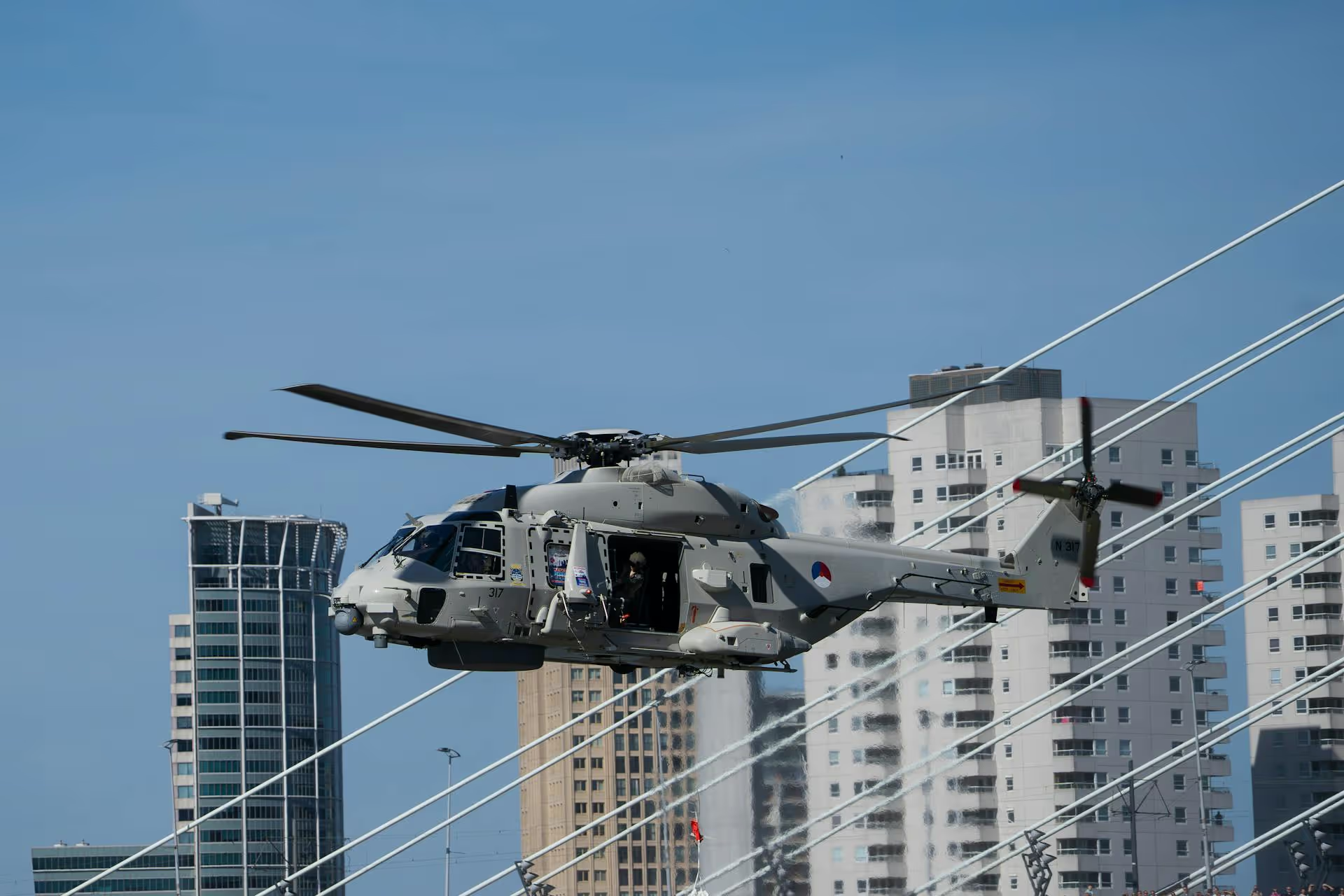
The Hidden Heroes: Helicopter Support in Major Infrastructure Projects

Discover how heavy-lift helicopters assist with the construction of major infrastructure like bridges, dams, and tunnels. Learn how they improve access, safety, and efficiency.

Major infrastructure projects like bridges, dams, and tunnels are true feats of engineering. But what onlookers can’t see from the outside is the immense logistical work and powerful equipment it takes to move massive components into challenging landscapes, dense urban areas, and sensitive ecosystems—often on tight timelines.

Heavy-lift helicopters are the hidden heroes in complex infrastructure operations. They are capable of accessing difficult terrain and placing heavy materials with precision, all while reducing risk to crew members and surrounding landscapes. These aircraft offer critical support behind the scenes, enabling both the initial construction and eventual upgrades to be completed efficiently.

Keep reading to learn how helicopters support large-scale infrastructure work, the unique benefits they provide, and why Helicopter Express is a trusted aerial service provider for agencies and contractors across the globe. 

How Helicopters Support Bridge Construction and Maintenance

Building critical public works like bridges frequently requires crews to overcome challenges that limit ground access, like highways, dense cityscapes, rivers, and canyons. Heavy-lift helicopters are capable of working around these obstacles without requiring approach roads or facing the difficulty of placing large ground cranes on rugged or constrained topography. 

Here are several ways helicopters support bridge construction and maintenance while avoiding many of the disruptions and delays often associated with ground work:

  • Material Delivery to Hard-to-Reach Sites: Helicopters can transport heavy building materials like formwork, towers, rebar, and concrete buckets to remote sites or dense urban centers. This reduces the need for road closures and limits the extensive ground preparation required for traditional crane work.

  • Precision Placement of Structural Components: Pilots experienced with aerial crane support can position prefabricated bridge sections, steel members, and girders over active roadways, waterways, and canyons with extreme accuracy. This level of precision improves installation efficiency and reduces labor costs and project timelines.

  • Rapid Assembly of Construction Materials: By completing multiple controlled lifts in a short timeframe, helicopters enable crews to capitalize on short weather windows to keep complex bridge projects moving forward without delay.

  • Routine Inspections and Repairs: For routine bridge inspections and ongoing maintenance work, helicopters provide access to hard-to-reach areas beneath bridge decks, over water, or above traffic corridors. The quick transportation of inspection crews, tools, and replacement parts allows teams to complete critical repairs in a timely manner.

side-by-side bridges over a body of water at dusk
Photo by Griffin Wooldridge from Pexels

Real-World Example of Rotorcraft at Work: The Danube River Bridge

The construction of the Danube River Bridge in Novi Sad, Serbia is an engineering marvel made possible by two Sikorsky S-64 Skycrane helicopters. These heavy-lift rotorcraft lifted large steel sections into place over the Danube River, quickly assembling the bridge without relying solely on extensive scaffolding or cranes. Maneuvering around tight spaces with ease, these helicopters played a key role in building an impressive structure that linked two parts of the country and boosted the local economy.

Discover more real-life examples of bridges, transmission lines, wind farms, and other complex construction projects that heavy-lift helicopters made possible. 

How Helicopters Simplify Dam Building and Repair Work

Dams are often located in narrow valleys or watersheds where ground-based transportation is slow, costly, and environmentally impactful. Helicopters simplify the construction and ongoing maintenance of dams in many critical ways.

  • Material Transport to Remote Locations: Crews can rely on rotorcraft to transport concrete, rebar, oversized mechanical components, and specialized tools to faraway dams without needing to build temporary access roads in environmentally sensitive areas.
  • Staged Logistical Assistance: Temporary platforms, barge components, and safety equipment can be moved as work progresses, keeping crews on task and on schedule.

  • Inspections and Maintenance: Aerial surveys allow observers to capture reliable, real-time data about existing dams so they can identify issues early and prioritize timely repairs.

  • Rehabilitation and Retrofit Support: In regions where crane access is limited, rotorcraft can lift replacement gates, penstock sections, and other equipment to support rehabilitation and retrofit work on aging dams.
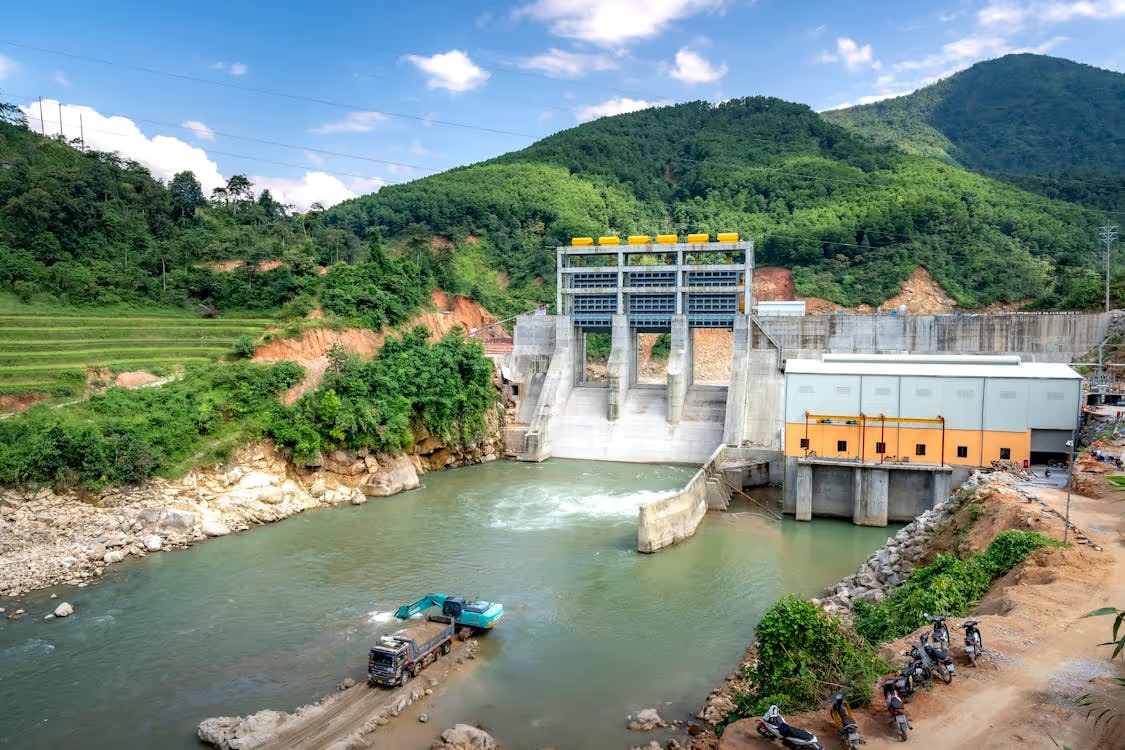
hydroelectric dam in a lush mountainous region under blue skies
Photo by Quang Nguyen Vinh from Pexels

Real-World Example of Rotorcraft at Work: Hoover Dam Bypass Bridge

During construction of Nevada’s Hoover Dam Bypass Bridge, helicopters worked alongside traditional methods to lift large steel sections into place. This hybrid approach allowed construction crews to complete work more efficiently despite challenging terrain and tight working conditions. 

Aerial Support for Tunnel Construction and Access Work

Tunnel construction begins long before the excavation process commences. Here’s how heavy-lift helicopters aid critical work in difficult environments:

  • Delivery to Remote Portal Locations: Ventilation shaft components, power units, portal support structures, and construction gear can be flown directly to steep slopes or high-elevation sites far from existing roads.

  • Efficient Transportation of Materials to Entry Points: Helicopters can transport drilling rigs, excavators, rock bolts, lattice girders, and other drilling equipment to intermediate entry points that would be too costly or impractical to reach by ground vehicle.

  • Rapid Access for Long Linear Projects: Aerial teams can move and reposition survey, monitoring, and safety equipment along tunnel alignments to support geotechnical and construction personnel with ease.

two highway tunnel openings inside a cliff under gray skies
Photo by Katelin Post from Pexels

Real-World Example of Rotorcraft at Work: High-Elevation Operations in the Himalayas

Heavy-lift helicopters like the Erickson Aircrane S-64 have supported many high-elevation power transmission projects in the Himalayas, moving steel, machinery, and other equipment into remote regions where tunnels form critical corridors.

Key Advantages of Helicopter Assistance for Major Infrastructure Projects

Aerial support offers numerous benefits throughout the construction and ongoing maintenance of major infrastructure like bridges, dams, and tunnels.

  • Improved Access: Helicopters are able to fly for hundreds of miles at a time without disruption, and their hovering capabilities allow them to navigate steep, secluded, or urban-constrained locations with ease.

  • Limited Ground Disruption: Because they don’t require the building of approach roads or the placement of dense ground equipment, helicopters significantly limit the environmental impact of major construction work. This is especially crucial in dense urban centers, within protected lands, or in other environmentally sensitive areas.

  • Faster Timelines: Quick material delivery and accurate placement of large structural components can be completed in hours or days instead of weeks or months. This results in significant time and cost savings and enables projects to stay on track during short construction seasons and weather windows.

  • Reduced Risk: Experienced pilots flying modern heavy-lift helicopters can place loads with pinpoint precision, limiting manual handling at significant heights and reducing crew member risk in hazardous conditions.

  • Flexible Deployment: Rotorcraft can mobilize quickly and easily adapt to changing needs, making them invaluable for both planned work and urgent repairs.
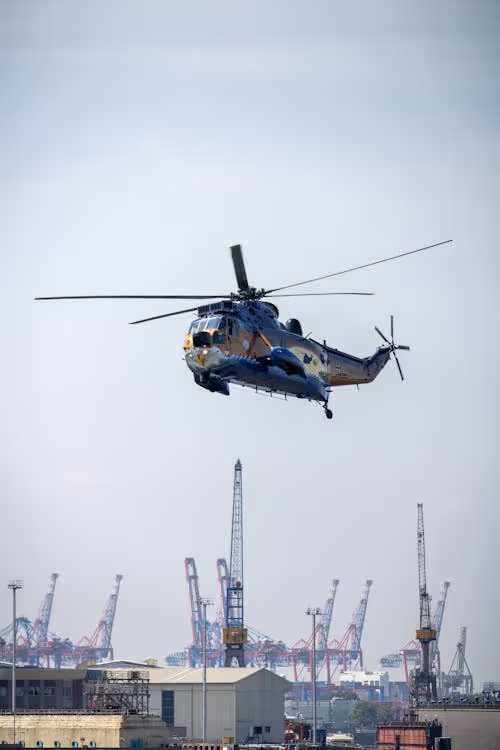
blue and yellow helicopter flying over a harbor with ground cranes in the background
Photo by Niklas Jeromin from Pexels

Heavy-Lift Aircraft Built for Demanding Infrastructure Operations

A successful aerial lift requires the right helicopter for the job. Helicopter Express, based in North Georgia (and operating throughout the entire U.S. and abroad), operates a versatile fleet designed to support elaborate infrastructure projects from start to finish.

Here are a few of our favorite heavy-lift choppers for major infrastructure work.

Sikorsky S-64E & S-64F Skycranes

The pinnacle of our fleet’s capabilities, our Sikorsky S-64E & S-64F Skycranes have undisputed strength. These aircraft regularly handle external loads of up to 25,000 pounds, making them ideal for transporting and placing bridge sections, dam components, and large tunnel materials.
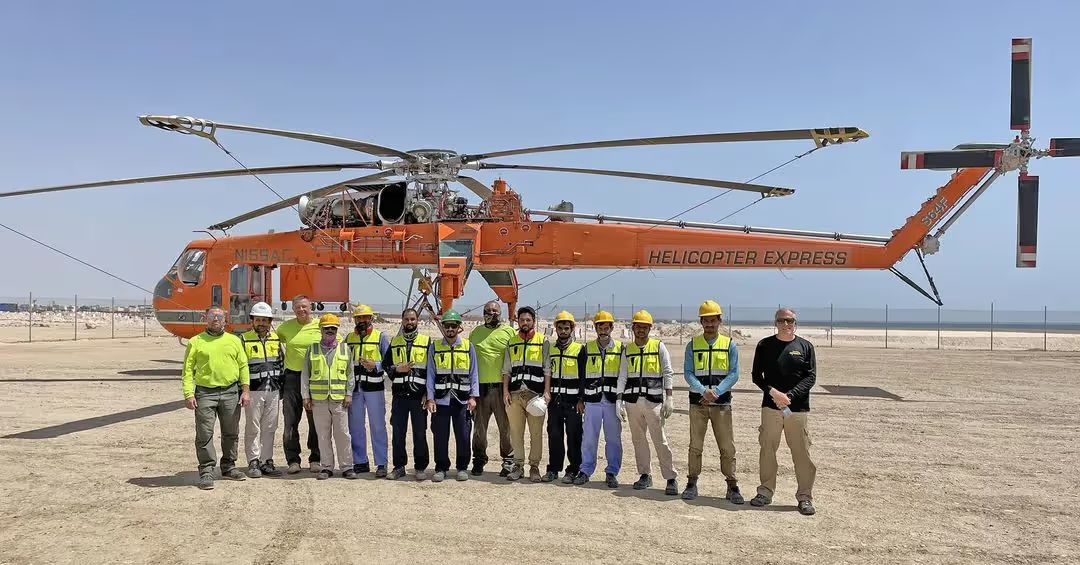
Helicopter Express team standing in front of an orange Sikorsky S-64 Skycrane helicopter on a clear day
Photo from Helicopter Express

Kaman K-Max K-1200

A true workhorse, the Kaman K-Max combines agility and power for efficient heavy lifting operations. With an impressive 6,000-pound lift capacity and compact footprint, this chopper performs well in tight spaces and under extreme conditions.
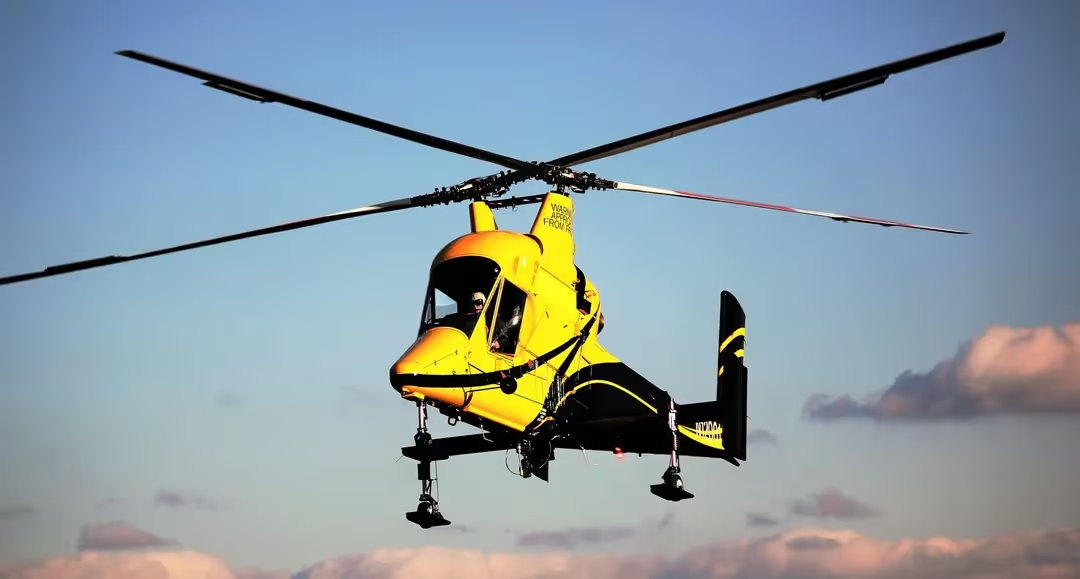
yellow and black Kaman K-Max K-1200 helicopter flying in blue skies
Photo from Helicopter Express

Bell 205A-1++

With an exceptional range of 345 miles and high positioning accuracy, the dependable Bell 205A-1++ supports work in remote construction sites and jobs that span wide geographic locations.
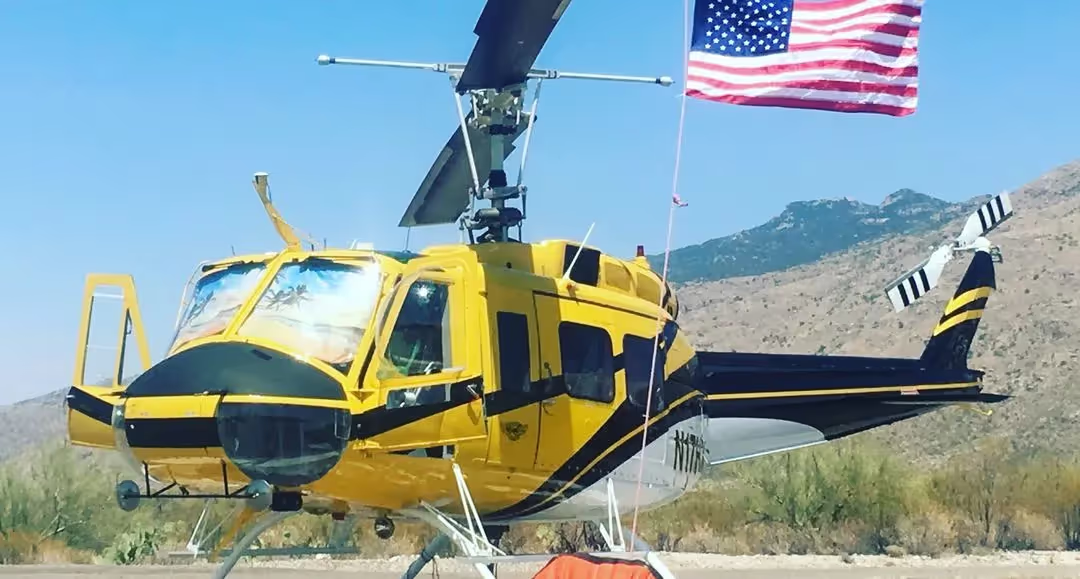
yellow and black Bell 205A-1++ helicopter sitting behind an American flag with mountains in the background
Photo from Helicopter Express

Helicopter Express: A Partner You Can Trust for Your Complex Infrastructure Operation

Major infrastructure projects require more than just heavy-lift helicopters and capable pilots. They demand intricate coordination, deep aerial lifting expertise, and clear communication at every stage. The skilled team at Helicopter Express has supported bridge, dam, and tunnel construction and maintenance projects for over three decades.

When you work with us, you’re guaranteed to get:

  • Experienced Pilots and Crews: We believe that skilled pilots are the backbone of our operation. Our elite pilots have extensive experience in heavy-lift helicopter work and know how to safely navigate rough terrain, position demanding loads, and operate in tight, high-risk environments.

  • Customized Project Planning: Each job presents unique challenges and requirements. That’s why our experts will work closely with you to develop a comprehensive plan that considers your scope, location, timeline, and budgetary considerations.

  • Commitment to Safety and Reliability: Safety is our unwavering priority at Helicopter Express. Our experienced pilots, rigorous maintenance protocols, and well-trained crew members carry out every lift with adherence to the highest industry standards.

Whether you need support for a public infrastructure upgrade or a large-scale construction operation, contact our helicopter service experts today to request a quote. We work with agencies, businesses, and contractors throughout Georgia, across the United States, and in many locations abroad.

The Hidden Heroes: Helicopter Support in Major Infrastructure Projects

Major infrastructure projects like bridges, dams, and tunnels are true feats of engineering. But what onlookers can’t see from the outside is the immense logistical work and powerful equipment it takes to move massive components into challenging landscapes, dense urban areas, and sensitive ecosystems—often on tight timelines.

Heavy-lift helicopters are the hidden heroes in complex infrastructure operations. They are capable of accessing difficult terrain and placing heavy materials with precision, all while reducing risk to crew members and surrounding landscapes. These aircraft offer critical support behind the scenes, enabling both the initial construction and eventual upgrades to be completed efficiently.

Keep reading to learn how helicopters support large-scale infrastructure work, the unique benefits they provide, and why Helicopter Express is a trusted aerial service provider for agencies and contractors across the globe. 

How Helicopters Support Bridge Construction and Maintenance

Building critical public works like bridges frequently requires crews to overcome challenges that limit ground access, like highways, dense cityscapes, rivers, and canyons. Heavy-lift helicopters are capable of working around these obstacles without requiring approach roads or facing the difficulty of placing large ground cranes on rugged or constrained topography. 

Here are several ways helicopters support bridge construction and maintenance while avoiding many of the disruptions and delays often associated with ground work:

  • Material Delivery to Hard-to-Reach Sites: Helicopters can transport heavy building materials like formwork, towers, rebar, and concrete buckets to remote sites or dense urban centers. This reduces the need for road closures and limits the extensive ground preparation required for traditional crane work.

  • Precision Placement of Structural Components: Pilots experienced with aerial crane support can position prefabricated bridge sections, steel members, and girders over active roadways, waterways, and canyons with extreme accuracy. This level of precision improves installation efficiency and reduces labor costs and project timelines.

  • Rapid Assembly of Construction Materials: By completing multiple controlled lifts in a short timeframe, helicopters enable crews to capitalize on short weather windows to keep complex bridge projects moving forward without delay.

  • Routine Inspections and Repairs: For routine bridge inspections and ongoing maintenance work, helicopters provide access to hard-to-reach areas beneath bridge decks, over water, or above traffic corridors. The quick transportation of inspection crews, tools, and replacement parts allows teams to complete critical repairs in a timely manner.
side-by-side bridges over a body of water at dusk
Photo by Griffin Wooldridge from Pexels

Real-World Example of Rotorcraft at Work: The Danube River Bridge

The construction of the Danube River Bridge in Novi Sad, Serbia is an engineering marvel made possible by two Sikorsky S-64 Skycrane helicopters. These heavy-lift rotorcraft lifted large steel sections into place over the Danube River, quickly assembling the bridge without relying solely on extensive scaffolding or cranes. Maneuvering around tight spaces with ease, these helicopters played a key role in building an impressive structure that linked two parts of the country and boosted the local economy.

Discover more real-life examples of bridges, transmission lines, wind farms, and other complex construction projects that heavy-lift helicopters made possible. 

How Helicopters Simplify Dam Building and Repair Work

Dams are often located in narrow valleys or watersheds where ground-based transportation is slow, costly, and environmentally impactful. Helicopters simplify the construction and ongoing maintenance of dams in many critical ways.

  • Material Transport to Remote Locations: Crews can rely on rotorcraft to transport concrete, rebar, oversized mechanical components, and specialized tools to faraway dams without needing to build temporary access roads in environmentally sensitive areas.
  • Staged Logistical Assistance: Temporary platforms, barge components, and safety equipment can be moved as work progresses, keeping crews on task and on schedule.

  • Inspections and Maintenance: Aerial surveys allow observers to capture reliable, real-time data about existing dams so they can identify issues early and prioritize timely repairs.

  • Rehabilitation and Retrofit Support: In regions where crane access is limited, rotorcraft can lift replacement gates, penstock sections, and other equipment to support rehabilitation and retrofit work on aging dams.
hydroelectric dam in a lush mountainous region under blue skies
Photo by Quang Nguyen Vinh from Pexels

Real-World Example of Rotorcraft at Work: Hoover Dam Bypass Bridge

During construction of Nevada’s Hoover Dam Bypass Bridge, helicopters worked alongside traditional methods to lift large steel sections into place. This hybrid approach allowed construction crews to complete work more efficiently despite challenging terrain and tight working conditions. 

Aerial Support for Tunnel Construction and Access Work

Tunnel construction begins long before the excavation process commences. Here’s how heavy-lift helicopters aid critical work in difficult environments:

  • Delivery to Remote Portal Locations: Ventilation shaft components, power units, portal support structures, and construction gear can be flown directly to steep slopes or high-elevation sites far from existing roads.

  • Efficient Transportation of Materials to Entry Points: Helicopters can transport drilling rigs, excavators, rock bolts, lattice girders, and other drilling equipment to intermediate entry points that would be too costly or impractical to reach by ground vehicle.

  • Rapid Access for Long Linear Projects: Aerial teams can move and reposition survey, monitoring, and safety equipment along tunnel alignments to support geotechnical and construction personnel with ease.

two highway tunnel openings inside a cliff under gray skies
Photo by Katelin Post from Pexels

Real-World Example of Rotorcraft at Work: High-Elevation Operations in the Himalayas

Heavy-lift helicopters like the Erickson Aircrane S-64 have supported many high-elevation power transmission projects in the Himalayas, moving steel, machinery, and other equipment into remote regions where tunnels form critical corridors.

Key Advantages of Helicopter Assistance for Major Infrastructure Projects

Aerial support offers numerous benefits throughout the construction and ongoing maintenance of major infrastructure like bridges, dams, and tunnels.

  • Improved Access: Helicopters are able to fly for hundreds of miles at a time without disruption, and their hovering capabilities allow them to navigate steep, secluded, or urban-constrained locations with ease.

  • Limited Ground Disruption: Because they don’t require the building of approach roads or the placement of dense ground equipment, helicopters significantly limit the environmental impact of major construction work. This is especially crucial in dense urban centers, within protected lands, or in other environmentally sensitive areas.

  • Faster Timelines: Quick material delivery and accurate placement of large structural components can be completed in hours or days instead of weeks or months. This results in significant time and cost savings and enables projects to stay on track during short construction seasons and weather windows.

  • Reduced Risk: Experienced pilots flying modern heavy-lift helicopters can place loads with pinpoint precision, limiting manual handling at significant heights and reducing crew member risk in hazardous conditions.

  • Flexible Deployment: Rotorcraft can mobilize quickly and easily adapt to changing needs, making them invaluable for both planned work and urgent repairs.

blue and yellow helicopter flying over a harbor with ground cranes in the background
Photo by Niklas Jeromin from Pexels

Heavy-Lift Aircraft Built for Demanding Infrastructure Operations

A successful aerial lift requires the right helicopter for the job. Helicopter Express, based in North Georgia (and operating throughout the entire U.S. and abroad), operates a versatile fleet designed to support elaborate infrastructure projects from start to finish.

Here are a few of our favorite heavy-lift choppers for major infrastructure work.

Sikorsky S-64E & S-64F Skycranes

The pinnacle of our fleet’s capabilities, our Sikorsky S-64E & S-64F Skycranes have undisputed strength. These aircraft regularly handle external loads of up to 25,000 pounds, making them ideal for transporting and placing bridge sections, dam components, and large tunnel materials.

Helicopter Express team standing in front of an orange Sikorsky S-64 Skycrane helicopter on a clear day
Photo from Helicopter Express

Kaman K-Max K-1200

A true workhorse, the Kaman K-Max combines agility and power for efficient heavy lifting operations. With an impressive 6,000-pound lift capacity and compact footprint, this chopper performs well in tight spaces and under extreme conditions.

yellow and black Kaman K-Max K-1200 helicopter flying in blue skies
Photo from Helicopter Express

Bell 205A-1++

With an exceptional range of 345 miles and high positioning accuracy, the dependable Bell 205A-1++ supports work in remote construction sites and jobs that span wide geographic locations.

yellow and black Bell 205A-1++ helicopter sitting behind an American flag with mountains in the background
Photo from Helicopter Express

Helicopter Express: A Partner You Can Trust for Your Complex Infrastructure Operation

Major infrastructure projects require more than just heavy-lift helicopters and capable pilots. They demand intricate coordination, deep aerial lifting expertise, and clear communication at every stage. The skilled team at Helicopter Express has supported bridge, dam, and tunnel construction and maintenance projects for over three decades.

When you work with us, you’re guaranteed to get:

  • Experienced Pilots and Crews: We believe that skilled pilots are the backbone of our operation. Our elite pilots have extensive experience in heavy-lift helicopter work and know how to safely navigate rough terrain, position demanding loads, and operate in tight, high-risk environments.

  • Customized Project Planning: Each job presents unique challenges and requirements. That’s why our experts will work closely with you to develop a comprehensive plan that considers your scope, location, timeline, and budgetary considerations.

  • Commitment to Safety and Reliability: Safety is our unwavering priority at Helicopter Express. Our experienced pilots, rigorous maintenance protocols, and well-trained crew members carry out every lift with adherence to the highest industry standards.

Whether you need support for a public infrastructure upgrade or a large-scale construction operation, contact our helicopter service experts today to request a quote. We work with agencies, businesses, and contractors throughout Georgia, across the United States, and in many locations abroad.

Make us your go-to team.

Our highly skilled pilots have the experience and equipment needed to rise to any challenge. When you need experts you can trust, give us a call.