
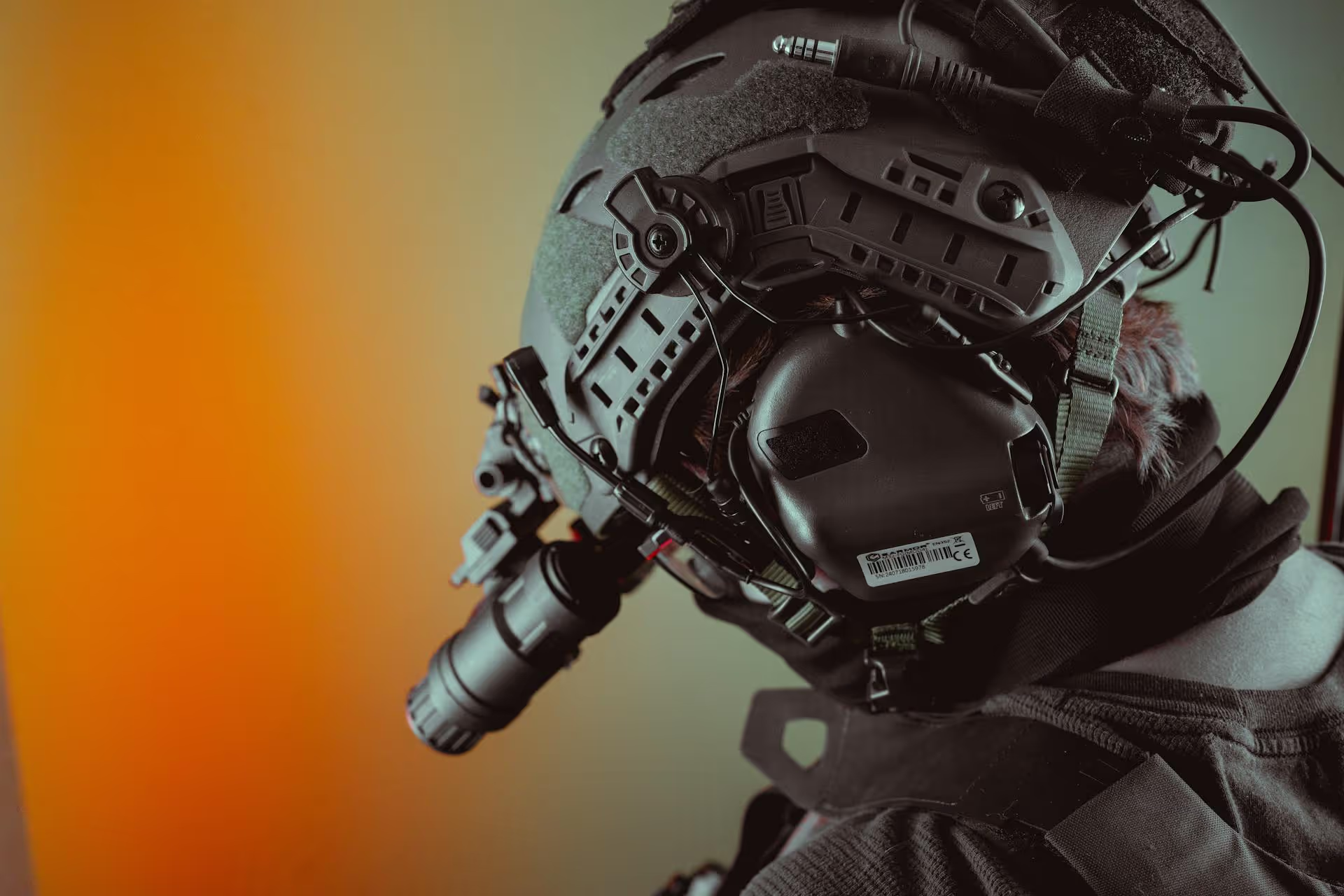
Helicopter operations don’t necessarily stop when the sun sets. Emergency missions like disaster response and time-sensitive tasks like infrastructure repair often continue long after daylight fades. But flying at night introduces some serious visibility challenges that night vision technology was created to address.
Night vision goggles help pilots see more effectively in low-light environments. This equipment has expanded operational capabilities and made night flying significantly safer, but it’s only as effective as the training, systems, and safety culture behind it.
In this article, we’ll dive into how night vision goggles work, the benefits and limitations they present, and FAA training requirements pilots must complete for safe integration of night vision technology into after-dark flight.
What Are Night Vision Goggles and How Do They Work?
Night vision goggles—also known as NVGs—are goggles that pilots wear to amplify light during nighttime flight. They can be either binocular (two lenses) or monocular (one lens).
These devices deliver a bright, intensified image of faraway obstacles and terrain directly to the pilot’s eyepiece, despite low-light conditions. Essentially, NVGs replace many of the visual cues that pilots would otherwise lose to the darkness.
How NVGs Amplify Light in the Dark
When flying at night, electromagnetic energy–both visible and infrared—bounces off nearby terrain before entering the goggles through the front lens. Inside the goggles, that light energy (referred to as photons) hits a component called an image intensifier.
Here’s what happens next:
- The photocathode element converts the light into electrons before moving them to the microchannel plate.
- The microchannel plate speeds up the electrons and multiplies them thousands of times.
- The boosted electrons hit a phosphor screen that turns them back into visible light.
- The phosphor screen delivers the light to the goggles as a focused image in a single color (usually green or sometimes amber).
Unlike a regular video camera, NVGs don’t need much light to work. Even very faint light, like starlight or low moonlight, is enough. That’s because this technology is capable of amplifying available light thousands of times. In fact, modern systems can intensify light up to 35,000 times or more.
However, NVGs aren’t magic. In total darkness, there’s no light to amplify. And in very bright conditions, too much light can reduce performance.
NVGs: One Element of an Entire System
Night vision goggles are just one piece of a total Night Vision Imaging System (NVIS). All three parts must work properly to perform successful nighttime operations.
These three elements include:
- FAA-approved NVG-compatible lighting system
- Flight and maintenance crews who are properly trained in nighttime flying and use of NVGs
- FAA-accepted maintenance program for both the aircraft NVIS lighting system and the NVGs themselves
Night vision tools should only be used to aid flight in limited-visibility environments—never to encourage pilots to take unnecessary risks. Aerial crews must be capable of continuing safe flight operations if any part of the NVIS fails.

Night Vision Goggles: Real-Life Applications
Night vision goggles are critical tools in a variety of helicopter operations. These devices:
- Support life-saving emergency missions like search and rescue efforts that take place in complex environments, disaster relief work that cannot wait for daylight, and aerial firefighting tasks when wildfires ravage at night.
- Assist with power line inspections, railroad repairs, and other critical safety-related tasks often necessary during low-light conditions.
- Extend creative and logistical opportunities for aerial cinematography projects that require dramatic nighttime scenes, as well as luxury charters for VIPs who have somewhere important to be.
Operational Benefits of Night Vision Technology
Night vision goggles enhance safety and efficiency in night flight environments in several key ways:
- Improved Safety: During critical phases of flight, such as takeoffs and landings, this technology provides enhanced visual cues and reference points. Elevated situational awareness helps pilots avoid hazardous situations.
- Increased Maneuverability: Better visibility enables pilots to see obstacles and terrain more clearly, reducing collision risk and helping them maneuver easier in tight or rugged locations, like mountain ranges or dense urban areas.
- Higher Visual Acuity: Clearer visuals in low light give pilots greater visual acuity. A pilot’s unaided night vision could be 20/200 or worse, but a pilot with properly adjusted NVGs may have a visual acuity of 20/40 or 20/30. Some newer goggles are capable of achieving 20/25 nighttime visual acuity.
- Expanded Capabilities: NVGs allow helicopters to operate in dark conditions that would otherwise require cancellation, expanding the scope of missions helicopters can support. This gives operators greater flexibility to respond to emergencies, tight project timelines, and time-sensitive operations without waiting for daylight.

Operational Limitations and Risk Considerations
Flying at night is still challenging even with advancements in night vision technology. There are many disadvantages that pilots need intensive training and experience to overcome.
Potential obstacles include:
- Greater Workload: Pilot workload initially increases as they learn how to use night vision equipment effectively. These specialized tools are not easy to operate and require specialized training.
- Depth Perception and Peripheral Vision Changes: Night vision goggles can reduce a pilot’s ability to judge distances accurately while limiting their field of view, which requires frequent head movement. Training teaches pilots how to compensate for these issues.
- Impaired Visibility: Bright light sources like oncoming aircraft can cause glare and image distortion or degradation. Impaired visibility—even if temporary—can hide terrain and other obstacles from a pilot’s field of vision.
- Heightened Fatigue: Added helmet weight and head pressure can affect a pilot’s balance and comfort during flight, and nighttime operations demand sustained concentration that causes eye strain. All of these factors contribute to pilot fatigue during lengthy operations.
- Complacency Risk: Overreliance on night vision technology may lead pilots to skip routine but critical tasks, like the frequent scanning required for situational awareness.
- Time to Adapt to the Dark: NVG usage requires pilots to overcome a period of dark adaptation as they switch from aided to unaided flight.
- Cost: Technology designed to help aerial crews see in the dark is expensive to purchase and maintain.
Despite the learning curve for successful use of night vision systems, NVGs are a valuable tool for boosting safety and expanding operational windows. When pilots undergo extensive, specialized training, get proper rest, and implement risk management techniques, this technology greatly enhances overall mission success.
Learn more about recent advancements in night vision technology.
FAA Training Requirements for NVG Authorization
Pilots seeking to use night vision goggles must pursue NVG authorization. This requires them to satisfy the requirements laid out in 14 CFR Part 61.31(k)(1-2).
In practical terms, this means completing both ground training and flight training with an authorized instructor, as well as receiving the proper logbook endorsements.
Ground Training Requirements
Pilots who wish to use NVGs must:
- Complete and log NVG ground training with an authorized instructor
- Receive a logbook or training record endorsement confirming completion
Ground training must cover:
- FAA regulations that apply to NVG limitations and operations
- Aeromedical factors (how night vision works, challenges pilots face, stress factors, etc.)
- Normal, abnormal, and emergency NVG equipment procedures
- NVG performance and interpretation
- NVG-specific flight planning, including night terrain interpretation and related risk factors
Flight Training Requirements
Pilots seeking NVG authorization must also:
- Complete and log NVG flight training with an authorized instructor
- Receive a logbook endorsement confirming proficiency in NVG operations
Flight training must include:
- Proper use of internal and external aircraft lighting during NVG operations
- Preflight inspection and preparation of NVG equipment
- NVG flight techniques during takeoff, climb, en route operations, descent, and landing
- Normal, abnormal, and emergency NVG flight operations
Exceptions to FAA NVG Training Requirements
The requirements under 14 CFR 61.31(k)(1) and (2) do not apply if a pilot can document that they have successfully completed an NVG proficiency check conducted by one of the following:
- The U.S. Armed Forces
- An FAA Examiner or Check Airman
- An NVG manufacturer or authorized instructor (applies only if the manufacturer or instructor works for a federal, state, county, or municipal law enforcement agency and has logged at least 20 hours as pilot in command in NVG operations)
In addition to the initial qualification for pilots who are new to night vision goggle operations, recurrent proficiency training helps maintain NVG skills and authorization. Pilots seeking NVG instructor qualifications must successfully complete an authorized NVG instructor course as well.

Approved Night Vision Goggles
Not all NVGs are created equal, and operators must ensure their equipment meets FAA acceptance standards for aviation use.
Helicopter operators must:
- Use approved night vision goggles
- Understand exactly which performance specifications they need
Currently only three manufacturers provide FAA-accepted NVGs:
- ITT’s F4949
- NIVISYS
- L-3’s M949
Selecting approved, mission-appropriate equipment is a critical step in maintaining compliance, protecting crews, and ensuring reliable performance in low-light operations.
Discover Nighttime Operations at Helicopter Express
At Helicopter Express, safety is the underlying foundation of everything we do. We offer a wide range of helicopter services, from heavy-lift construction and infrastructure repairs to aerial firefighting and disaster response.
Our three decades in the aviation industry have taught us that nighttime operations demand more than just advanced technology. They require highly trained crews, FAA-compliant systems, and a culture that prioritizes risk management during every phase of flight. That’s why we integrate rigorous training standards with top-tier equipment to maintain performance without compromising safety.
If your project requires reliable helicopter support during the day or night, contact us today. We’ll show you how our team and fleet can make your mission safer, more cost effective, and more efficient.