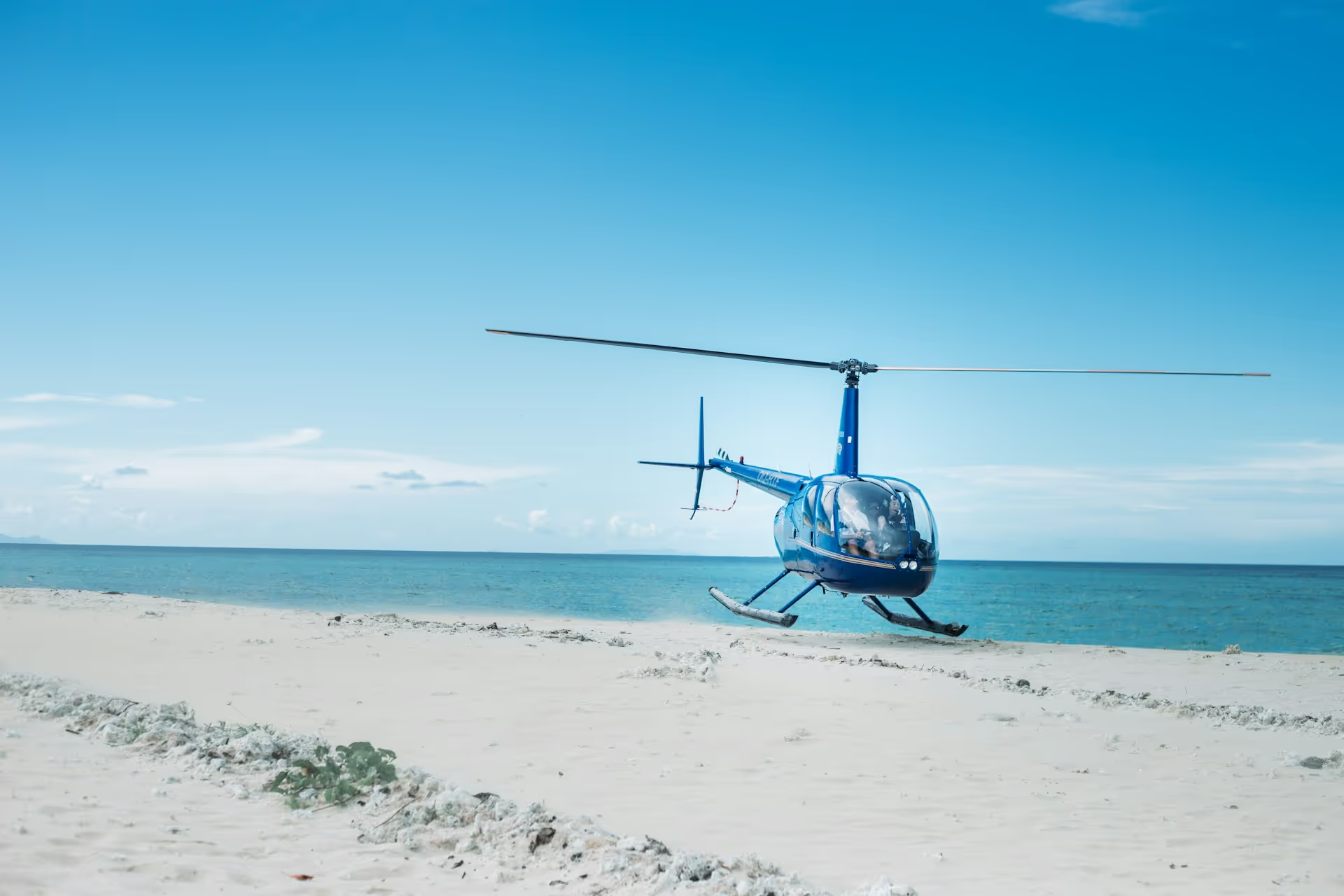
How Helicopters Are Transforming Beach Restoration Projects

Learn how helicopters support and enhance beach restoration projects through precise sand placement, dune resculpting, and efficient environmental monitoring.

Coastal erosion is more than just a distant threat—it’s actively reshaping shorelines every day. In fact, coastline recession rates of 25–50 feet per year are not uncommon along barrier islands and regions like the Great Lakes. 

As climate change leads to rising sea levels and intensifying storms, erosion thins shorelines and eliminates necessary barriers between coastal communities and the sea. Local residents, ecosystems, and infrastructure depend on large-scale beach restoration efforts to stay protected from the elements.

But restoring shorelines is not a simple task. Replenishment projects require quick and accurate assessments, precision placement of sediment, and long-term monitoring to determine operational success.

Read on to discover how helicopters streamline sand replenishment, enhance dune rebuilding efforts, improve environmental impact assessments, and keep field teams safe. We’ll also explore the challenges and benefits of helicopter-assisted beach rehabilitation and share why Helicopter Express is the right partner for modern coastal management. 

What Is Beach Restoration?

Beach restoration—also known as beach nourishment or replenishment—is the strategic process of adding sand onto a beach suffering from erosion. Key goals of beach restoration include:

  • Providing a wider buffer against ocean waves to protect coastal communities from storms and flooding and prevent further coastal degradation
  • Improving recreational opportunities for locals and tourists alike
  • Restoring habitats for wildlife like shorebirds and nesting sea turtles

Why is this important? Shoreline loss currently affects 40% of U.S. coasts, creating increased risk of dangerous flooding. Floodwaters can threaten the lives, property, and infrastructure of the 13 million Americans living in low-lying coastal zones. 

Beach restoration projects allow us to address this phenomenon and prevent disaster through sand replenishment, dune rebuilding, and vegetation planting projects.

The Role of Helicopters in Sand Replenishment Projects

Sand replenishment is the foundation of most shoreline restoration projects. Specialists have traditionally relied on dump trucks and offshore pump systems, like dredgers, to acquire sand and move it into place. However, those methods can be slow, restricted by terrain, or hazardous after storms. 

Helicopters can accelerate these operations by providing logistical support, swift transportation, repeatable aerial surveys, efficient sourcing, and targeted placement of sediment and reinforcements.

Logistics and Transport

Helicopters are capable of carrying heavy loads, including personnel, specialized tools, and even sediment via external-load systems. When roads are limited due to recent storms or unstable cliffs present safety risks, aerial transport keeps work on schedule and ensures individuals stay out of harm’s way.

Aerial Surveys

Helicopters equipped with instruments like LiDAR and photogrammetry can fly over beaches to map shorelines in great detail. This mapping offers a clear picture of erosion patterns and sediment distribution so researchers can determine how much sand is required and where replenishment is needed most.

Sand Sourcing

Crews may collect sediment from nearby stockpiles, offshore dredging, or inland quarries. Helicopters are capable of moving crews and equipment between sourcing locations and beach deposit sites to accelerate the process during project phases where time is critical.

Precision Placement

Helicopters can’t replace large-scale pumping systems like dredgers, but they can help deliver sand to high-traffic or environmentally sensitive areas. Their speed reduces downtime, and experienced pilots are capable of placing sand exactly where it’s needed along narrow beaches or rocky shorelines.
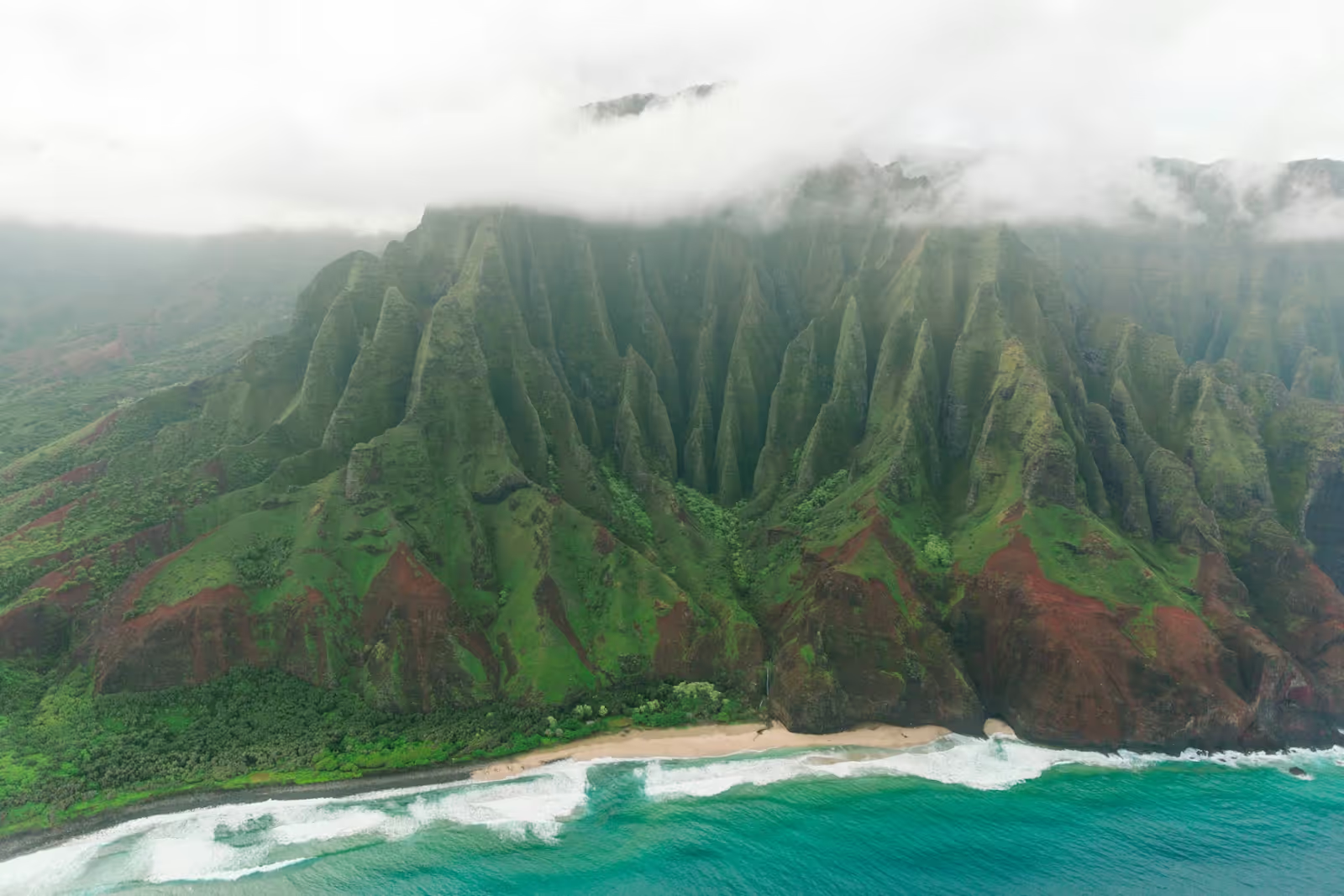
aerial view of a small beach surrounded by green and brown mountains extending into the clouds
Photo by Jordan McQueen from Unsplash

How Helicopters Support Dune Restoration and Vegetation Planting

Sand dunes are crucial for coastal resilience. They play several important roles, like:

  • Protecting coasts against high waves and storm surges, which prevents flooding and damage to properties and infrastructure
  • Providing important ecological habitats for wildlife, plants, and insects
  • Storing and supplying sand to eroded beaches

When dunes are flattened or eroded by storms, helicopters can facilitate the rebuilding process in several ways.

Dune Rebuilding and Contouring

In narrow areas or protected regions where heavy ground equipment cannot operate, aerial crews can deliver sediment and replenishment materials to specific points along dune lines. This work enables restoration teams to rebuild dunes and sculpt new contours without disturbing the surrounding environment.

Vegetation Transport and Planting

Vegetation species like native dune grass and sea oats are essential for shoreline and barrier island protection. They provide food and shelter for wildlife, trap blowing sand, and offer reinforcement that helps prevent erosion.

Helicopters enable the growth of this vital vegetation by:

  • Transporting plants to remote or protected rehabilitation areas
  • Moving planting crews quickly along long stretches of shoreline
  • Delivering stabilization materials, such as fencing

Dune Recovery Monitoring

Aerial helicopter surveys help scientists monitor dune shapes and vegetation, track dune growth, and monitor stability over time. This research makes it easier to document progress and identify areas that require additional reinforcement before approaching storm seasons.

Environmental Impact Assessments and Coastal Erosion Monitoring

Environmental assessments are necessary during key stages of beach restoration projects. Helicopters enable researchers to collect accurate, detailed data from the sky—all while minimizing ground disturbance—to determine where reinforcements are needed and whether replenishment efforts are working.

Pre-Work Surveys

Helicopters equipped with specialized tools and technology can cover long stretches of coastline to identify wildlife habitats, nesting areas of sensitive species, and resources that restoration efforts could impact. 

Critical survey tools include:

  • Aerial Photography: Instead of relying on ground crews, helicopters equipped with cameras and photographers can fly over shorelines to capture high-resolution images from multiple altitudes and angles. Especially useful for surface-level visuals and vegetation analysis, aerial photography provides a clear, real-time picture of shoreline conditions to help guide recovery plans.

  • Photogrammetry: Photogrammetry is a process by which researchers take a sequence of overlapping images along planned flight paths to build 3D models of environments like beaches and dunes. These accurate reconstructions reveal subtle changes in shorelines that help predict erosion and plan for shoreline rehabilitation.

  • LiDAR: Helicopter-mounted light detection and ranging (LiDAR) technology emits laser pulses to gather data and create accurate, high-resolution 3D maps of dune topography for further analysis. These models help restoration teams assess dune shape, measure sediment volume, and evaluate how storms impact coastlines. 

Together, these tools help scientists evaluate beaches and plan for interventions without disturbing the fragile ecosystem below.
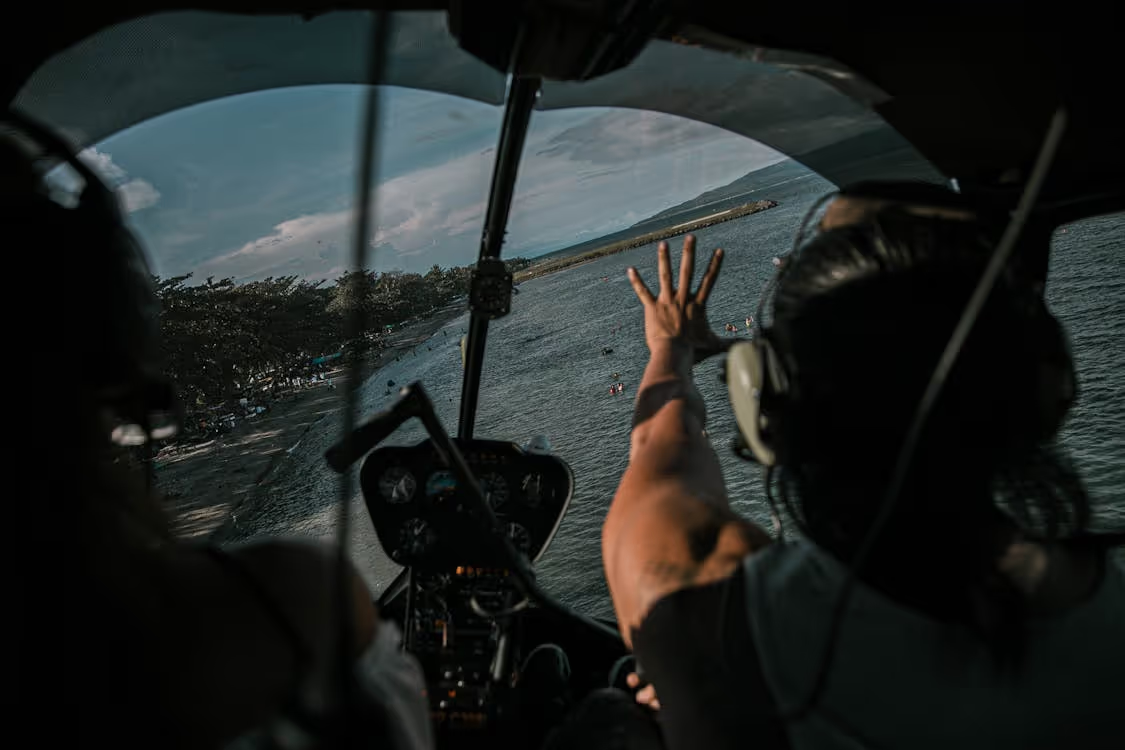
view from inside a helicopter cockpit of a pilot with an outstretched arm flying low over a beach
Photo by Denniz Futalan from Pexels

Post-Work Monitoring

Once sand is placed and shorelines are rebuilt, coastal erosion monitoring helps researchers:

  • Track beach and dune elevation changes, erosion rates, vegetation growth, and ecological recovery
  • Determine whether operations have been successful or if further work is needed
  • Make timely adjustments if shoreline loss accelerates or vegetation fails to take root

Long-Term Assessments

Helicopters provide support for researchers who need to collect consistent data about the same areas across months or years. Consistent data makes it easier to determine how recovery efforts are progressing, where conditions are improving or declining, and what adjustments may be needed to protect shorelines over time.

Operational Challenges and Safety Considerations

Helicopters offer significant advantages, but there are several logistical and environmental factors to keep in mind.

  • Inclement Weather Risks: Careful planning is necessary to help crews avoid hazardous conditions like storms, wind, heavy rain, and low visibility.

  • Maintenance Hurdles: Crews must carefully inspect helicopters and adhere to all maintenance recommendations to ensure salt spray, high humidity, and airborne sand do not corrode aircraft components and impact operations.

  • Environmental Constraints: Coordination with biologists ensures pilots minimize disturbance to wildlife and nesting sites.

  • Regulatory Compliance: All helicopter operators must secure necessary permits and comply with strict airspace requirements and environmental protection regulations.
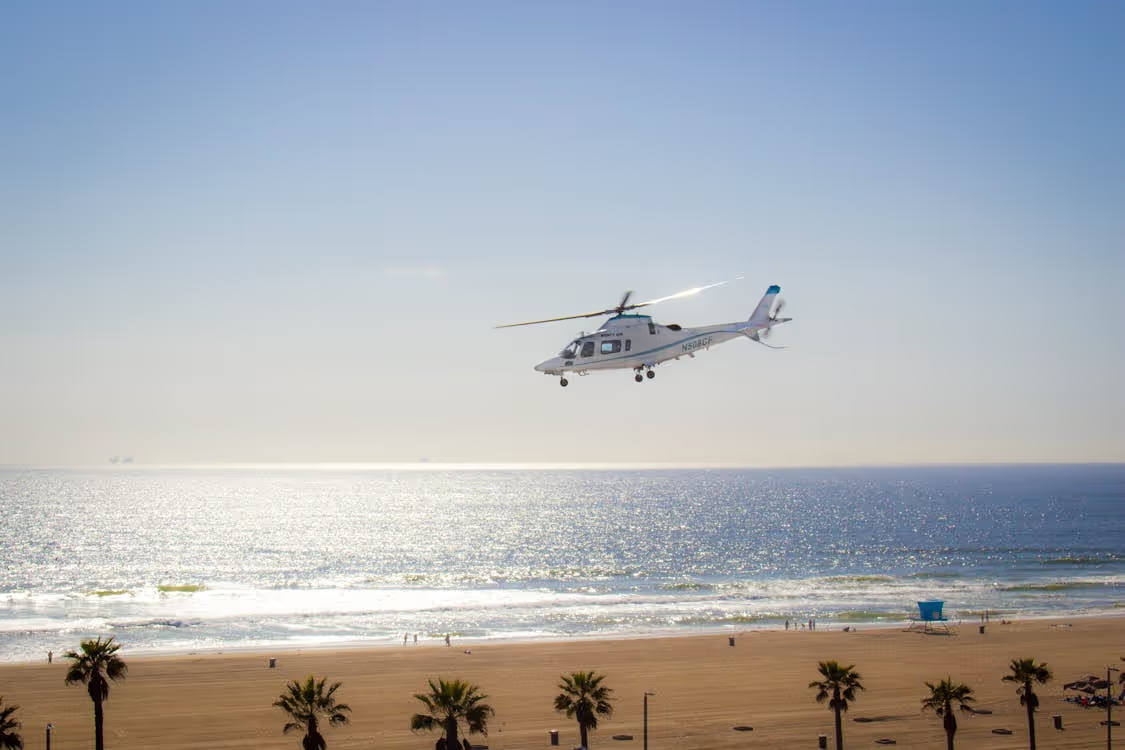
white helicopter flying low over a shoreline on a sunny day at the beach
Photo by Phil from Pexels

How Helicopter Operations Benefit Beach Restoration Projects

Aerial support offers unmatched advantages for beach restoration teams seeking accessibility, safety, and accuracy.

  • Boosted Speed and Flexibility: Helicopter teams can mobilize quickly after storms, reach damaged areas faster than ground-based crews, and fly low or hover in place when needed.

  • Increased Accessibility: Rotorcraft can bypass boggy wetlands and steep cliffs, reaching remote islands and accessing a variety of unique environments with speed and precision.

  • Enhanced Capabilities: A range of helicopter models can be chosen to match the specific demands of your beach restoration project, whether the priority is passenger capacity, external load limits, speed, range, or specialized capabilities. These aircraft can also be equipped with specific technology and tools to enhance efficiency.

  • Exacting Precision: Helicopter crews can deliver vegetation and place sand exactly where it’s needed, reducing waste and improving rehabilitation outcomes.

  • Safety: Aerial work drastically reduces the risks of on-foot coastal work since helicopters can fly over unstable dunes, eroding cliffs, and beachfronts prone to landslides. 

These advantages mean rehabilitation teams can work faster, safer, and with greater accuracy to accelerate the return of healthy coastlines.

Why Choose Helicopter Express for Your Beach Restoration Project

Helicopter Express provides dependable aerial support for beach restoration efforts, coastal research projects, heavy lifting, environmental assessments, and more. Our experienced pilots are trained to operate in challenging environments, executing complex external load operations and precision placement with confidence. Backed by a versatile fleet, we’re equipped with the capabilities and expertise needed to match the unique requirements of your operation. By working closely together to develop a comprehensive plan, our experts deliver exceptional results every time.

If you’re ready to elevate your beach restoration project, contact Helicopter Express today. We’ll show you how our collaborative approach and unmatched expertise guarantee seamless and successful project execution.

How Helicopters Are Transforming Beach Restoration Projects

Coastal erosion is more than just a distant threat—it’s actively reshaping shorelines every day. In fact, coastline recession rates of 25–50 feet per year are not uncommon along barrier islands and regions like the Great Lakes. 

As climate change leads to rising sea levels and intensifying storms, erosion thins shorelines and eliminates necessary barriers between coastal communities and the sea. Local residents, ecosystems, and infrastructure depend on large-scale beach restoration efforts to stay protected from the elements.

But restoring shorelines is not a simple task. Replenishment projects require quick and accurate assessments, precision placement of sediment, and long-term monitoring to determine operational success.

Read on to discover how helicopters streamline sand replenishment, enhance dune rebuilding efforts, improve environmental impact assessments, and keep field teams safe. We’ll also explore the challenges and benefits of helicopter-assisted beach rehabilitation and share why Helicopter Express is the right partner for modern coastal management. 

What Is Beach Restoration?

Beach restoration—also known as beach nourishment or replenishment—is the strategic process of adding sand onto a beach suffering from erosion. Key goals of beach restoration include:

  • Providing a wider buffer against ocean waves to protect coastal communities from storms and flooding and prevent further coastal degradation
  • Improving recreational opportunities for locals and tourists alike
  • Restoring habitats for wildlife like shorebirds and nesting sea turtles

Why is this important? Shoreline loss currently affects 40% of U.S. coasts, creating increased risk of dangerous flooding. Floodwaters can threaten the lives, property, and infrastructure of the 13 million Americans living in low-lying coastal zones. 

Beach restoration projects allow us to address this phenomenon and prevent disaster through sand replenishment, dune rebuilding, and vegetation planting projects.

The Role of Helicopters in Sand Replenishment Projects

Sand replenishment is the foundation of most shoreline restoration projects. Specialists have traditionally relied on dump trucks and offshore pump systems, like dredgers, to acquire sand and move it into place. However, those methods can be slow, restricted by terrain, or hazardous after storms. 

Helicopters can accelerate these operations by providing logistical support, swift transportation, repeatable aerial surveys, efficient sourcing, and targeted placement of sediment and reinforcements.

Logistics and Transport

Helicopters are capable of carrying heavy loads, including personnel, specialized tools, and even sediment via external-load systems. When roads are limited due to recent storms or unstable cliffs present safety risks, aerial transport keeps work on schedule and ensures individuals stay out of harm’s way.

Aerial Surveys

Helicopters equipped with instruments like LiDAR and photogrammetry can fly over beaches to map shorelines in great detail. This mapping offers a clear picture of erosion patterns and sediment distribution so researchers can determine how much sand is required and where replenishment is needed most.

Sand Sourcing

Crews may collect sediment from nearby stockpiles, offshore dredging, or inland quarries. Helicopters are capable of moving crews and equipment between sourcing locations and beach deposit sites to accelerate the process during project phases where time is critical.

Precision Placement

Helicopters can’t replace large-scale pumping systems like dredgers, but they can help deliver sand to high-traffic or environmentally sensitive areas. Their speed reduces downtime, and experienced pilots are capable of placing sand exactly where it’s needed along narrow beaches or rocky shorelines.

aerial view of a small beach surrounded by green and brown mountains extending into the clouds
Photo by Jordan McQueen from Unsplash

How Helicopters Support Dune Restoration and Vegetation Planting

Sand dunes are crucial for coastal resilience. They play several important roles, like:

  • Protecting coasts against high waves and storm surges, which prevents flooding and damage to properties and infrastructure
  • Providing important ecological habitats for wildlife, plants, and insects
  • Storing and supplying sand to eroded beaches

When dunes are flattened or eroded by storms, helicopters can facilitate the rebuilding process in several ways.

Dune Rebuilding and Contouring

In narrow areas or protected regions where heavy ground equipment cannot operate, aerial crews can deliver sediment and replenishment materials to specific points along dune lines. This work enables restoration teams to rebuild dunes and sculpt new contours without disturbing the surrounding environment.

Vegetation Transport and Planting

Vegetation species like native dune grass and sea oats are essential for shoreline and barrier island protection. They provide food and shelter for wildlife, trap blowing sand, and offer reinforcement that helps prevent erosion.

Helicopters enable the growth of this vital vegetation by:

  • Transporting plants to remote or protected rehabilitation areas
  • Moving planting crews quickly along long stretches of shoreline
  • Delivering stabilization materials, such as fencing

Dune Recovery Monitoring

Aerial helicopter surveys help scientists monitor dune shapes and vegetation, track dune growth, and monitor stability over time. This research makes it easier to document progress and identify areas that require additional reinforcement before approaching storm seasons.

Environmental Impact Assessments and Coastal Erosion Monitoring

Environmental assessments are necessary during key stages of beach restoration projects. Helicopters enable researchers to collect accurate, detailed data from the sky—all while minimizing ground disturbance—to determine where reinforcements are needed and whether replenishment efforts are working.

Pre-Work Surveys

Helicopters equipped with specialized tools and technology can cover long stretches of coastline to identify wildlife habitats, nesting areas of sensitive species, and resources that restoration efforts could impact. 

Critical survey tools include:

  • Aerial Photography: Instead of relying on ground crews, helicopters equipped with cameras and photographers can fly over shorelines to capture high-resolution images from multiple altitudes and angles. Especially useful for surface-level visuals and vegetation analysis, aerial photography provides a clear, real-time picture of shoreline conditions to help guide recovery plans.

  • Photogrammetry: Photogrammetry is a process by which researchers take a sequence of overlapping images along planned flight paths to build 3D models of environments like beaches and dunes. These accurate reconstructions reveal subtle changes in shorelines that help predict erosion and plan for shoreline rehabilitation.

  • LiDAR: Helicopter-mounted light detection and ranging (LiDAR) technology emits laser pulses to gather data and create accurate, high-resolution 3D maps of dune topography for further analysis. These models help restoration teams assess dune shape, measure sediment volume, and evaluate how storms impact coastlines. 

Together, these tools help scientists evaluate beaches and plan for interventions without disturbing the fragile ecosystem below.

view from inside a helicopter cockpit of a pilot with an outstretched arm flying low over a beach
Photo by Denniz Futalan from Pexels

Post-Work Monitoring

Once sand is placed and shorelines are rebuilt, coastal erosion monitoring helps researchers:

  • Track beach and dune elevation changes, erosion rates, vegetation growth, and ecological recovery
  • Determine whether operations have been successful or if further work is needed
  • Make timely adjustments if shoreline loss accelerates or vegetation fails to take root

Long-Term Assessments

Helicopters provide support for researchers who need to collect consistent data about the same areas across months or years. Consistent data makes it easier to determine how recovery efforts are progressing, where conditions are improving or declining, and what adjustments may be needed to protect shorelines over time.

Operational Challenges and Safety Considerations

Helicopters offer significant advantages, but there are several logistical and environmental factors to keep in mind.

  • Inclement Weather Risks: Careful planning is necessary to help crews avoid hazardous conditions like storms, wind, heavy rain, and low visibility.

  • Maintenance Hurdles: Crews must carefully inspect helicopters and adhere to all maintenance recommendations to ensure salt spray, high humidity, and airborne sand do not corrode aircraft components and impact operations.

  • Environmental Constraints: Coordination with biologists ensures pilots minimize disturbance to wildlife and nesting sites.

  • Regulatory Compliance: All helicopter operators must secure necessary permits and comply with strict airspace requirements and environmental protection regulations.
white helicopter flying low over a shoreline on a sunny day at the beach
Photo by Phil from Pexels

How Helicopter Operations Benefit Beach Restoration Projects

Aerial support offers unmatched advantages for beach restoration teams seeking accessibility, safety, and accuracy.

  • Boosted Speed and Flexibility: Helicopter teams can mobilize quickly after storms, reach damaged areas faster than ground-based crews, and fly low or hover in place when needed.

  • Increased Accessibility: Rotorcraft can bypass boggy wetlands and steep cliffs, reaching remote islands and accessing a variety of unique environments with speed and precision.

  • Enhanced Capabilities: A range of helicopter models can be chosen to match the specific demands of your beach restoration project, whether the priority is passenger capacity, external load limits, speed, range, or specialized capabilities. These aircraft can also be equipped with specific technology and tools to enhance efficiency.

  • Exacting Precision: Helicopter crews can deliver vegetation and place sand exactly where it’s needed, reducing waste and improving rehabilitation outcomes.

  • Safety: Aerial work drastically reduces the risks of on-foot coastal work since helicopters can fly over unstable dunes, eroding cliffs, and beachfronts prone to landslides. 

These advantages mean rehabilitation teams can work faster, safer, and with greater accuracy to accelerate the return of healthy coastlines.

Why Choose Helicopter Express for Your Beach Restoration Project

Helicopter Express provides dependable aerial support for beach restoration efforts, coastal research projects, heavy lifting, environmental assessments, and more. Our experienced pilots are trained to operate in challenging environments, executing complex external load operations and precision placement with confidence. Backed by a versatile fleet, we’re equipped with the capabilities and expertise needed to match the unique requirements of your operation. By working closely together to develop a comprehensive plan, our experts deliver exceptional results every time.

If you’re ready to elevate your beach restoration project, contact Helicopter Express today. We’ll show you how our collaborative approach and unmatched expertise guarantee seamless and successful project execution.

Make us your go-to team.

Our highly skilled pilots have the experience and equipment needed to rise to any challenge. When you need experts you can trust, give us a call.