Helicopters in Commercial Fishing: Spotting, Herding, and Net Guidance

Learn how helicopters support commercial fishing by identifying schools of wild fish, tracking their movements, relaying information, and guiding purse-seine sets.

A flock of diving seabirds or surface disturbances like ripples can be signs that fish are nearby. While this activity offers clues, fishing crews can only see so much from a vessel at water level.

A helicopter provides a broader view of surrounding waters and another source of real-time information for the fishing team. Aerial observation is just one reason why rotorcraft play a key role in some commercial fishing operations. In collaboration with fishing crews, helicopter pilots and airborne observers can help locate fish, track their movements, and guide nets as they encircle wild schools.

Below, we share the benefits of working with a helicopter operator and explain how these aircraft fit into each stage of a commercial fishing operation.

Wild Fish Spotting: Finding Schools From Above

Locating fish from a ship is no easy feat. The horizon, surface conditions, and weather often limit shipboard radar, sonar, and visibility. A helicopter can maximize visual range by flying ahead of the vessel and scanning a more expansive area.

Helicopter-based observers aren’t necessarily looking through the water to see fish swimming below the surface. They’re often searching for natural cues like surface activity or patterns in the surrounding environment.

Depending on the fishery and local conditions, signs of nearby fish can include:

  • Seabirds gathering or diving repeatedly in a single area
  • Surface disturbances such as swirls, ripples, and visible movement
  • Dark patches or shapes beneath clear, calm water
  • Jumping baitfish breaking the surface
  • Marine mammals or other wildlife activity associated with feeding fish
  • Floating objects or natural features that attract or hold fish

Aerial intelligence captured via helicopter gives fishing crews another way to identify promising locations where wild schools may be swimming or feeding.

How Aerial Fish Spotting Works

Airborne crews help in several key ways:

  • Detect Likely Schools: Pilots and spotters look for signs of sub-surface activity, such as dark patches of water or seabird feeding frenzies.

  • Assess Potential Schools: Once cues are detected, the helicopter descends to a lower altitude. Spotters use high-definition cameras and advanced sensors to evaluate the school’s size, density, and travel direction.

  • Relay Information: The aerial crew reports its findings and observations to the fishing team, along with the position, direction, and movement of the helicopter.

  • Decide Whether to Approach: The fishing team uses this information alongside its own observations — collected using equipment like fish finders, underwater cameras, and sonar — to determine if it’s worth approaching the school.

  • Track the School: The spotter continues observing the school as the vessel approaches, reporting timely information and providing updates as conditions change.

  • Compare Reports: The fishing team may compare spotter reports with its own sonar readings, radar, and observations.

Together, airborne observations and onboard data help the vessel captain assess a school’s movement and decide whether and how to approach. While the spotter provides a clearer picture, the captain is responsible for decisions aboard the ship.

kayaker looking up at a yellow and red helicopter flying over rocks in Lake Ontario under blue skies
Photo by Anurag Jamwal from Pexels

Wild Fish Herding: Helping Crews Track Moving Schools

Finding a school is only the beginning. Fish can quickly change direction or depth, and crews may need time to position vessels and prepare equipment.

Here’s how the helicopter and spotter track the school and keep the fishing team informed as the vessel moves into position:

  • Coordinate Vessel Movements: The airborne spotter relays information to the vessel and its support boats as they get into position.

  • Provide Real-Time Updates: The spotter provides ongoing reports as conditions shift.

  • Guide the School: Smaller vessels carry out maneuvers designed to contain or guide the school as the net is deployed.

The helicopter crew’s key role in wild fish herding is to observe, track, and communicate. The fishing vessel and its support boats perform the maneuvers that influence the school’s movement.

In some cases, helicopter personnel continue monitoring and relaying information about the school’s movement to help guide the fishing net as it’s deployed.

a vibrant school of fish swimming in clear blue and brown water under a ray of sunlight
Photo by Ayşegül Aytören from Pexels

Net Guidance: Supporting a Purse-Seine Set

A purse seine is a large fishing net designed to surround a school of fish. Vessel crews, skiff operators, and aerial observers sometimes work together to position the net effectively during the set.

How a Purse-Seine Set Works

Purse-seine operations involve several coordinated stages. While a helicopter does not deploy, control, or close the net, it provides a broader operational view and improved communication.

Here’s what the process might look like with helicopter assistance:

  • Net Deployment: The vessel and a smaller skiff communicate to deploy the net and encircle the school.

  • Net Guidance: The helicopter operates above the fishing area, providing position updates as the net is deployed.

  • Barrier Creation: Floats keep the top of the net near the surface while weights extend it downward.

  • Pursing: “Pursing” tightens the line that runs through rings along the bottom of the net, creating an enclosure around the school.

How Aerial Observation Supports Net Deployment

The timing and placement of the net are important. If the school moves as the net is being set, the crew needs to understand where the fish are in relation to the developing enclosure.

By flying overhead, the pilot and spotter can:

  • Maintain an aerial perspective that allows them to pinpoint the school’s position
  • Observe the school’s direction and movement
  • Monitor the net’s edges to prevent the herd from escaping before pursing occurs
  • Share updates with the fishing team that support tactical adjustments

Clear radio communication and defined responsibilities help the pilot, spotter, vessel captain, deck crew, and skiff operator align their actions. This teamwork helps everyone maintain awareness as the operation develops.
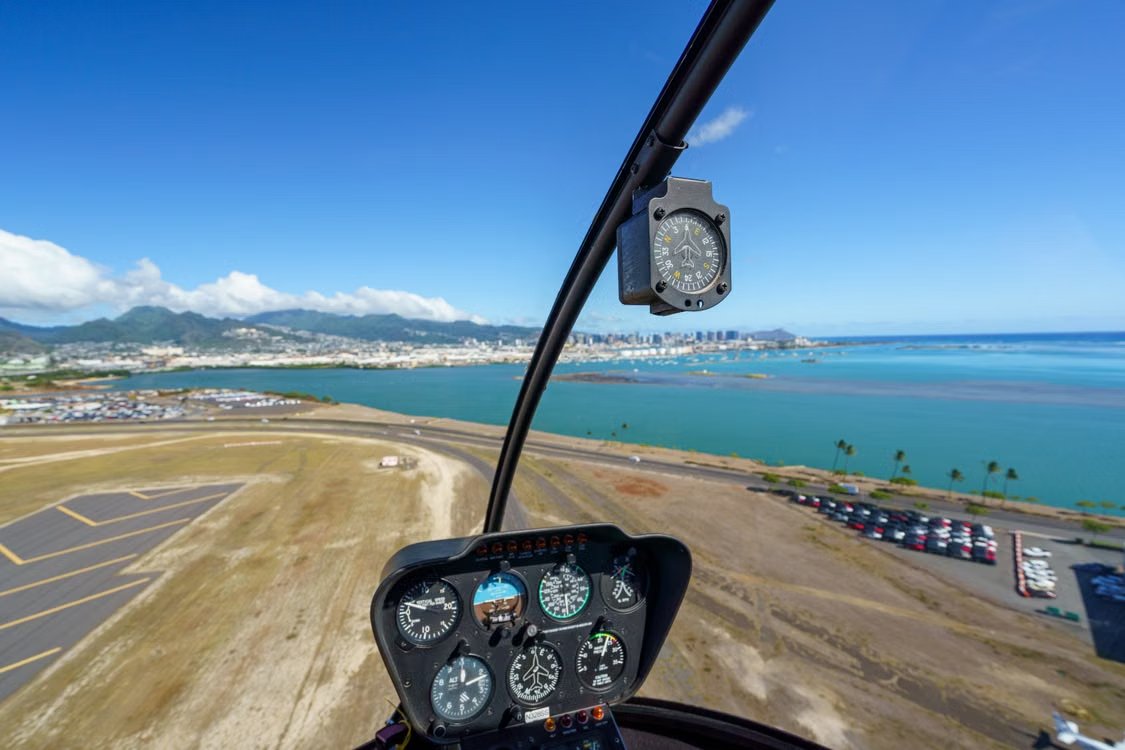
clear view from inside a helicopter cockpit during landing with mountains and oceans in the background
Photo by Cyrill from Pexels

Benefits of Helicopters in Commercial Fishing

Helicopters provide commercial fishing operators with a broad aerial perspective that helps crews locate, monitor, and assess wild schools more effectively.

Here are some key benefits:

  • Cover More Water in Less Time: Rotorcraft can scout large areas quickly, helping crews locate schools sooner and reduce time spent searching.

  • Provide Real-Time Visibility: Aerial observers can track a school’s location, movement, and direction and relay up-to-date information.

  • Boost Efficiency: By guiding vessels toward active schools, spotters help crews make more informed decisions about where to focus their efforts.

  • Enhance Collaboration: Aerial crews relay updates between teams and help maintain situational awareness throughout the operation.

  • Leverage Human Expertise: Experienced pilots and spotters contribute knowledge of fish behavior, environmental conditions, and fishing operations that drones cannot.

Learn how helicopters help support wildlife conservation, oceanography, and other scientific research.

Planning for Safe and Responsible Fishing

Commercial fishing flights require coordination between the aviation team and the vessel before, during, and after operations.

Safety Considerations

Planning should account for:

  • Aircraft performance, flight duration, and fuel requirements
  • Vessel location and sea conditions
  • Weather and visibility
  • Available landing and refueling arrangements
  • Aircraft and crew suitability for extended offshore operations

Responsible Practices and Requirements

Operations must also consider wildlife conservation measures and fishery regulations. The National Oceanic and Atmospheric Administration (NOAA) notes that marine mammals and sea turtles can be at risk during purse-seine operations.

That’s just one reason why it’s important to implement responsible fishing practices, such as:

  • Following applicable fishery regulations
  • Careful monitoring of surrounding wildlife
  • Reducing interactions with non-target species
  • Taking appropriate steps to minimize environmental impact

Get Experienced Helicopter Support for Your Next Commercial Fishing Operation

Locating and tracking wild fish across open waters requires several vessels to work together. An experienced helicopter crew can enhance the efficiency of your operation with thorough flight planning, reliable communication, and a clear understanding of how the aircraft will work alongside your vessel and team.

At Helicopter Express, we pair elite pilots with a versatile fleet to support a wide variety of specialized aerial operations. We work closely with clients to understand their project requirements and develop a tailored plan based on timeline and scope. These details help us determine the ideal aircraft and plan for your mission.

If you’re exploring aerial support for your commercial fishing operation, contact Helicopter Express today.

Helicopters in Commercial Fishing: Spotting, Herding, and Net Guidance

A flock of diving seabirds or surface disturbances like ripples can be signs that fish are nearby. While this activity offers clues, fishing crews can only see so much from a vessel at water level.

A helicopter provides a broader view of surrounding waters and another source of real-time information for the fishing team. Aerial observation is just one reason why rotorcraft play a key role in some commercial fishing operations. In collaboration with fishing crews, helicopter pilots and airborne observers can help locate fish, track their movements, and guide nets as they encircle wild schools.

Below, we share the benefits of working with a helicopter operator and explain how these aircraft fit into each stage of a commercial fishing operation.

Wild Fish Spotting: Finding Schools From Above

Locating fish from a ship is no easy feat. The horizon, surface conditions, and weather often limit shipboard radar, sonar, and visibility. A helicopter can maximize visual range by flying ahead of the vessel and scanning a more expansive area.

Helicopter-based observers aren’t necessarily looking through the water to see fish swimming below the surface. They’re often searching for natural cues like surface activity or patterns in the surrounding environment.

Depending on the fishery and local conditions, signs of nearby fish can include:

  • Seabirds gathering or diving repeatedly in a single area
  • Surface disturbances such as swirls, ripples, and visible movement
  • Dark patches or shapes beneath clear, calm water
  • Jumping baitfish breaking the surface
  • Marine mammals or other wildlife activity associated with feeding fish
  • Floating objects or natural features that attract or hold fish

Aerial intelligence captured via helicopter gives fishing crews another way to identify promising locations where wild schools may be swimming or feeding.

How Aerial Fish Spotting Works

Airborne crews help in several key ways:

  • Detect Likely Schools: Pilots and spotters look for signs of sub-surface activity, such as dark patches of water or seabird feeding frenzies.

  • Assess Potential Schools: Once cues are detected, the helicopter descends to a lower altitude. Spotters use high-definition cameras and advanced sensors to evaluate the school’s size, density, and travel direction.

  • Relay Information: The aerial crew reports its findings and observations to the fishing team, along with the position, direction, and movement of the helicopter.

  • Decide Whether to Approach: The fishing team uses this information alongside its own observations — collected using equipment like fish finders, underwater cameras, and sonar — to determine if it’s worth approaching the school.

  • Track the School: The spotter continues observing the school as the vessel approaches, reporting timely information and providing updates as conditions change.

  • Compare Reports: The fishing team may compare spotter reports with its own sonar readings, radar, and observations.

Together, airborne observations and onboard data help the vessel captain assess a school’s movement and decide whether and how to approach. While the spotter provides a clearer picture, the captain is responsible for decisions aboard the ship.

kayaker looking up at a yellow and red helicopter flying over rocks in Lake Ontario under blue skies
Photo by Anurag Jamwal from Pexels

Wild Fish Herding: Helping Crews Track Moving Schools

Finding a school is only the beginning. Fish can quickly change direction or depth, and crews may need time to position vessels and prepare equipment.

Here’s how the helicopter and spotter track the school and keep the fishing team informed as the vessel moves into position:

  • Coordinate Vessel Movements: The airborne spotter relays information to the vessel and its support boats as they get into position.

  • Provide Real-Time Updates: The spotter provides ongoing reports as conditions shift.

  • Guide the School: Smaller vessels carry out maneuvers designed to contain or guide the school as the net is deployed.

The helicopter crew’s key role in wild fish herding is to observe, track, and communicate. The fishing vessel and its support boats perform the maneuvers that influence the school’s movement.

In some cases, helicopter personnel continue monitoring and relaying information about the school’s movement to help guide the fishing net as it’s deployed.

a vibrant school of fish swimming in clear blue and brown water under a ray of sunlight
Photo by Ayşegül Aytören from Pexels

Net Guidance: Supporting a Purse-Seine Set

A purse seine is a large fishing net designed to surround a school of fish. Vessel crews, skiff operators, and aerial observers sometimes work together to position the net effectively during the set.

How a Purse-Seine Set Works

Purse-seine operations involve several coordinated stages. While a helicopter does not deploy, control, or close the net, it provides a broader operational view and improved communication.

Here’s what the process might look like with helicopter assistance:

  • Net Deployment: The vessel and a smaller skiff communicate to deploy the net and encircle the school.

  • Net Guidance: The helicopter operates above the fishing area, providing position updates as the net is deployed.

  • Barrier Creation: Floats keep the top of the net near the surface while weights extend it downward.

  • Pursing: “Pursing” tightens the line that runs through rings along the bottom of the net, creating an enclosure around the school.

How Aerial Observation Supports Net Deployment

The timing and placement of the net are important. If the school moves as the net is being set, the crew needs to understand where the fish are in relation to the developing enclosure.

By flying overhead, the pilot and spotter can:

  • Maintain an aerial perspective that allows them to pinpoint the school’s position
  • Observe the school’s direction and movement
  • Monitor the net’s edges to prevent the herd from escaping before pursing occurs
  • Share updates with the fishing team that support tactical adjustments

Clear radio communication and defined responsibilities help the pilot, spotter, vessel captain, deck crew, and skiff operator align their actions. This teamwork helps everyone maintain awareness as the operation develops.

clear view from inside a helicopter cockpit during landing with mountains and oceans in the background
Photo by Cyrill from Pexels

Benefits of Helicopters in Commercial Fishing

Helicopters provide commercial fishing operators with a broad aerial perspective that helps crews locate, monitor, and assess wild schools more effectively.

Here are some key benefits:

  • Cover More Water in Less Time: Rotorcraft can scout large areas quickly, helping crews locate schools sooner and reduce time spent searching.

  • Provide Real-Time Visibility: Aerial observers can track a school’s location, movement, and direction and relay up-to-date information.

  • Boost Efficiency: By guiding vessels toward active schools, spotters help crews make more informed decisions about where to focus their efforts.

  • Enhance Collaboration: Aerial crews relay updates between teams and help maintain situational awareness throughout the operation.

  • Leverage Human Expertise: Experienced pilots and spotters contribute knowledge of fish behavior, environmental conditions, and fishing operations that drones cannot.

Learn how helicopters help support wildlife conservation, oceanography, and other scientific research.

Planning for Safe and Responsible Fishing

Commercial fishing flights require coordination between the aviation team and the vessel before, during, and after operations.

Safety Considerations

Planning should account for:

  • Aircraft performance, flight duration, and fuel requirements
  • Vessel location and sea conditions
  • Weather and visibility
  • Available landing and refueling arrangements
  • Aircraft and crew suitability for extended offshore operations

Responsible Practices and Requirements

Operations must also consider wildlife conservation measures and fishery regulations. The National Oceanic and Atmospheric Administration (NOAA) notes that marine mammals and sea turtles can be at risk during purse-seine operations.

That’s just one reason why it’s important to implement responsible fishing practices, such as:

  • Following applicable fishery regulations
  • Careful monitoring of surrounding wildlife
  • Reducing interactions with non-target species
  • Taking appropriate steps to minimize environmental impact

Get Experienced Helicopter Support for Your Next Commercial Fishing Operation

Locating and tracking wild fish across open waters requires several vessels to work together. An experienced helicopter crew can enhance the efficiency of your operation with thorough flight planning, reliable communication, and a clear understanding of how the aircraft will work alongside your vessel and team.

At Helicopter Express, we pair elite pilots with a versatile fleet to support a wide variety of specialized aerial operations. We work closely with clients to understand their project requirements and develop a tailored plan based on timeline and scope. These details help us determine the ideal aircraft and plan for your mission.

If you’re exploring aerial support for your commercial fishing operation, contact Helicopter Express today.

Make us your go-to team.

Our highly skilled pilots have the experience and equipment needed to rise to any challenge. When you need experts you can trust, give us a call.