
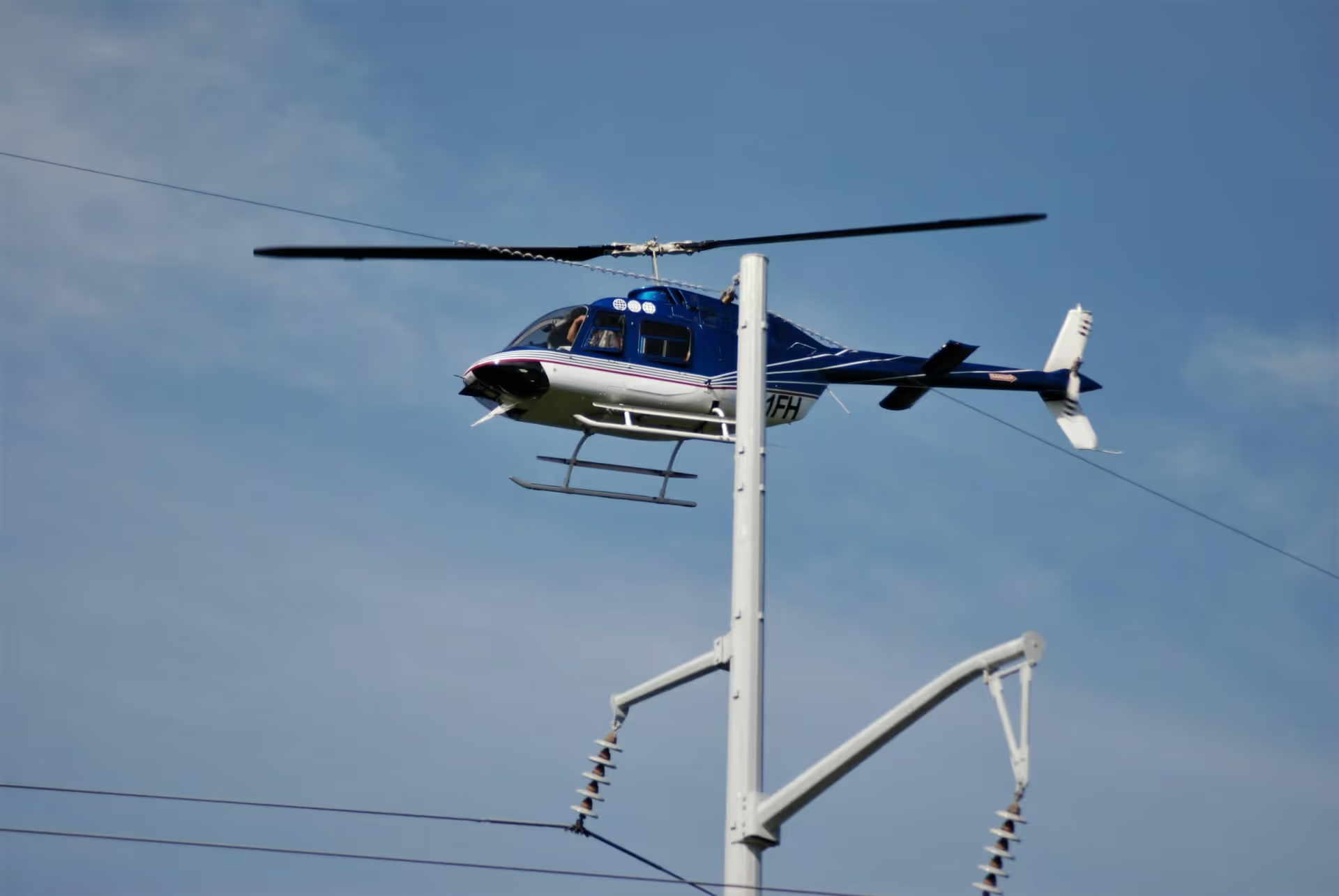
Unlike fixed-wing aircraft, helicopters are designed to fly low, hover, and stay close to the ground when needed. This flexibility makes helicopters invaluable for projects involving heavy-lift construction, utility work, emergency response efforts, and more. But it also means rotorcraft frequently fly near wires that pose a serious threat to aircraft and their crews.
Power lines, transmission cables, and support wires can be nearly impossible to see in unfamiliar terrain or during certain low-light conditions. This blog will help you understand the real risks behind wire strikes and uncover the technology, strategies, and training helicopter pilots use to stay safe.
Risks and Realities of Helicopter Wire Strikes
The Federal Aviation Administration (FAA) analyzed civil and military helicopter accidents over a 20-year period (1994–2004) and found that wire strikes accounted for approximately 5% of all helicopter accidents. While this may seem like a small percentage, these collisions are often deadly. In fact, two fatalities occur for every five line-impact incidents, and power lines claim an average of two helicopters each week.
Several trends challenge common assumptions about these accidents:
- Experience Does Not Eliminate Vulnerability: Although experience lowers many risks associated with flight, experienced pilots are not immune to wire strikes. A report for the Department of Homeland Security found that pilots involved in these types of incidents averaged over 4,000 flight hours.
- Incidents Occur During Both Day and Night: Approximately 85% of transmission line collisions happen in daylight, despite the added visibility.
- Mission Profile Matters: Helicopters frequently operate around 1,000 feet above ground level (AGL). Low-level operations like power line inspection and repair, wildlife surveys, aerial crop spraying, aerial filming, and more place rotorcraft in closer proximity to transmission lines and unmarked wires. This danger only increases during takeoff and landing in unfamiliar landscapes.
In addition to damaged aircraft, property, and lives lost, wire strike incidents can also lead to litigation, significant fines, and regulatory scrutiny.
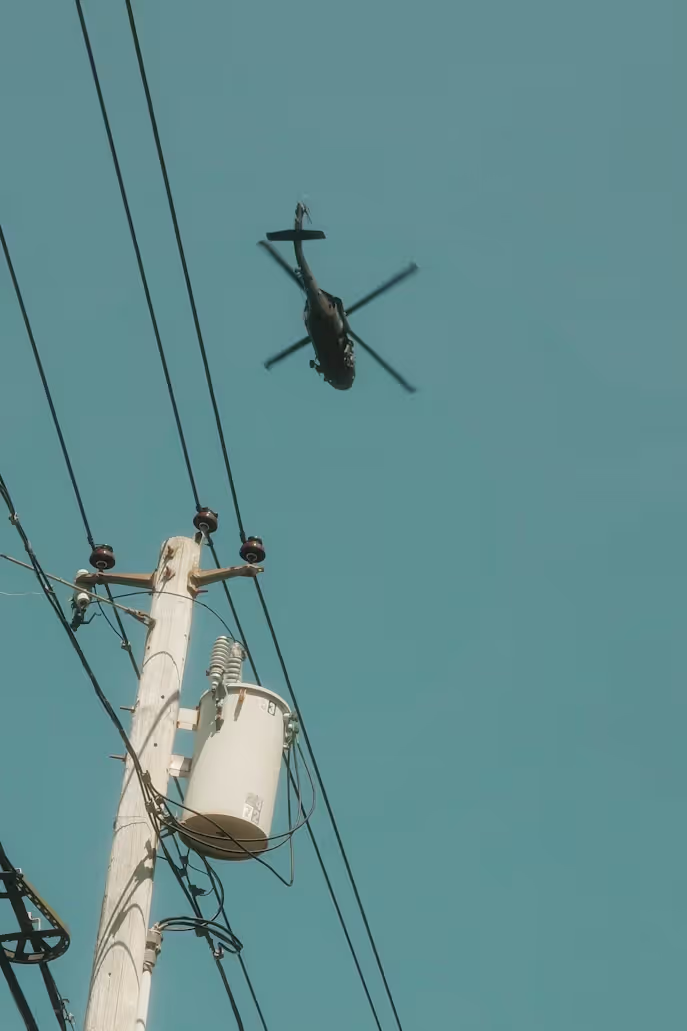
Causes of Helicopter Wire Strikes
We know that low-altitude flight elevates collision risk. But why are utility lines so hard to detect and avoid?
Common contributing factors include:
- Low Visual Contrast: Thin cables can blend into terrain, vegetation, and skies, making them difficult to see until the aircraft is dangerously close.
- Sun Angle and Glare: Glare and the low angle of the sun can obscure even clearly marked lines.
- Darkness and Limited Visual Cues: Low-light conditions may cause pilots to lose depth perception and struggle to distinguish wires from terrain. Reduced visual cues make it harder to judge both distance and height.
- Distractions During Critical Phases: Takeoff and landing in unfamiliar terrain increase pilot workload, while distractions from ground activity can divert focus from obstacle scanning. These hazards increase vulnerability during the most safety-sensitive phases of flight.
- Improper Judgment: Pilots must remain vigilant at all times, maintaining proper altitude and sufficient clearance from transmission lines.
- Ineffective Preflight Planning: Preflight planning must include the identification of nearby transmission corridors, unmarked lines, and the selection of suitable landing areas.
Systems and Technology That Help Prevent Wire Strikes
No technology can take the place of a well-trained, disciplined pilot who avoids unnecessary risk. But modern systems can significantly reduce exposure by providing a critical second layer of defense.
Here are a few crucial systems helicopter pilots use to ensure safer flight:
Wire Strike Protection Systems (WSPS)
Often referred to as “wire cutters,” WSPS consist of hardened cutting blades mounted on the roof and belly of a helicopter and deflectors placed on the aircraft’s nose. If a helicopter comes into contact with a wire during forward flight, this system grabs and cuts the cable.
While WSPS do not prevent contact with lines, they greatly reduce the chance that a pilot will lose control of their aircraft. One study from the U.S. Army found that wire strike fatalities decreased by nearly 50% after helicopters were equipped with wire cutters.
Wire and Power Line Databases
Many onboard avionics and Electronic Flight Bags (EFBs) now incorporate transmission line locations as moving-map overlays. This technology warns a pilot when a helicopter is approaching known lines.
While databases are not able to capture every single rural or private line, they can provide valuable information that helps aerial crews avoid known obstacles.
Obstacle Collision Avoidance Systems (OCAS)
An Obstacle Collision Avoidance System (OCAS) consists of units that are placed on utility and power line towers. These units detect when air traffic, like helicopters, enters a predefined warning area near critical lines. The entrance triggers high-intensity warning lights that illuminate the tower, as well as radio warnings to alert pilots of the obstacles the aircraft is approaching.
Terrain Awareness and Warning Systems (TAWS)
Enhanced Ground Proximity Warning Systems, also known as Terrain Awareness and Warning Systems (TAWS), depend on GPS position data, aircraft performance data, and a digital terrain database. They provide pilots with audible and visual alerts about fixed, land-based obstacles like towers and rising terrain. These warnings increase pilot awareness, which is particularly helpful during nighttime flights or operations with degraded visibility.
Laser Radar Obstacle and Terrain Avoidance Systems
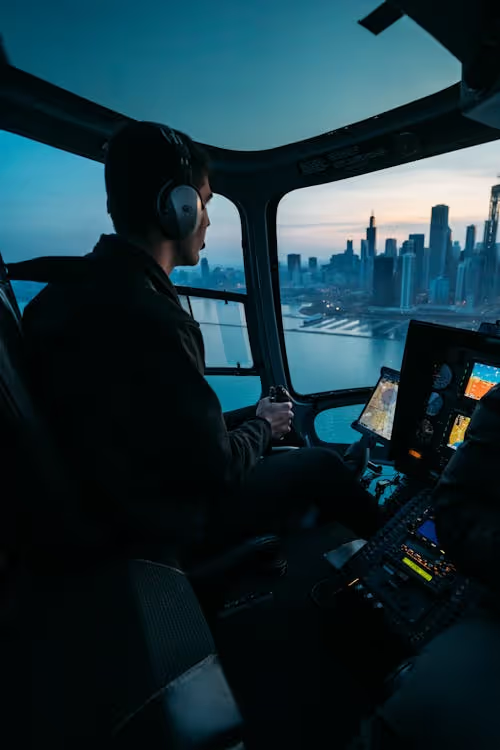
A laser radar obstacle and terrain avoidance system mounts an eye-safe laser, like LiDAR, on the helicopter’s fuselage. This laser scans ahead of the aircraft to detect thin objects—like wires—that are otherwise difficult for pilots to see. This type of system provides both visual and aural warnings in real time, allowing pilots to maneuver around obstacles like overhead lines and challenging terrain.
Helicopter-based LiDAR is also widely used to create detailed maps of an environment. This technology supports infrastructure assessments, urban planning, power line inspections, conservation efforts, and more. Discover more about how LiDAR mapping works to enhance project efficiency and reduce risks.
The Critical Role of Marking Systems and Lighting
Power line markers are also essential to ensuring aircraft avoid collisions during flight. Appropriate markings can prevent deadly accidents and help utility companies avoid considerable costs.
The FAA notes that temporary or permanent structures exceeding 200 feet above ground level must be marked and/or lighted. The administration outlines several best practices for proper power line marking and lighting in its Advisory Circular.
Here are some key marking guidelines:
- Overhead lines should be clearly identified using spherical markers.
- Markers should be spaced equally along wires at 200-foot intervals, alternating in color between orange, white, and yellow (with orange markers at each end).
- Markers for power lines that require fewer than four should all be aviation orange.
- Markers should be repainted when fading or chipping.
- Skeletal structures should be painted on the inner and outer surfaces to ensure visibility from multiple approach angles.
- Flags should mark structures when spherical markers or paint are impractical.
- Markings are especially important on known helicopter routes and near rivers or valleys.
The FAA’s lighting recommendations include these guidelines:
- Lighting systems should meet FAA specifications for intensity, beam pattern, flash rate, and color.
- Flashing red lights and/or steady-burning lights should be used on tower structures during nighttime.
- Flashing lights should operate in sync to provide a consistent visual signal to approaching aircraft.
- Obstruction lights should be mounted so that at least one light is visible to a pilot approaching from any direction.
- Obstruction lights should be inspected every 24 hours to confirm proper operation.
- Ice shields may be installed in areas prone to icing to prevent damage.
- Lighting outages must be corrected as soon as possible.
Proper marking and lighting not only protects aerial crews, but also reduces liability exposure for utility companies and other infrastructure owners.
Pilot Strategies That Avoid Wire Strikes and Save Lives
Incorporating critical technology into helicopters helps pilots avoid collisions with aerial cables and other obstacles, but a disciplined pilot who follows meticulous safety protocols remains the strongest safeguard against cable strikes.
Here are the strategies pilots employ:
- Conduct Thorough Pre-Flight Briefings: A pre-flight briefing should include an overview of all threats the aircraft may face during takeoff, flight, and approach. Crews should review charts, satellite imagery, and known utility corridors to create a mental model of the landscape where they will operate.
- Follow Standard Operating Procedures (SOPs): Pilots and their team must understand their roles and be prepared to respond when faced with a threat. Mitigation strategies against wire collisions often include stabilized approach calls, go-around briefings, and clearly defined scanning responsibilities.
- Ensure Effective Crew Communication: In a multi-crew environment, the flying pilot should focus on safely flying the aircraft. The monitoring pilot should consistently assess the surrounding environment and evaluate flight parameters and aircraft systems. Other crew members must actively scan their surroundings and call out suspected hazards immediately.
- Avoid Flying Low: While low flight may be required for a particular operation, pilots should never fly low if it’s not necessary. The higher a helicopter flies, the less chance it has of coming into contact with lines, trees, drones, and terrain-based obstacles.
- Identify Masts: While some wires emerge from mountainous areas and other terrain where masts aren’t easily identifiable, most masts can be detected easier than the wires themselves. Pilots should prioritize mast detection over line detection, scan for easy-to-see towers and poles, and never assume there aren’t additional wires splitting off in different directions.
- Treat Private Helipads with Special Care: Private helipads don’t offer the same assurances as public helipads or airports. Pilots should commit to extra reconnaissance, especially during nighttime operations for flight in unfamiliar terrain.
- Avoid Complacency: Experienced pilots who become accustomed to their aircraft, crew, and flight environment can experience a false sense of security. Pilots must maintain situational awareness, continuously scan for obstacles, and treat every low-level operation as if new hazards exist.
- Assume That Wires Exist: Perhaps the most important principle of avoiding utility line strikes is assuming that wires exist even if you can’t see them. This mindset helps reduce pilot complacency and reinforce disciplined scanning of the environment.
Training and Awareness Programs for Helicopter Pilots
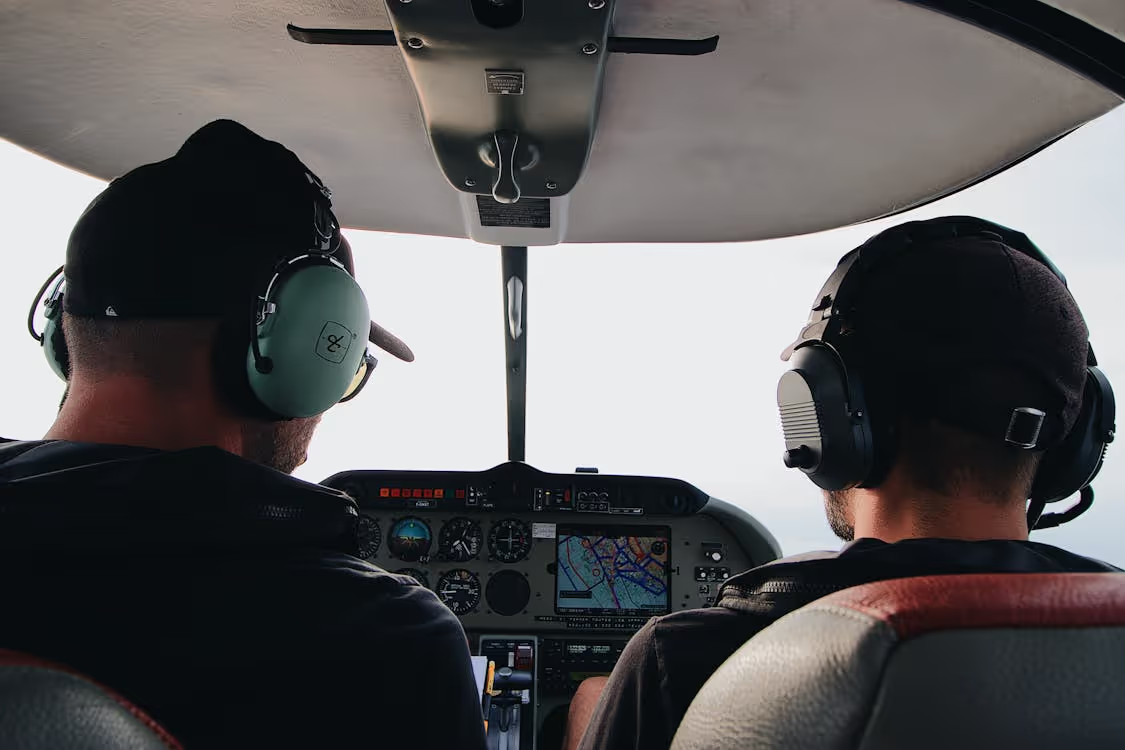
Pilots and aerial crews should undertake terrain and obstacle awareness training and frequently reinforce their power line avoidance skills.
Common types of training include:
- Wire Strike Prevention Courses: Structured classroom and scenario-based courses focus on hazard recognition, route planning, use of detection technology, and risk mitigation.
- E-Learning Modules: Computer-based training offers annual refreshers that cover case studies, flight planning mistakes, and decision-making skills.
- Simulator Scenarios: Full-flight and procedural simulators teach pilots how to safely approach in low-flying environments and make decisions without real-world danger.
- Virtual Reality (VR) Environments: Some organizations offer virtual reality training that practices reconnaissance and reinforces correct techniques in realistic wire environments.
- Specialized Training: Industry-specific training programs combine classroom instruction with cockpit videos that cover low-altitude flight in areas with line infrastructure.
Helicopter Express: Services Rooted in Planning and Precision
Wire environments are the reality of certain types of operations, from heavy-lift construction and utility support to wildlife conservation and emergency response missions. The team at Helicopter Express knows that preventing wire strikes not only requires advanced technology, but also intensive training, experience, and discipline. That’s why we integrate safety, maintenance protocols, and ongoing training into every aspect of our operation.
When you work with us, you can expect:
- Elite pilots highly experienced in low-level flight
- Customized operational plans tailored to your mission’s terrain, timeline, and goals
- Transparent coordination with clients, utilities, and crews
- Well-maintained aircraft supported by the most advanced hazard avoidance technology
If your project requires safe and reliable helicopter services, contact us today to request a quote. We’ll help you develop a plan built around safety and performance.