
Fatigue Management in Long-Duration Helicopter Missions

Learn how fatigue impacts pilots and crews during long-duration helicopter operations and discover the strategies used to stay safe, alert, and mission-ready.

Long-duration helicopter missions require intense concentration, quick decision-making, and seamless collaboration between crews. Even small lapses in judgment or alertness can create unnecessary risk during flight. That’s why it’s crucial for aerial teams to understand fatigue and take the necessary steps to prevent it.

NASA’s Aviation Safety Reporting System found that fatigue directly contributed to 77 out of 2,006 pilot-reported incidents. When researchers expanded their analysis to include issues indirectly linked to fatigue, that number jumped to 426 incidents, or just over 21%.

Keep reading to learn what causes fatigue during prolonged helicopter operations, how it impacts safety and performance, and the strategies and techniques crews can take to prevent and manage this condition during multi-leg missions and demanding aerial work.

What Fatigue Looks Like in Long-Duration Helicopter Operations

Pilot fatigue is much more than just feelings of sleepiness or tiredness. This phenomenon refers to a measurable decrease in alertness, reaction time, and cognitive performance—coupled with feelings of sleepiness or exhaustion—while operating an aircraft. 

Just how detrimental is exhaustion to safe and successful flight? Fatigue was a causative factor in 12% of the U.S. Navy’s most severe aircraft accidents. It also played a role in 25% of the U.S. Air Force’s most severe night tactical fighter accidents.

What Causes Pilot Fatigue?

Fatigue builds from a mix of operational, environmental, and physiological factors, including:

  • Insufficient or Poor-Quality Sleep: Disrupted sleep cycles, fragmented sleep, sleep disorders (like sleep apnea and restless leg syndrome), and environmental stressors (like noise, light, and temperature shifts) can cause insufficient sleep quality. In the army in particular, 80-90% of aviators, including those in training, sleep only 6.6 hours on average per night. This average decreases to 6 hours per night before a flight and 5.6 hours per night during.
  • Circadian Rhythm Disruption: Early mornings, overnight flights, north/south travel, and especially east/west travel significantly affect aerial crew members’ circadian rhythms. This is the body’s internal clock that regulates the sleep-wake cycle, hormone release, digestion, and body temperature.

  • Heavy Workloads and Inefficient Flight Planning: A high number of time zones crossed, tight schedules, multi-leg trips, and consecutive work days all contribute to fatigue during helicopter operations.

nighttime aerial view of a city from inside a helicopter cockpit
Photo by Ashwin Vaswani from Unsplash

How Fatigue Impacts Long-Duration Helicopter Missions

Fatigue degrades individual performance as well as team collaboration—yet these elements are necessary for safe, long-distance flights. Below, we’ll walk through the specific ways in which extreme tiredness affects performance and crew coordination while causing dangerous levels of psychological and physiological strain.

Reduced Situational Awareness and Performance

  • Less Precise Aircraft Control: Fatigue reduces fine motor control and hand-eye coordination. This means hovering, rooftop work, takeoffs and landings in confined areas, and low-visibility missions can become more difficult when flight teams are tired.

  • Missed Cues: Tired pilots experience decreased situational awareness, which may cause them to miss fuel issues, signs of deteriorating weather, changes in aircraft performance, or critical radio calls.

  • Slowed Reaction Times: Fatigue can make it more difficult for aerial crews to respond quickly to sudden weather shifts, system alerts, and air traffic conflicts.

  • Impaired Judgment: Navigation issues, altitude deviations, poor fuel or routing decisions, and airspace violations are more common during extended legs—especially when operating at night. Fatigue also increases the likelihood that aerial personnel take shortcuts when it comes to safety and maintenance protocols.

  • Task Fixation: Tired crews are more likely to fixate on a single task while unintentionally overlooking others. This can be dangerous in flight environments where they must continuously monitor aircraft performance, weather, terrain, and mission objectives.
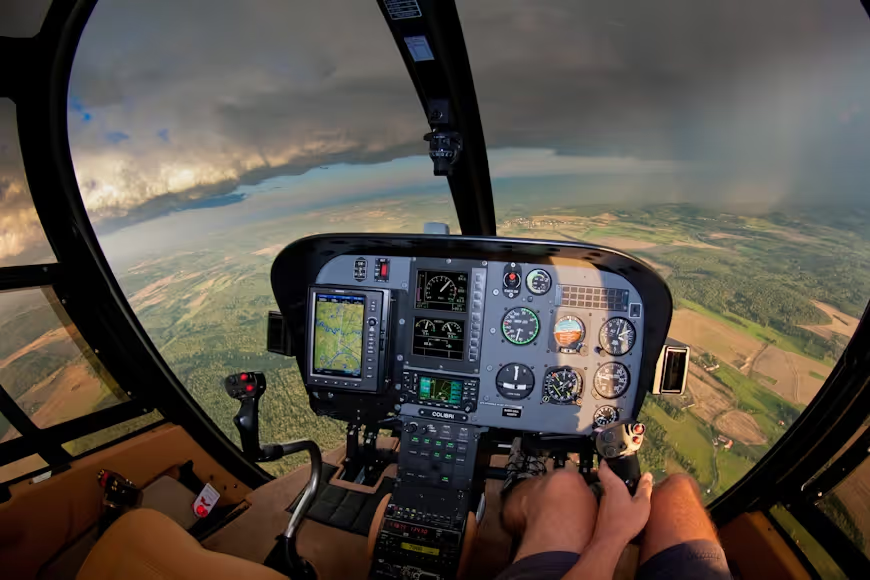
view from inside a helicopter cockpit showing flight controls and gray clouds ahead
Photo by Ivo Lukacovic from Unsplash

Amplified Crew Coordination Issues

  • Lower-Quality Communication: Incomplete briefings and misunderstandings between operational teams are more likely once exhaustion sets in.

  • Uneven Workload Sharing: Task monitoring and cross-checking often become less effective as well.

Increased Psychological and Physiological Strain

Studies show that seven-day duty cycles can reduce average sleep to fewer than six hours per night, creating cumulative sleep deficits of around 15 hours. This level of chronic strain increases adrenaline, noradrenaline, and cortisol levels by 50-80%. This can lead to:

  • Increased sleepiness, irritability, and mood changes
  • Decreased motivation and resilience under pressure
  • Long-term health concerns, such as hypertension and cardiovascular disease

Nighttime operations and shift work tend to exacerbate physiological and psychological strain as well.

Discover how night vision technology is enhancing visibility and safety for pilots who fly in the dark.

Strategies for Preventing and Managing Fatigue During Lengthy Flights

Effective fatigue prevention and management requires aerial service providers to:

  • Schedule flights strategically
  • Prepare before the flight
  • Implement smart management techniques in the air

The following practices help aircrews stay safe and alert while performing medical transports, heavy-lifting jobs, wildfire suppression, and other critical helicopter-based services.

Pre-Flight Prevention Strategies

  • Prioritize Healthy Sleep Hygiene: Crews should aim for 7-9 hours of consistent, high-quality sleep in the 2-3 nights before an extended flight leg. Sleep in a dark room with a cooler temperature is recommended. Limiting alcohol, caffeine, heavy meals, exercise, and screen time in the 2-4 hours before bed can improve sleep quality.

  • Plan Pre-Flight Naps: 20-90-minute naps (timed to avoid waking just prior to reporting for duty) can offset overnight or early morning exhaustion.

  • Eat Healthy and Hydrate: Lean protein, complex carbs, and consistent hydration support sustained alertness.

  • Maintain Fitness and Overall Health: Staying physically fit can help reduce physiological strain during long rotations.

male pilot walking toward an orange helicopter resting on a concrete helipad
Photo by Nejc Soklič from Unsplash

In-Flight Management Techniques

  • Implement Controlled Rest Periods: When standard operating procedures allow, short naps taken by the non-flying pilot (with formal handover and monitoring) can restore alertness and sufficient reaction times.

  • Plan Breaks: Scheduled stretching, posture changes, and social interactions serve to counter low arousal and monotony during flight.

  • Self-Assess Honestly: Flight teams should self-assess fatigue honestly and rely on structured checklists when tired. No punitive action should be taken for fatigue-related delays or replacement requests.

  • Make Decisions Conservatively: When fatigue risk is elevated, it’s crucial to avoid risk when it comes to inclement weather, diversion triggers, and fuel reserves.

  • Alternate Roles: During periods with lower workloads, switching between flying and monitoring duties and alternating navigation and systems monitoring (ideally in blocks of 20-40 minutes) allows at least one pilot to maintain a high-alert state.

Did you know AI integration in helicopters can reduce pilot workload by 45%? Learn how autonomous systems in helicopter operations are decreasing fatigue, boosting situational awareness, and helping pilots avoid accidents.

Operational and Logistical Measures

  • Limit Duty-Time and Rest Periods: Implementing strict caps on maximum duty length and consecutive night flights enables pilots to get restorative sleep.

  • Utilize a Fatigue Risk Management System (FRMS): An FRMS monitors schedules, incidents, and fatigue reports. This allows logistics teams to seek additional personnel, delay departures, or reroute flight paths when risk is high.

  • Provide Fatigue Awareness Training: Pilots and crew members must learn how to identify early symptoms of fatigue (mood changes, attention lapses, etc.) and apply approved countermeasures with confidence.

When fatigue management is built into flight planning and operations, crews are better positioned to perform safely and efficiently—no matter how demanding the mission.

Partner With Helicopter Express for Safe and Reliable Long-Duration Operations

At Helicopter Express, we uphold the highest standards of safety, reliability, and professionalism. Our elite pilots and aerial crews are highly trained in prolonged operations, and our ground-based personnel follow rigorous safety standards designed to protect teams and clients while minimizing downtime.

We recognize that fatigue prevention and management is vital for safe and reliable aerial work. When projects require extended flight, we coordinate closely with clients to strategically plan flight schedules, prioritize crew rotations, and implement strict work limits that support mission success. We leave no stone unturned when it comes to safeguarding our clients, our pilots, and the environment.

If you need an experienced partner for complex or long-distance helicopter operations, contact Helicopter Express to request a quote and start planning your mission. Our Georgia-based team is equipped to deploy across the United States and abroad. 

Fatigue Management in Long-Duration Helicopter Missions

Long-duration helicopter missions require intense concentration, quick decision-making, and seamless collaboration between crews. Even small lapses in judgment or alertness can create unnecessary risk during flight. That’s why it’s crucial for aerial teams to understand fatigue and take the necessary steps to prevent it.

NASA’s Aviation Safety Reporting System found that fatigue directly contributed to 77 out of 2,006 pilot-reported incidents. When researchers expanded their analysis to include issues indirectly linked to fatigue, that number jumped to 426 incidents, or just over 21%.

Keep reading to learn what causes fatigue during prolonged helicopter operations, how it impacts safety and performance, and the strategies and techniques crews can take to prevent and manage this condition during multi-leg missions and demanding aerial work.

What Fatigue Looks Like in Long-Duration Helicopter Operations

Pilot fatigue is much more than just feelings of sleepiness or tiredness. This phenomenon refers to a measurable decrease in alertness, reaction time, and cognitive performance—coupled with feelings of sleepiness or exhaustion—while operating an aircraft. 

Just how detrimental is exhaustion to safe and successful flight? Fatigue was a causative factor in 12% of the U.S. Navy’s most severe aircraft accidents. It also played a role in 25% of the U.S. Air Force’s most severe night tactical fighter accidents.

What Causes Pilot Fatigue?

Fatigue builds from a mix of operational, environmental, and physiological factors, including:

  • Insufficient or Poor-Quality Sleep: Disrupted sleep cycles, fragmented sleep, sleep disorders (like sleep apnea and restless leg syndrome), and environmental stressors (like noise, light, and temperature shifts) can cause insufficient sleep quality. In the army in particular, 80-90% of aviators, including those in training, sleep only 6.6 hours on average per night. This average decreases to 6 hours per night before a flight and 5.6 hours per night during.
  • Circadian Rhythm Disruption: Early mornings, overnight flights, north/south travel, and especially east/west travel significantly affect aerial crew members’ circadian rhythms. This is the body’s internal clock that regulates the sleep-wake cycle, hormone release, digestion, and body temperature.

  • Heavy Workloads and Inefficient Flight Planning: A high number of time zones crossed, tight schedules, multi-leg trips, and consecutive work days all contribute to fatigue during helicopter operations.

nighttime aerial view of a city from inside a helicopter cockpit
Photo by Ashwin Vaswani from Unsplash

How Fatigue Impacts Long-Duration Helicopter Missions

Fatigue degrades individual performance as well as team collaboration—yet these elements are necessary for safe, long-distance flights. Below, we’ll walk through the specific ways in which extreme tiredness affects performance and crew coordination while causing dangerous levels of psychological and physiological strain.

Reduced Situational Awareness and Performance

  • Less Precise Aircraft Control: Fatigue reduces fine motor control and hand-eye coordination. This means hovering, rooftop work, takeoffs and landings in confined areas, and low-visibility missions can become more difficult when flight teams are tired.

  • Missed Cues: Tired pilots experience decreased situational awareness, which may cause them to miss fuel issues, signs of deteriorating weather, changes in aircraft performance, or critical radio calls.

  • Slowed Reaction Times: Fatigue can make it more difficult for aerial crews to respond quickly to sudden weather shifts, system alerts, and air traffic conflicts.

  • Impaired Judgment: Navigation issues, altitude deviations, poor fuel or routing decisions, and airspace violations are more common during extended legs—especially when operating at night. Fatigue also increases the likelihood that aerial personnel take shortcuts when it comes to safety and maintenance protocols.

  • Task Fixation: Tired crews are more likely to fixate on a single task while unintentionally overlooking others. This can be dangerous in flight environments where they must continuously monitor aircraft performance, weather, terrain, and mission objectives.
view from inside a helicopter cockpit showing flight controls and gray clouds ahead
Photo by Ivo Lukacovic from Unsplash

Amplified Crew Coordination Issues

  • Lower-Quality Communication: Incomplete briefings and misunderstandings between operational teams are more likely once exhaustion sets in.

  • Uneven Workload Sharing: Task monitoring and cross-checking often become less effective as well.

Increased Psychological and Physiological Strain

Studies show that seven-day duty cycles can reduce average sleep to fewer than six hours per night, creating cumulative sleep deficits of around 15 hours. This level of chronic strain increases adrenaline, noradrenaline, and cortisol levels by 50-80%. This can lead to:

  • Increased sleepiness, irritability, and mood changes
  • Decreased motivation and resilience under pressure
  • Long-term health concerns, such as hypertension and cardiovascular disease

Nighttime operations and shift work tend to exacerbate physiological and psychological strain as well.

Discover how night vision technology is enhancing visibility and safety for pilots who fly in the dark.

Strategies for Preventing and Managing Fatigue During Lengthy Flights

Effective fatigue prevention and management requires aerial service providers to:

  • Schedule flights strategically
  • Prepare before the flight
  • Implement smart management techniques in the air

The following practices help aircrews stay safe and alert while performing medical transports, heavy-lifting jobs, wildfire suppression, and other critical helicopter-based services.

Pre-Flight Prevention Strategies

  • Prioritize Healthy Sleep Hygiene: Crews should aim for 7-9 hours of consistent, high-quality sleep in the 2-3 nights before an extended flight leg. Sleep in a dark room with a cooler temperature is recommended. Limiting alcohol, caffeine, heavy meals, exercise, and screen time in the 2-4 hours before bed can improve sleep quality.

  • Plan Pre-Flight Naps: 20-90-minute naps (timed to avoid waking just prior to reporting for duty) can offset overnight or early morning exhaustion.

  • Eat Healthy and Hydrate: Lean protein, complex carbs, and consistent hydration support sustained alertness.

  • Maintain Fitness and Overall Health: Staying physically fit can help reduce physiological strain during long rotations.
male pilot walking toward an orange helicopter resting on a concrete helipad
Photo by Nejc Soklič from Unsplash

In-Flight Management Techniques

  • Implement Controlled Rest Periods: When standard operating procedures allow, short naps taken by the non-flying pilot (with formal handover and monitoring) can restore alertness and sufficient reaction times.

  • Plan Breaks: Scheduled stretching, posture changes, and social interactions serve to counter low arousal and monotony during flight.

  • Self-Assess Honestly: Flight teams should self-assess fatigue honestly and rely on structured checklists when tired. No punitive action should be taken for fatigue-related delays or replacement requests.

  • Make Decisions Conservatively: When fatigue risk is elevated, it’s crucial to avoid risk when it comes to inclement weather, diversion triggers, and fuel reserves.

  • Alternate Roles: During periods with lower workloads, switching between flying and monitoring duties and alternating navigation and systems monitoring (ideally in blocks of 20-40 minutes) allows at least one pilot to maintain a high-alert state.

Did you know AI integration in helicopters can reduce pilot workload by 45%? Learn how autonomous systems in helicopter operations are decreasing fatigue, boosting situational awareness, and helping pilots avoid accidents.

Operational and Logistical Measures

  • Limit Duty-Time and Rest Periods: Implementing strict caps on maximum duty length and consecutive night flights enables pilots to get restorative sleep.

  • Utilize a Fatigue Risk Management System (FRMS): An FRMS monitors schedules, incidents, and fatigue reports. This allows logistics teams to seek additional personnel, delay departures, or reroute flight paths when risk is high.

  • Provide Fatigue Awareness Training: Pilots and crew members must learn how to identify early symptoms of fatigue (mood changes, attention lapses, etc.) and apply approved countermeasures with confidence.

When fatigue management is built into flight planning and operations, crews are better positioned to perform safely and efficiently—no matter how demanding the mission.

Partner With Helicopter Express for Safe and Reliable Long-Duration Operations

At Helicopter Express, we uphold the highest standards of safety, reliability, and professionalism. Our elite pilots and aerial crews are highly trained in prolonged operations, and our ground-based personnel follow rigorous safety standards designed to protect teams and clients while minimizing downtime.

We recognize that fatigue prevention and management is vital for safe and reliable aerial work. When projects require extended flight, we coordinate closely with clients to strategically plan flight schedules, prioritize crew rotations, and implement strict work limits that support mission success. We leave no stone unturned when it comes to safeguarding our clients, our pilots, and the environment.

If you need an experienced partner for complex or long-distance helicopter operations, contact Helicopter Express to request a quote and start planning your mission. Our Georgia-based team is equipped to deploy across the United States and abroad. 

Make us your go-to team.

Our highly skilled pilots have the experience and equipment needed to rise to any challenge. When you need experts you can trust, give us a call.