

Helicopter emergency medical crews work in some of the most intense and unpredictable environments in healthcare. They make split-second triage decisions while navigating confined helicopter cabins, filtering out high levels of noise, and managing altitude changes that can significantly affect patient stability.
In these life-or-death situations, it isn’t enough for flight medics, nurses, and physicians to know basic first aid. Instead, they must rely on their medical training and advanced skills, including airway management, trauma care, and more.
This blog walks you through the core skills emergency response teams rely on, why those skills matter during air medical missions, and how Helicopter Express supports life-or-death operations with experienced pilots, reliable aircraft, and rapid deployment capabilities.
Advanced Airway and Breathing Management
Airway stabilization inside a helicopter cabin is challenging, and medical teams must be prepared to secure and support breathing in difficult conditions. Here are several life-saving skills they rely on:
- Advanced Airway Management: Clinicians are trained in endotracheal intubation, supraglottic airways, and bag‑valve‑mask ventilation. They must be able to secure challenging airways and maintain ventilation in tight cabin spaces while noise levels are high.
- Drug‑Assisted or Rapid Sequence Intubation (RSI): Providers may use drug-assisted intubation or RSI to secure compromised airways while patients are under sedation. Post‑intubation ventilation and monitoring are essential.
- Chest Interventions: For patients with tension pneumothorax and severe chest trauma who are struggling to breathe during transport, emergency responders must be able to perform needle decompression and chest drains.

Circulation and In-Flight Resuscitation Skills
Managing circulation and resuscitating patients midair can be difficult due to the limited workspace, suboptimal lighting, and turbulence or vibrations. Flight medics must have skills such as:
- Advanced Cardiac Life Support (ACLS): Emergency response doctors may need to manage shockable and non-shockable heart rhythms and administer anti‑arrhythmic drugs during flight.
- Hemorrhage and Shock Management: Crews must know how to recognize obstructive, hypovolemic, and cardiogenic shock during short, high-stakes flights. Treating life-threatening bleeding and administering blood may be necessary.
- Vascular Access Techniques: IV and intraosseous (IO) access may be required despite challenges like vibrations, turbulence, and darkness during nighttime operations.
Trauma Care and Procedural Skills
Studies show that long-distance transfers of major trauma patients make up the largest portion of helicopter transports. When helicopters respond to critically injured patients instead of ground ambulances, patient mortality risk decreases by around 25%.
These are some of the trauma skills that save lives during flight:
- Major Trauma Assessment: Aerial providers are encouraged to conduct an ATLS‑style assessment of trauma patients. This involves performing rapid airway, breathing, circulation, disability, and exposure evaluations tailored to the aircraft environment.
- Surgical and Orthopedic Procedures: Physicians may need to perform cricothyrotomies, splinting, and even amputations in urgent situations.
- Analgesia and Sedation: Teams must know how to safely administer controlled substances like ketamine, opioids, and regional blocks. These drugs are used to sedate patients for procedures and manage their pain during transport.
Critical Care and Diagnostics
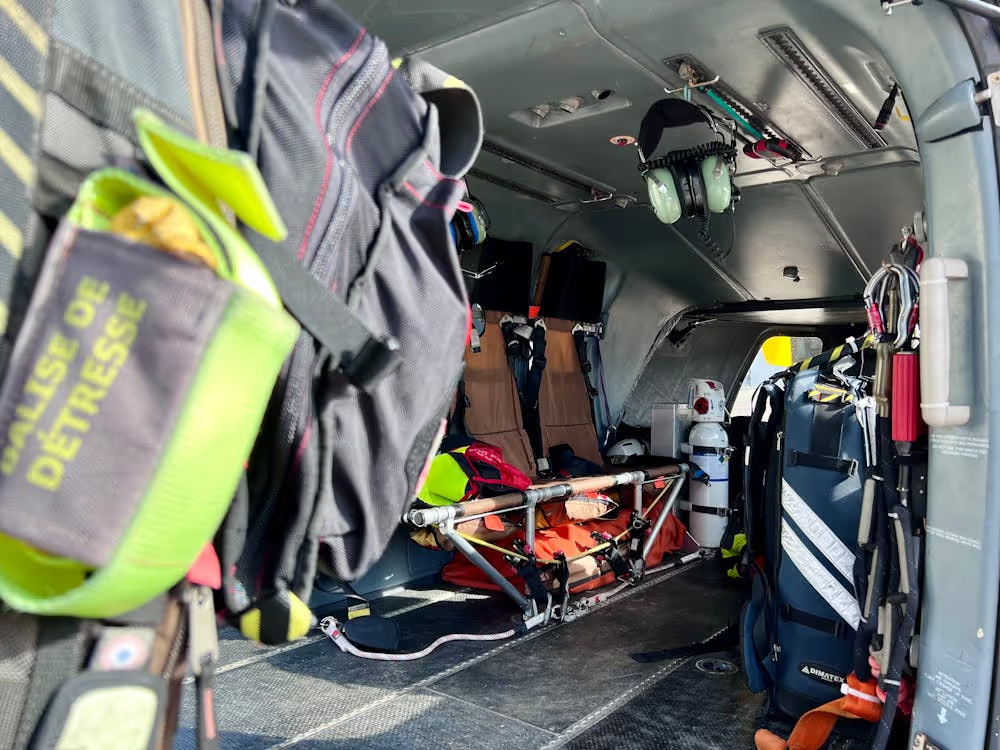
Many helicopter transports require crews to transfer patients from an initial treating facility to a hospital capable of providing ICU-level care. Air medical staff must be able to manage complex medical conditions in areas with limited space and equipment.
Some essential facets of critical care and diagnostics include:
- Ventilator Management: Providers may need to adjust invasive and non‑invasive ventilation, troubleshoot alarms, and titrate oxygen during flight.
- Monitoring and Diagnostics: Responders use advanced monitoring and point-of-care tools such as ECG, ultrasound, and blood gas analysis to assist with rapid diagnoses and real-time decision-making.
- Managing Complex Medical Cases: Medical teams must be able to manage severe cases, including sepsis, stroke, cardiac emergencies, and respiratory distress.
A Deep Understanding of Altitude Physiology
In the high-stress world of helicopter emergency medical services (HEMS), altitude physiology explains how reduced barometric pressure, lower oxygen availability, and gas expansion impact response teams, their patients, and crucial equipment in an unpressurized cabin.
Even modest elevation climbs can alter vital signs and exacerbate injuries. That’s why a deep understanding of flight and altitude physiology is imperative for helicopter-based response teams treating severe illnesses and traumas midair.
How Altitude Changes Affect Patients and Crews During Flight
Here’s what first responders need to know:
- Altitude can impact how injuries behave and worsen hypoxia, or low levels of oxygen in body tissues. This is especially true in cardiac cases or in patients with head injuries or sepsis. Aerial clinicians must anticipate increased oxygen needs and prepare to adjust strategies as elevation increases.
- Gas expansion is roughly 10-15% at altitudes where most helicopters fly, but it can increase to 30% in mountainous regions. Expanding gases can increase intracranial pressure and turn a small pneumothorax into a life-threatening emergency. That’s why pre-flight chest decompression and careful altitude selection are essential.
- At levels above 10,000 feet, patients run the risk of desaturation and heart-rate changes. Proactive intervention and close monitoring are necessary before, during, and after elevation changes occur. Timing interventions around ascent and descent can be helpful as well.
- It’s not just patients who are at increased risk of experiencing hypoxia during flight. This condition can impact flight medics as well, causing cognitive slowing and fatigue that impair situational awareness and decision-making abilities. To reduce that risk, crews should rely on supplemental oxygen when needed, stay alert to early symptoms, and follow altitude limits designed to protect cognitive performance.
Non-Technical Skills Every HEMS Member Must Master
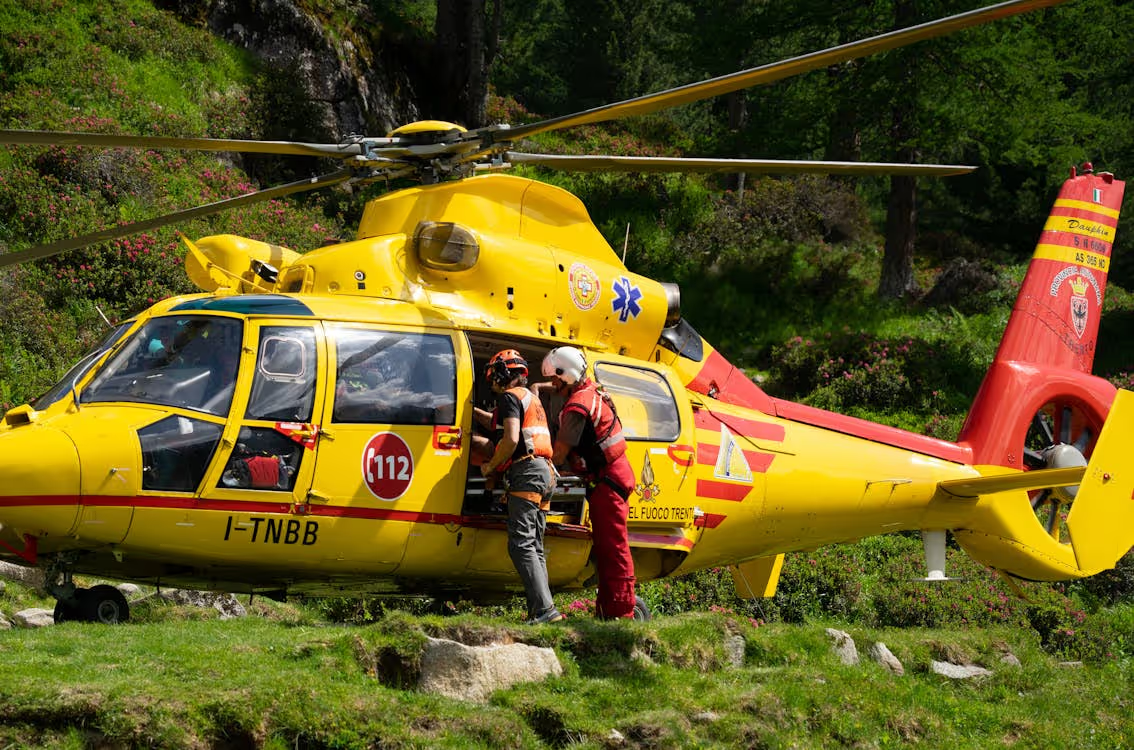
For helicopter emergency medical teams, technical skills are only one aspect of the job. Air medical staff responding to traumas and other medical emergencies must excel at skills like communication, rapid decision-making, and situational awareness under immense pressure.
Here are a few non-technical skills that can determine the outcome of an urgent mission:
- Quick and Confident Decision-Making: Air medical providers must make rapid triage determinations, decide whether to treat on scene or take off immediately, and select the most appropriate receiving facility. All of this occurs simultaneously with the management of complex—and often rapidly changing—patient conditions.
- Clear Communication and Collaboration: Clear resource management and communication between pilots, aerial crews, ground-based personnel, and receiving hospitals is vital for smooth operations. This collaboration is made possible by advanced communication systems like radio, telemetry, and flight vector software.
- Multi-Helicopter Emergency Response Coordination: During large-scale disasters, a multi-helicopter strategy allows aerial responders to divide and conquer. Multiple aircraft decrease workloads and fatigue, support simultaneous operations (i.e. medical evacuations and search and rescue operations), and enable more people to receive care. But effective coordination demands clear communication, strategic resource allocation, and meticulous flight planning.
- Inventory Management: Regularly checking medical kit supplies ensures all necessary items are in stock and within their expiration dates.
- Safety Protocols: Flight crews follow strict procedures around spinning rotors, night operations, challenging terrain, and patient management while maintaining situational awareness.
- Thorough Documentation: Keeping detailed records of each patient’s symptoms, actions taken, medications and treatments administered, and communication with medical experts is crucial for intake to the receiving facility and for post-incident reviews.
Helicopter Express: Your Trusted Support for Emergency Medical Operations
In the past 10 years, the demand for helicopter emergency medical services has increased by over 50%. That’s why Helicopter Express maintains a team of highly skilled pilots, state-of-the-art aircraft, and dedicated support staff on standby to respond to rescue calls.
We understand that having access to quick and reliable helicopter services makes all the difference when a patient is running out of time or a large-scale disaster has struck. In these urgent situations, helicopter services can mitigate damage and save lives. With over three decades of experience providing top-tier aviation services, we’re committed to delivering rapid support when it matters most.
Why Choose Helicopter Express for Emergency Medical Support
Here’s why organizations call upon Helicopter Express for lifesaving missions across Georgia, nationwide, and abroad:
- Proven Success Record: With more than 30 years of experience, our expert team has supported countless emergency medical operations and rescue missions.
- Fast, Dependable Response: We understand that emergencies don’t wait—and neither do we. Our flight personnel are ready to mobilize quickly and provide swift assistance when needed.
- Skilled Professionals: Our trained pilots have extensive experience in disaster response aviation and high-risk environments, and our flight coordinators work hard to handle unexpected requests, coordinate with relevant agencies, and provide real-time support. When you work with Helicopter Express, you work with the best in the business.
- Mission-Ready Aircraft: We operate a modern and well-maintained fleet equipped with advanced safety features and specialized equipment for effective emergency response.
- Comprehensive Emergency Services: Whether you’re in need of medevac services, disaster response support, or firefighting operations, our emergency helicopter services cover all bases.
Ready to discuss your needs and schedule rapid-response aviation support? Contact us today. Our team works with agencies, hospitals, government partners, and more across the U.S. and beyond.