
When a storage tank ruptures at a chemical plant, the situation can escalate in minutes. This puts plant workers, nearby communities, and the environment at risk for serious injury and long-term health effects. Whether the incident involves a chemical spill or hazardous gas release, it necessitates responders capable of quickly assessing the situation and making informed decisions.
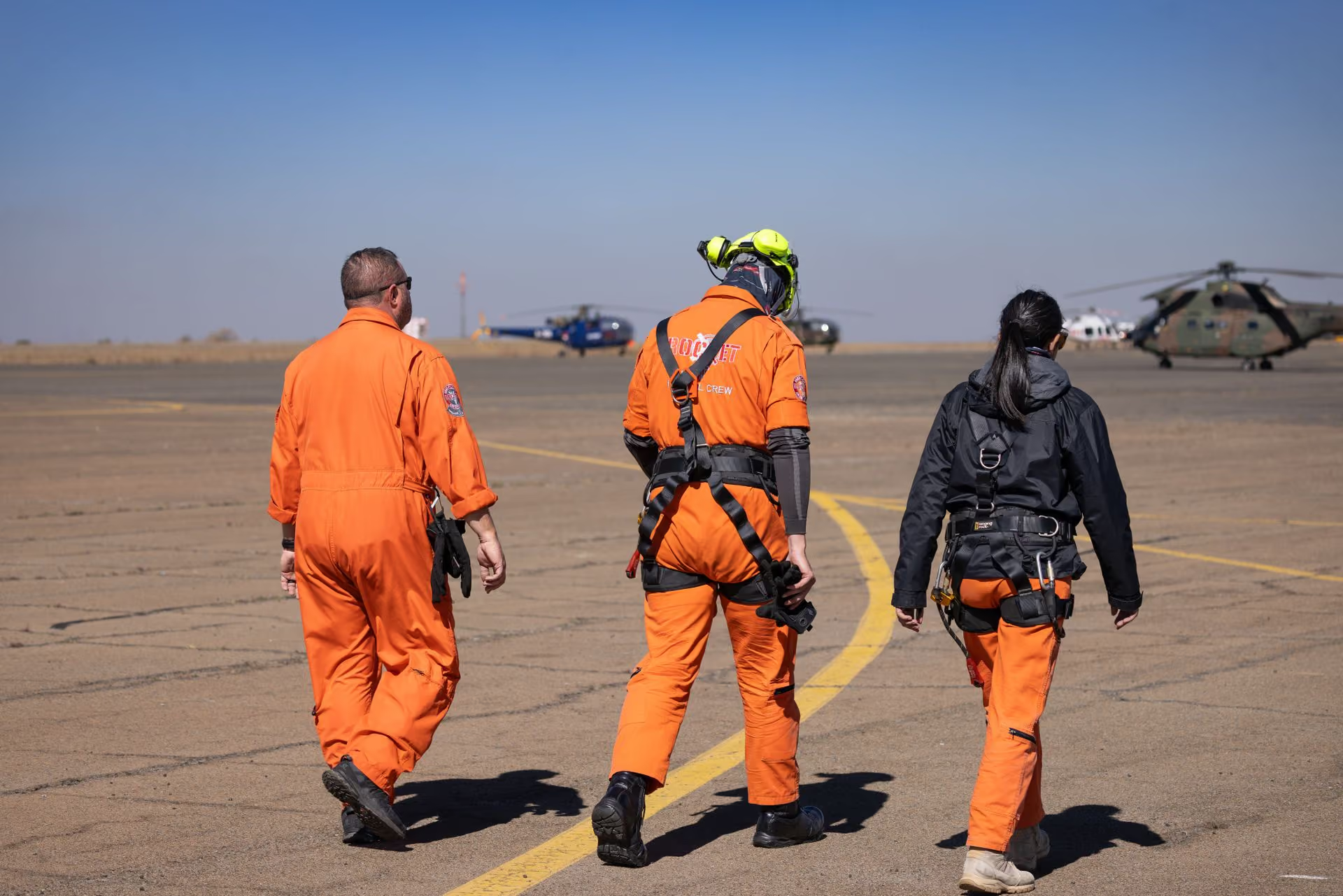
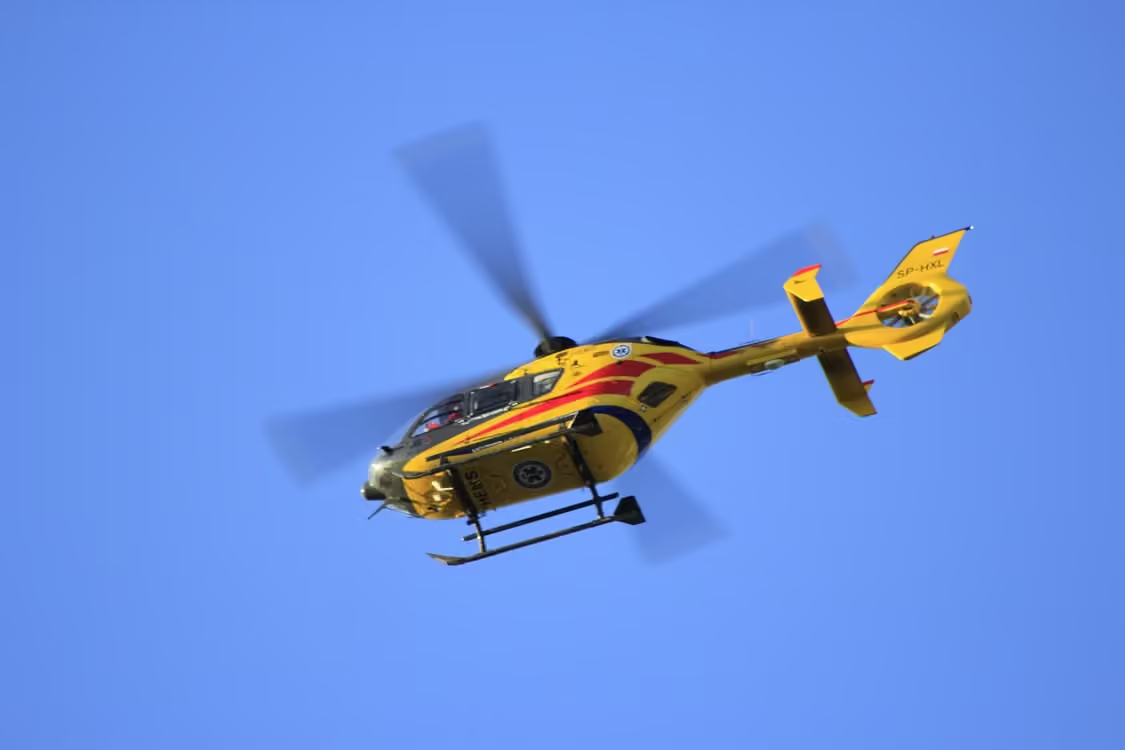
Unlike ground crews, helicopter teams can get close enough to evaluate hazard zones without putting themselves at serious risk. Helicopters can provide aerial reconnaissance, personnel and equipment transport, and real-time situational awareness—even as communications fragment and the hazard zone expands.
Below, we explain what chemical hazard response involves, how helicopters support response efforts, and the strict safety protocols that make these missions possible.
What Is Chemical Hazard Response?
Chemical hazard response is a coordinated effort to manage accidents that involve hazardous substances and occur in industrial sites, workplaces, or public environments. These events demand structured planning and quick implementation of safety measures, medical procedures, and decontamination protocols.
The primary goals of response operations are to:
- Protect personnel and bystanders
- Identify the type and scale of the incident
- Determine how to manage and contain the hazard
- Take immediate action
- Treat exposures
- Reduce environmental damage
- Restore controlled conditions as fast as possible
The 3 C’s of Incident Management
Most response plans follow three basic phases. These are known as “the 3 C’s of incident management.”
- Control: Responders must stop or reduce the chemical release at its source (as soon as it’s safe to do so). This may involve sealing a container, closing a valve, or taking another critical measure.
- Contain: Physical barriers like spill socks, absorbent materials, and other methods help prevent dangerous chemicals from spreading further.
- Clean Up: This phase involves safely removing and disposing of contaminated materials and decontaminating affected areas before normal operations resume.
Each phase relies on accurate information about the hazard, making aerial support an essential resource during large-scale industrial emergencies.
How Helicopters Support Chemical Hazard Response After Industrial Accidents
Helicopters are essential to chemical hazard response. During the 2010 Deepwater Horizon disaster—an offshore blowout that released over 130 million gallons of oil—helicopters provided aerial reconnaissance and quick personnel transport to the scene. Rotorcraft teams also helped coordinate response operations across the offshore site, command centers, and coastal teams. This incident showed how helicopters improve situational awareness and keep critical operations moving during large-scale industrial emergencies.
These capabilities continue to play a vital role during modern chemical release incidents. Whether gathering live intelligence or collecting air samples, helicopters help incident commanders make informed decisions and reduce risk to ground-based personnel.
Aerial Reconnaissance
One of the first priorities following a chemical release is to understand exactly what responders are facing. This step often requires helicopters equipped with specialized sensors to observe large areas quickly and relay information to agencies coordinating the response. Airborne reconnaissance enables officials to collect real-time information from a low-risk vantage point that avoids endangering personnel on the ground.

Key capabilities and technologies of aerial reconnaissance include:
- Remote Sensing: Rotorcraft equipped with specialized sensors like infrared cameras, mass spectrometers, and broadband satellite systems can quickly detect toxic industrial chemicals (TICs) and radioactive materials from the air. These tools allow responders to evaluate incident scenes, map toxic vapor plumes, and identify hazardous chemical spills from a safe distance.
- Live Mapping: Onboard systems can analyze sensor data and display it on digital maps in real time. This allows command teams to see where hazards are located, monitor their movement, and identify which areas may be at greatest risk.
- Weather Monitoring: Modern helicopters have weather radar systems that collect atmospheric data such as wind speed, wind direction, and temperature conditions at varying altitudes. This information helps responders predict how airborne contaminants may spread and which communities will likely be affected.
Transportation of Personnel and Equipment
Many chemical emergencies require equipment not immediately available on site. Helicopters can quickly deliver sensors, other air-monitoring equipment, and hazardous materials teams to locations that would otherwise be difficult or impossible to access. In remote or offshore industrial facilities and locations with blocked roads, helicopter transportation reduces delays and improves coordination between field responders and incident command.
Air Sampling Missions
Air sampling is the collection of air samples where chemical concentrations are expected to be highest. These missions require flight crews to identify the chemical plume and map its movement. Their findings provide the information needed to evaluate current safety measures and guide protection protocols.
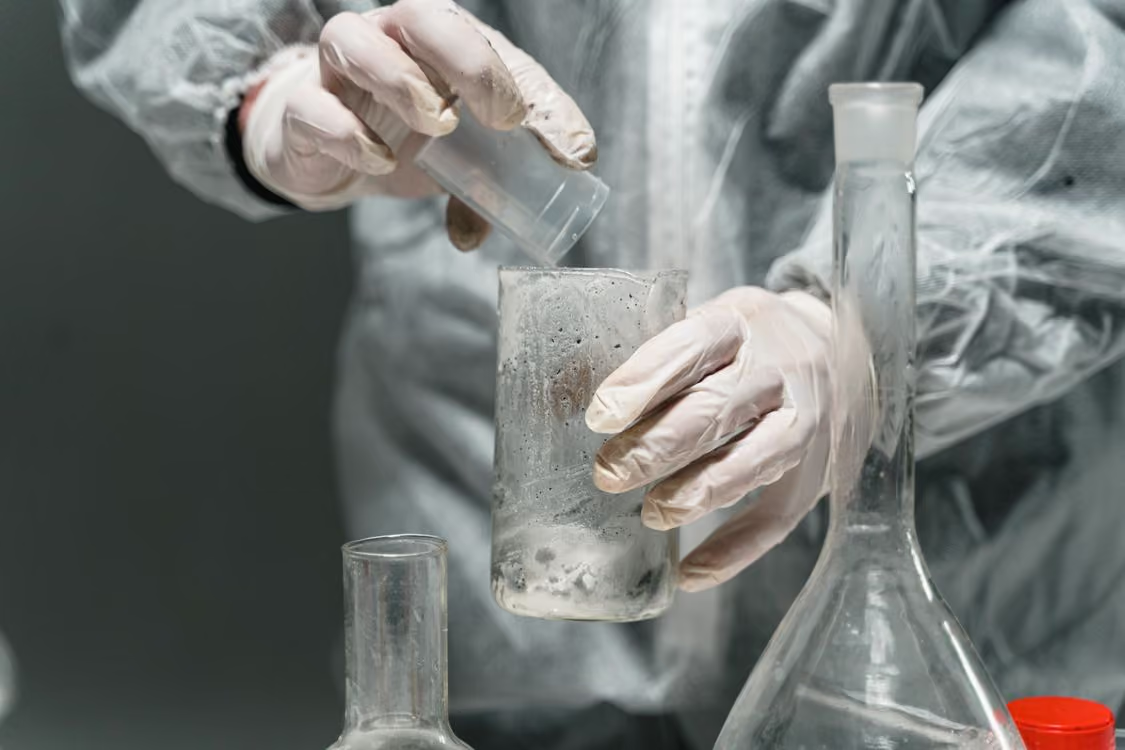
Two key sampling methods are frequently used during helicopter missions:
- Grab Sampling: When responders need near-immediate information about whether a certain contaminant exists—and how strong it is in real time—hazardous material response teams rely on grab sampling to provide quick snapshots of the air. With grab sampling, aerial teams collect a quick sample from a targeted point in or near a plume. This method supports hazard recognition, odor investigation, and post-accident clearance checks.
- Whole-Air Sampling: Whole-air sampling is a broader method used when a more detailed chemical picture or exposure assessment is required. An airborne team collects intact air samples from a particular location using a gas sample bag or stainless steel canister. The sample is transported to a lab, where scientists analyze it to identify the full range of gases and any trace compounds present.
Many teams use both types of air sampling to gain immediate access to critical information while supporting a more detailed follow-up that will guide ongoing response efforts.
Key Aspects of Safe Chemical-Response Helicopter Missions
Controlled chemical-response execution depends on strict planning and operational controls. This includes chemical confirmation, defined safety zones, strategic flight paths, thorough briefings, implementation of crew protection procedures, and strict decontamination protocols. These critical aspects ensure helicopters serve as part of the solution rather than creating additional risks for responders, nearby communities, and the environment.
Chemical Confirmation
Prior to launching a chemical hazard response mission, responders must first confirm the identity of the chemical from the Safety Data Sheet (SDS). This is a standardized document that outlines the chemical’s potential hazards, appropriate personal protective equipment (PPE), and what to do if an accident takes place. OSHA’s Hazard Communication Standard (HCS) requires chemical manufacturers, distributors, and importers to provide these sheets.
Chemical confirmation is essential because a substance's properties determine every aspect of response, from isolation distances to PPE requirements. In cases where a chemical is unknown, responders should treat the substance as potentially toxic.
Defined Safety Zones
Another critical element of chemical hazard response is the establishment of hot, warm, and cold safety zones. These zones indicate the degree of hazard, the type of operations that may occur within, and the areas that only authorized or protected personnel may enter.
Helicopter pilots rely on these designations to avoid landing, hovering, or offloading inside contamination areas. Defined low-risk zones help prevent workers and equipment from accidentally spreading dangerous substances from contaminated areas into protected areas.
Three essential safety zones must be identified:
- Exclusion Zone (Hot Zone): This is the area of the hazardous substance release site that contains actual or potential contamination. It presents the highest chance of exposure to a hazardous chemical substance.
- Support Zone (Cold Zone): The support zone is the area of the site that’s free of harmful contaminants. Responders may use this area for low-risk planning and staging.
- Contamination Reduction Zone (Warm Zone): This zone sits between the exclusion and support zones, serving as the spot where responders enter and exit the exclusion zone and engage in decontamination activities.
Strategic Flight Paths
Aircraft should plan their approach, hover, and departure path upwind whenever possible to avoid unnecessary exposure to hazardous vapor clouds. Strategic routing helps pilots and aerial crews avoid low-level time within the chemical plume and provides a clean escape path in case conditions shift.
Thorough Briefings
Before takeoff, pilots and crews must review:
- Identity and expected behaviors of known chemical hazards
- Weather conditions, such as wind direction
- Ignition risks
- Chemical cloud indicators
- Communication roles and procedures
- Emergency contingencies
Crew Protection Procedures
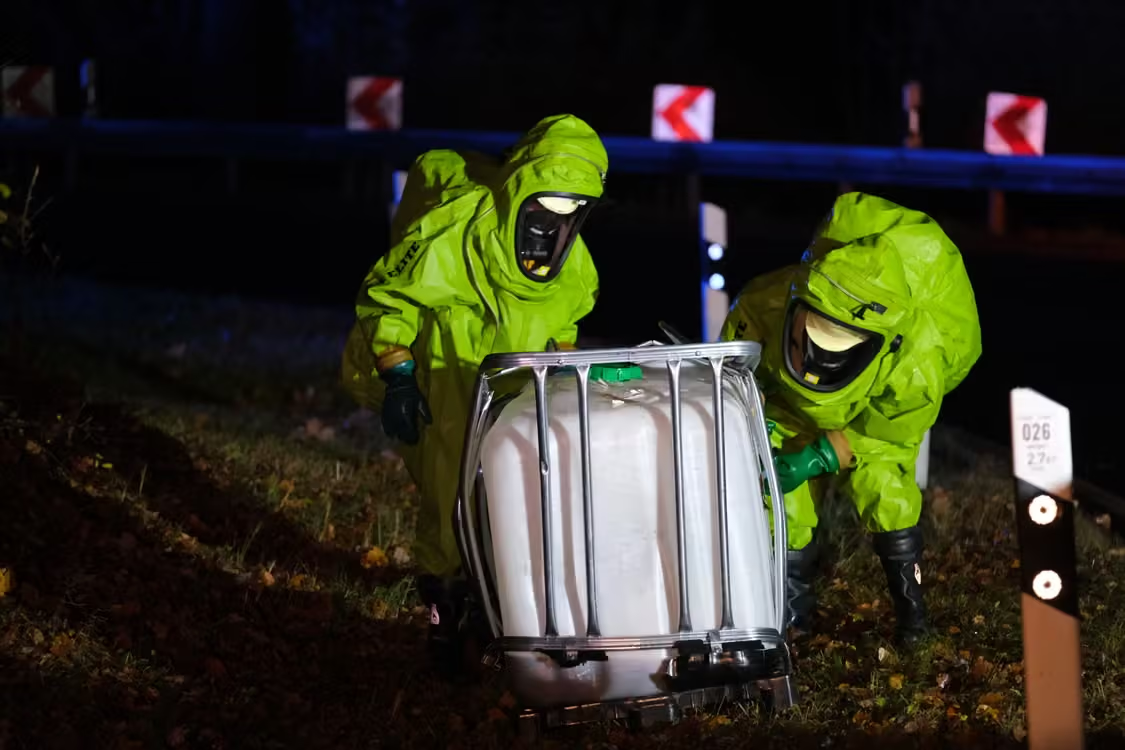
Protecting flight crews starts with understanding the hazards they will encounter. Before entering an affected area, responders must know what chemicals may be present, how these chemicals are expected to behave, and what protective equipment is required.
The type of personal protective equipment (PPE) necessary depends on the specific hazard. However, chemical-response PPE typically includes:
- Flight helmet and standard aviation safety gear
- Chemical-protective clothing
- Eye protection
- Respiratory protection (if hazardous gases or airborne contaminants are present)
If responders will be dropped off on the ground, operators should have a plan to keep them upwind of the hazard if possible and evacuate personnel quickly if conditions change.
Strict Decontamination Protocols
Thorough decontamination is essential before normal operations can resume. Proper procedures help prevent hazardous materials from spreading beyond the incident scene and reduce the risk of secondary contamination.
Decontamination protocols typically include:
- Operating within designated decontamination corridors
- Controlled boarding and deplaning
- Using personal protective equipment
- Cleaning contaminated surfaces with compatible solutions
- Safely disposing of contaminated materials
- Documenting any personnel or equipment exposures during the mission
Following strict decontamination protocols helps protect flight crews, emergency responders, and anyone else who may come into contact with the aircraft after the mission.
When the Stakes Are This High, Experience Is Non-Negotiable
Chemical hazard response leaves little room for inexperience or improvisation. The aviation partner you choose must arrive at the disaster scene fully prepared, with pilots who understand hazardous environments and a modern fleet configured with advanced technology.
For almost three decades, Helicopter Express has provided services for disaster response, emergency medical transport, aerial firefighting, and other high-stakes industries across the United States and beyond. We combine mission-specific planning with rigorous safety standards to support operations where the margin for error is zero.
Explore the services we offer or contact Helicopter Express to learn why we’re the aviation partner you need for operations in demanding environments.